
Flowers
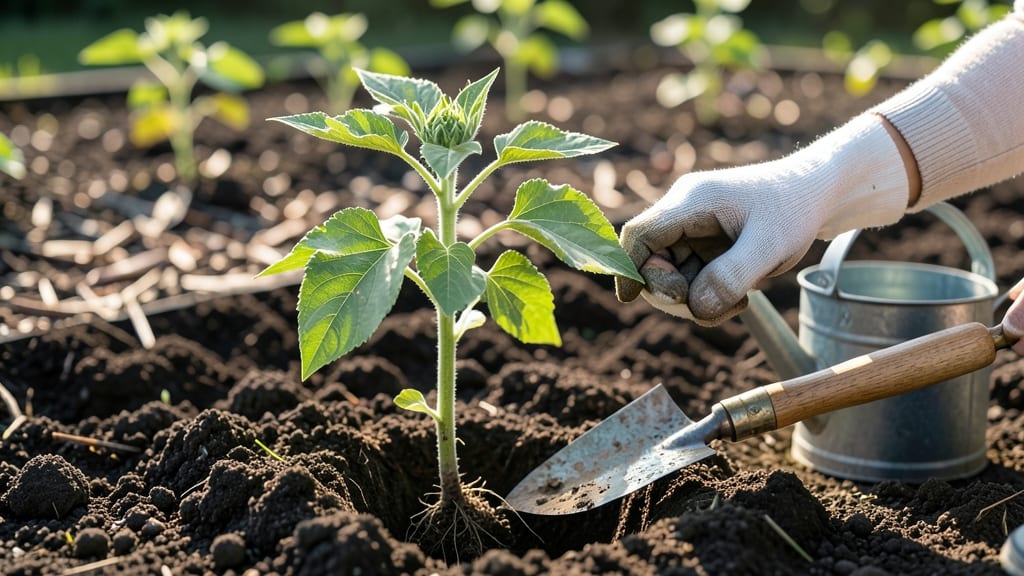
Transplanting sunflowers at the right depth ensures they grow strong and tall 🌻—most gardeners bury them 1-2 inches deep, but there’s more to it than meets the eye.
Picture this: you’ve nurtured delicate seedlings for weeks, only to transplant them too deep, smothering their growth, or too shallow, leaving them vulnerable to wind and drought. The key to success lies in how you handle those roots and prepare the soil.
Sunflowers thrive when their roots get just the right amount of space to spread without being buried too deep. We’ll cover the ideal depth, how to adjust for different soil types, and what to watch for in the first few weeks after transplanting.
By the end, you’ll know exactly how to position your sunflowers for maximum height and vibrant blooms, avoiding the common mistakes that leave plants struggling to stand.


The ideal sunflower root depth for transplanting success
Sunflowers have taproots that grow deep—up to 3 feet in mature plants—and transplanting them correctly is critical. The root collar (where roots meet the stem) must sit just below soil level, never buried deeper than 1-2 inches. This ensures the plant can access sunlight and nutrients without suffocating.
Transplanting too deep can cause stem rot or weak stems, while planting too shallow exposes roots to drying out. The key lies in understanding your sunflower’s maturity stage and soil type.
Loamy soil holds moisture better, allowing slightly deeper planting, while sandy soil requires shallower depths to prevent dehydration.
🌱
| Sunflower Stage | Root Depth | Soil Type Adjustment | Key Notes |
|---|---|---|---|
| Seedling (1-2 weeks) | 0.5–1 inch | Sandy: 0.5 inch; Clay: 1 inch | Fragile roots; handle gently |
| Young Plant (3-4 weeks) | 1–2 inches | Loam: 2 inches; Sandy: 1 inch | Root collar visible above soil |
| Mature (Transplant Ready) | 2–3 inches (taproot) | Clay: 2 inches; Loam: 3 inches | Avoid disturbing deep roots |
| Post-Transplant (Established) | Natural depth (no adjustment) | Mulch to retain moisture | Focus on watering, not depth |
To measure the correct depth, gently remove the seedling from its container and locate the root collar. This is the swollen area where the stem meets the roots. When transplanting, position this 1 inch below soil level.
For dwarf varieties (like 'Teddy Bear'), you can plant slightly deeper (1.5 inches), but standard varieties need precise depth to support their tall stems.
Soil type plays a surprising role. In sandy soil, which drains quickly, plant sunflowers shallower (0.5–1 inch) to prevent roots from drying out. Conversely, clay soil, which holds moisture longer, allows for slightly deeper planting (1.5–2 inches) without risking rot.
Always loosen the soil around the roots to encourage new growth.
One common mistake is burying the stem too deep, which can lead to fungal diseases like damping-off. Another is planting too shallow, leaving roots exposed to heat stress.
To avoid these, use your finger to create a small trench around the root ball, ensuring the collar sits at the ideal depth while backfilling with soil.
After transplanting, water deeply to settle the soil and eliminate air pockets. This helps the roots establish contact with the moisture-rich soil. Within 7–10 days, you should see new growth, indicating successful transplantation. If the soil is dry, water again to encourage root expansion.
For container-grown sunflowers, the same rules apply, but use a pot with at least 12-inch depth to accommodate the taproot. Dwarf varieties can thrive in 8-inch pots, while standard varieties need deeper containers. Always include drainage holes to prevent waterlogging, which can suffocate roots.
Sunflowers are fast-growing but sensitive to transplant shock. By following these depth guidelines, you’ll give your plants the best start. Remember, the root collar’s position is the most critical factor—prioritize it over soil type or variety when transplanting.
🌻
Step-by-step guide: how to transplant sunflowers at the right depth
Transplanting sunflowers requires precision to avoid stressing young plants. The correct depth ensures roots establish quickly while preventing stem rot or exposure. For most varieties, aim to bury the seedling stem 1-2 inches deep, but soil type and seedling age can adjust this.
Before you begin, harden off seedlings by placing them outdoors for 3-5 hours daily for 5-7 days. This toughens stems so they handle transplant shock better. Choose a cloudy day or late afternoon to minimize stress from direct sun.
- 1 Prepare the soil: Loosen soil to 12 inches deep with a fork, mixing in 2 inches of compost. Sunflowers need well-draining soil to prevent root rot.
- 2 Dig planting holes: Space holes 6-12 inches apart in rows 18-24 inches apart. Dig holes 2 inches deeper than the seedling’s root ball to accommodate depth adjustments.
- 3 Handle the seedling: Gently remove the seedling from its pot, loosening roots if tangled. Trim any damaged roots with clean scissors, but leave healthy roots intact.
- 4 Position the seedling: Place the seedling in the hole so the top of the root ball sits 1 inch below soil level. For taller varieties, bury slightly deeper (2 inches) to support stems.
- 5 Fill and firm soil: Cover roots with soil, pressing gently to remove air pockets. Water deeply to settle soil and encourage root contact.
After transplanting, water sunflowers deeply every 5-7 days to encourage root growth. Avoid overhead watering, which can spread disease. Apply a 1-inch layer of mulch around stems to retain moisture and suppress weeds.
Monitor your sunflowers for 2-3 weeks to ensure they’re establishing well. Yellowing leaves or wilting may indicate overwatering or poor drainage. Adjust care as needed, and soon you’ll see those towering stems reaching for the sky! 🌻