
Planting
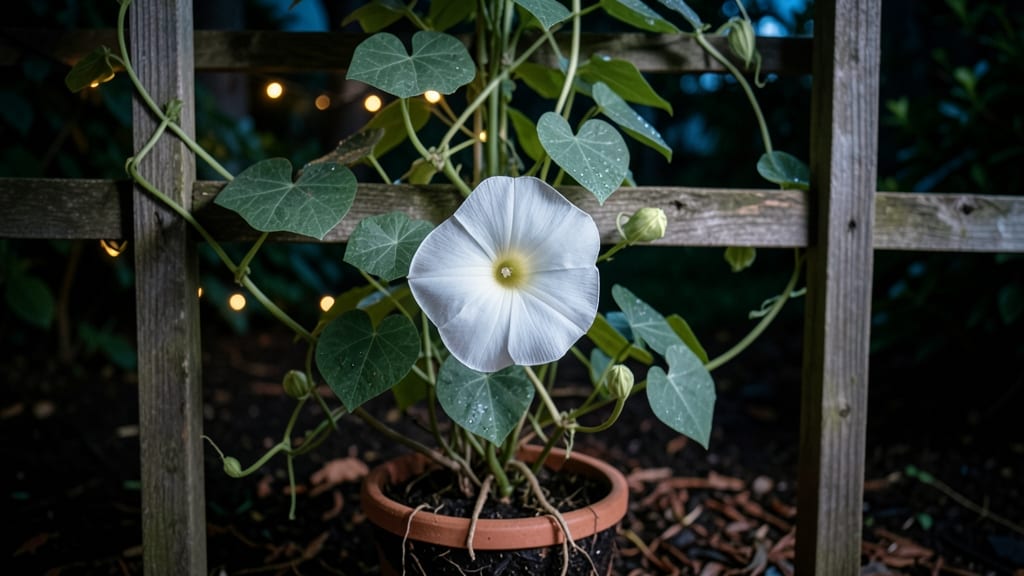
The moonflower plant looks like a tropical dream come to life, with its giant white blooms that unfurl only after sunset 🌙 — a sight so striking it feels like magic.
Imagine a plant that stays dormant all day, only revealing its breathtaking beauty when the sun sets. These night-blooming vines produce flowers as large as dinner plates, with velvety petals that glow under moonlight and a sweet, intoxicating fragrance that fills the evening air.
By day, the moonflower hides its secrets behind heart-shaped leaves and twining stems that climb eagerly toward any support. But once night falls, the transformation is nothing short of spectacular—pure white blooms with delicate purple centers, each one a beacon for moths and other nocturnal pollinators.
If you’ve ever wondered how to spot this rare beauty in your garden, I’ll walk you through its key features—from the size of its flowers to the way its vines grow—and how to tell it apart from other night-blooming plants.

Moonflower plant appearance: giant white flowers and tropical leaves
The moonflower plant (Ipomoea alba) is a stunning night-blooming vine that transforms your garden after dark. Its most iconic feature is its giant white flowers, which can reach 6-10 inches wide—large enough to cast shadows!
These flowers emerge from closed buds during the day, remaining tightly shut until dusk when they unfurl dramatically. The petals are snow-white with a deep purple center, creating a striking contrast that glows under moonlight.
Beyond its flowers, the moonflower's tropical leaves add to its exotic appeal. The leaves are heart-shaped with pointed tips, measuring about 3-6 inches long, and have a glossy, dark green appearance.
They grow in a spiral pattern along the vine, which can climb 10-15 feet if given proper support. The vine itself is slender and twining, wrapping tightly around trellises, fences, or arbors.
| Feature | Description |
|---|---|
| Flower Size | 6-10 inches wide |
| Flower Color | Pure white with purple center |
| Leaf Shape | Heart-shaped, glossy green |
| Leaf Size | 3-6 inches long |
| Vine Height | 10-15 feet when mature |
| Growth Habit | Fast-growing, twining vine |
| Bloom Time | Evening to midnight |
The moonflower's blooming pattern sets it apart from similar night-blooming plants like morning glories. While morning glories often bloom in pink, purple, or blue and open in the morning, moonflowers stay closed all day and only unfurl at dusk.
Their sweet, intoxicating fragrance fills the night air, attracting moths and other nocturnal pollinators. This scent is one of their most distinctive traits, often described as vanilla-like or tropical.
When comparing moonflowers to other night-blooming vines, their size and color are key identifiers. Unlike morning glories, which have smaller flowers (2-4 inches wide) and more vibrant colors, moonflowers stand out with their massive white blooms.
Their leaves are also larger and more tropical-looking, with a shinier finish compared to the matte leaves of morning glories. If you're growing both, you'll notice moonflowers climb more aggressively and produce fewer but larger flowers.
Another striking feature is the moonflower's rapid growth. In just one growing season, a vine can reach 10 feet tall if given proper support. The stems are hairy and twining, gripping trellises or fences with strong, spiral tendrils.
This fast growth makes moonflowers ideal for quick garden coverage, especially on pergolars, arbors, or chain-link fences. Their tropical appearance also makes them a favorite in humid climates, where they thrive in USDA zones 6-11.
The moonflower's buds are another fascinating feature. During the day, they appear as tightly closed, greenish-white spheres about 2 inches in diameter. As evening approaches, the buds begin to swell slightly, and by full dark, they've fully unfurled into their stunning white blooms.
This transformation happens within just a few hours, making it a magical sight for gardeners who time their evening walks right.
If you're new to growing moonflowers, pay attention to the leaf arrangement and vine texture. The leaves grow in a spiral pattern along the stem, with alternate placement rather than opposite pairs.
The stems are slightly fuzzy and woody as they mature, providing a nice contrast to the smooth, glossy leaves. This combination of textures and colors gives moonflowers a lush, almost jungle-like appearance, perfect for creating a tropical garden atmosphere.
One common mistake is confusing moonflowers with white morning glories, which can look similar at first glance. However, morning glories typically have smaller flowers (3-5 inches wide) and more delicate stems.
Moonflowers also tend to bloom later in the evening, often staying open until midnight or later, while morning glories close by early evening. These differences can help you quickly identify which plant you're dealing with in your garden.
For the best viewing experience, plant moonflowers near a patio, deck, or seating area where you can enjoy their evening spectacle. Pair them with complementary plants like night-scented jasmine or evening primrose to create a sensory garden experience that comes alive after dark.
With their dramatic flowers, tropical leaves, and intoxicating scent, moonflowers are sure to become the star of your night garden.
How to identify moonflower plants in daylight vs night
The moonflower plant (Ipomoea alba) is a fascinating night-blooming vine that stays hidden during daylight hours, making it tricky to spot. During the day, its closed buds and heart-shaped leaves blend seamlessly into your garden, often resembling other vines like morning glories.
But as the sun sets, this unassuming plant transforms into a stunning spectacle with giant white blooms that can reach up to 6 inches wide.
To distinguish a moonflower from other vines, pay close attention to its leaf structure and growth habits. The leaves are typically dark green, glossy, and triangular, with smooth edges that help them conserve moisture.
Unlike morning glories, moonflowers grow much faster—sometimes reaching 10 feet in a single season—and their vines are thicker and more robust.
| Feature | Daylight Appearance | Nighttime Appearance |
|---|---|---|
| Leaves | Dark green, glossy, heart-shaped, 3-5 inches long | Same as daytime; no change |
| Flowers | Tightly closed buds, pale green or white | Fully open, 6-inch white blooms with purple centers |
| Scent | No fragrance | Sweet, intoxicating aroma at night |
| Vine | Thick, twining stems, fast-growing | Same as daytime; supports heavy blooms |
| Blooming Time | Closed by mid-morning | Opens at dusk, closes by noon |
One of the easiest ways to confirm you’ve spotted a moonflower is by observing its blooming schedule. Unlike morning glories, which bloom in the morning and close by afternoon, moonflowers open only at night and are fully closed by mid-morning.
This nocturnal habit is a dead giveaway—if you see a vine with large white flowers glowing under moonlight, you’ve found a moonflower!
Another distinguishing feature is the fragrance of moonflowers. Their blooms release a sweet, almost tropical scent that fills the air on warm evenings, often attracting moths and other night pollinators.
If your garden smells like a tropical paradise after sunset, you’re likely growing moonflowers. This scent is far more potent than that of morning glories or other daytime bloomers.
To avoid confusing moonflowers with similar vines, look for these key differences: morning glories have blue or purple flowers that bloom in the morning, while cypress vines have tiny white flowers that bloom year-round.
Moonflowers are also annuals, meaning they die back in cold weather, whereas some vines like morning glories may return if they self-seed.
If you’re still unsure, check the buds during the day. Moonflower buds are plump and rounded, often with a slight green tint, while morning glory buds are pointier and more elongated.
With these clues, you’ll be able to spot and enjoy your moonflowers’ magical nighttime display with confidence! 🌙✨