
Flowers
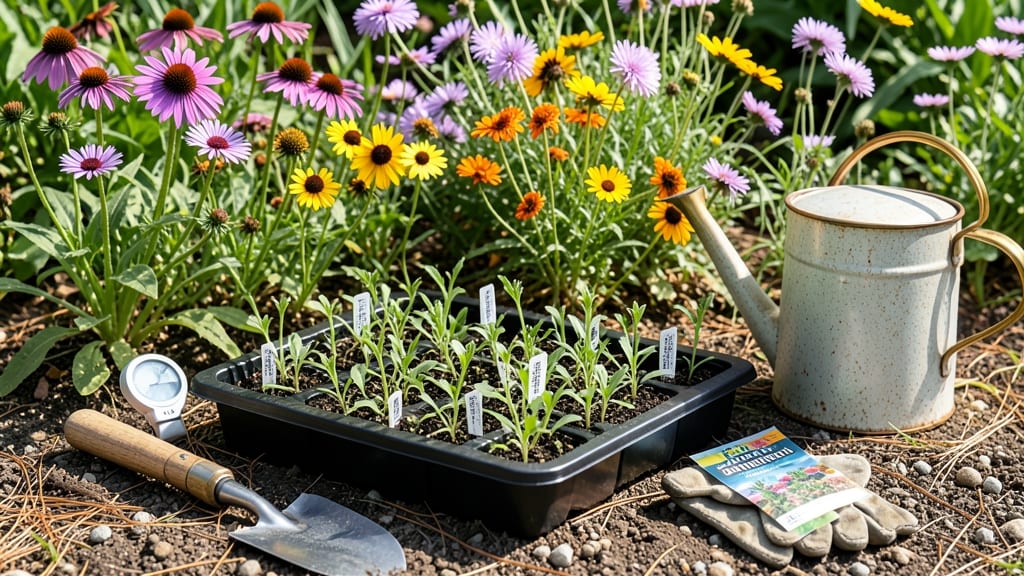
Planting wildflowers in Massachusetts at the right time means the difference between a burst of color by summer and a season of missed blooms.
Massachusetts gardeners know that wildflowers can transform a landscape into a vibrant, pollinator-friendly haven—but timing is everything. Plant too early, and frost strikes; too late, and summer blooms never arrive.
With USDA zones 5b-6b across the state, your planting window varies from early March in coastal areas to late April inland. The key is aligning your schedule with the last frost date while giving seeds time to germinate before summer heat sets in.
Here’s what you need to know about zone-specific timing, soil prep, and the best native species to ensure your wildflower meadow thrives year-round.
Massachusetts wildflower planting calendar by hardiness zones (5-7)
Massachusetts spans USDA hardiness zones 5-7, meaning your wildflower planting schedule depends heavily on whether you're in coastal Zone 6b/7a or inland Zone 5b/6a. Coastal areas enjoy 2-3 weeks earlier last frost dates, while inland zones face harsher winters and later planting windows.
I’ve broken down the best times to plant annuals vs. perennials to maximize blooms and survival.
For Zone 5b (Western MA, Berkshires), aim for early spring (March-April) or late summer (August) planting. Zone 6a/6b (Central MA, Worcester) can start 2 weeks earlier, while Zone 7a (Cape Cod, Islands) extends the season by another 3 weeks.
Always check your local last frost date—typically mid-April to early May—as a guide.
Here’s how to align your planting with Massachusetts’ climate quirks, including microclimates like sheltered valleys or exposed coastal gardens.
Spring planting is ideal for perennial wildflowers, which establish roots before summer heat. Annuals thrive when sown 2-3 weeks after your last frost date, ensuring they bloom all season.
For example, in Zone 5b, sow cosmos seeds in late April to see flowers by July, while Zone 7a gardeners can start zinnias in early April for earlier blooms.
Fall planting (late August to September) gives perennials a head start on root growth before winter. Zone 6a/6b is perfect for this strategy, as seeds germinate slowly in cool soil and avoid summer drought. I’ve had black-eyed Susans bloom 2 weeks earlier when planted in September versus spring.
Late-summer planting (post-July) is risky in Zone 5b due to early frosts, but works in Zone 7a for annuals like marigolds. Always check 7-day forecasts—if frost is predicted within 4 weeks, delay planting until spring.
Coastal areas like Cape Cod can push this to early September safely.
Soil prep is critical: loosen 6 inches of soil, mix in compost, and rake seeds lightly into the top ¼ inch. Perennials benefit from mulch after planting to retain moisture.
In Zone 5b, add a thick straw layer in fall to protect seeds from freeze-thaw cycles.
Microclimates matter! A south-facing slope warms up 2-3 weeks earlier than a north-facing garden. Use this to your advantage: plant early bloomers like crocus on sunny slopes in March, while
Best wildflower species for Massachusetts seasons and soil types
Massachusetts’ diverse climate zones and soil types create the perfect canvas for wildflowers—but choosing the right species ensures your garden thrives. Whether you’re in Western MA’s rocky terrain or Eastern MA’s wetland edges, native wildflowers adapt beautifully while supporting local pollinators.
Let’s dive into the best picks for each season and soil, tailored to your landscape.
For spring bloomers, consider Virginia bluebells (Mertensia virginica) and trillium, both thriving in moist, well-drained soil with partial shade. These perennials naturalize effortlessly and attract early bees and butterflies.
In summer, black-eyed Susans (Rudbeckia hirta) and purple coneflowers (Echinacea purpurea) dominate, handling drought and clay soil with ease. For fall interest, goldenrod (Aster spp.) and New England asters (Symphyotrichum novae-angliae) shine, their late-season blooms feeding migratory pollinators.
| Species | Bloom Season | Soil Type | Sun Needs | MA Region |
|---|---|---|---|---|
| Virginia bluebells | Spring | Moist, well-drained | Partial shade | Eastern MA |
| Black-eyed Susan | Summer | Clay or sandy | Full sun | Western MA |
| Purple coneflower | Summer-Fall | Rocky or loamy | Full sun | Statewide |
| New England aster | Fall | Moist to dry | Partial sun | Eastern MA |
| Butterfly weed | Summer | Sandy or rocky | Full sun | Western MA |
| Swamp milkweed | Summer | Wet, boggy | Full sun | Eastern MA wetlands |
If your Western MA garden battles drought or rocky soil, prioritize butterfly weed (Asclepias tuberosa) and smooth blue aster (Symphyotrichum laeve). These drought-tolerant species thrive with minimal water once established and attract monarch butterflies.
For Eastern MA’s wetter soils, swamp milkweed (Asclepias incarnata) and cardinal flower (Lobelia cardinalis) are ideal, flourishing in moist to soggy conditions near ponds or streams.
Sun exposure is critical: Full sun lovers like purple coneflower and black-eyed Susans need 6+ hours of sunlight daily, while partial shade species such as Virginia bluebells and trillium prefer 3–6 hours. Mixing these in layers creates a low-maintenance meadow that blooms from