
Blooming
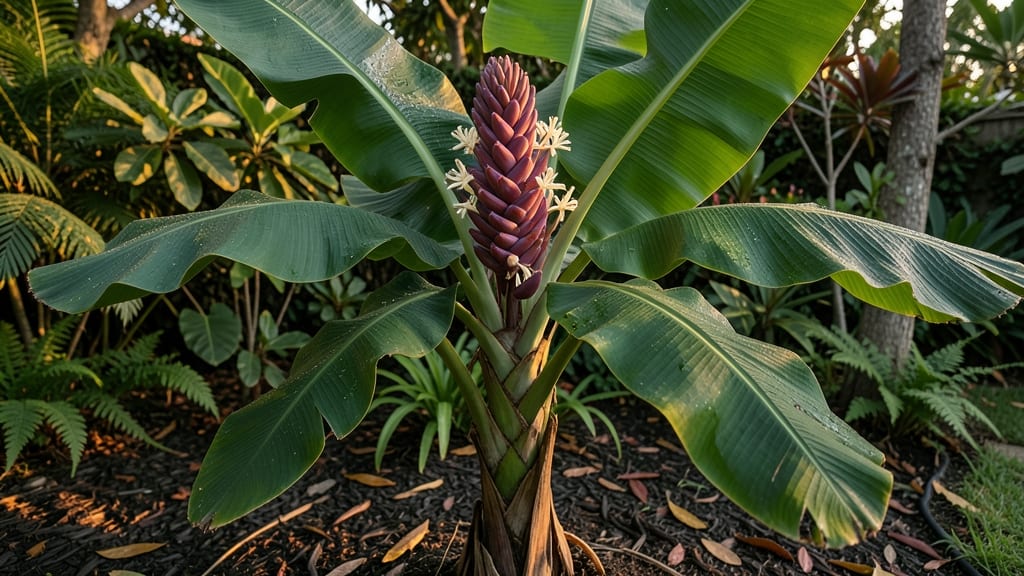
Recognizing the banana flowering stage is your first clue that fruit is on the way—and missing these signs could mean lost harvests or stressed plants.
Banana plants grow leaves for years before finally producing fruit, but spotting the flowering stage early can help you anticipate harvests and troubleshoot issues before they arise. Here’s how to recognize the subtle (and sometimes hidden) signs that your 🍌 is about to bloom.
Most gardeners overlook the first visual cues, like the pseudostem splitting or the inflorescence peeking out from the base. These changes aren’t always obvious, but they’re critical for adjusting care—whether it’s watering, fertilization, or even pest control—to support a healthy bloom.
Below, I break down the three key signs to watch for, how to check for hidden buds, and what to do once you spot them to maximize your fruit yield.
3 Key visual signs your banana plant is entering flowering stage
Banana plants often take 12-18 months to reach maturity before flowering, but knowing the visual cues can help you prepare for fruit production. The transition from vegetative growth to flowering is marked by subtle yet distinct physical changes in the plant’s structure.
Recognizing these early signs lets you adjust care routines to support healthy fruit development and avoid common mistakes that reduce yield.
Unlike many plants, banana flowering doesn’t announce itself with colorful blooms—it begins with internal changes in the pseudostem and leaf patterns. These signs often appear weeks before the iconic banana flower emerges, giving you time to optimize growing conditions.
Missing these cues might mean your plant struggles to produce fruit or faces stress during the critical flowering phase.
Here are the three most reliable visual indicators that your banana plant is entering the flowering stage, along with what each sign means for your care routine:
The pseudostem (the "trunk" made of leaf sheaths) may develop vertical cracks or split slightly at the base. This happens as the plant redirects energy from leaf growth to flower development.
Emerging leaves may show pink, purple, or reddish hues along the edges or midribs. This color shift indicates hormonal changes preparing the plant for flowering.
A rounded bulge (the developing flower cluster) may form at the center of the plant, often hidden between the youngest leaves. Gently part the leaves to spot a tight, compact growth.
The pseudostem splitting is the most noticeable sign because it’s visible from a distance, but it often appears after the internal flower bud has already formed. This means the plant has been preparing to flower for weeks, so adjusting your care immediately is crucial.
For example, increasing potassium-rich fertilizer can support flower and fruit development, while reducing nitrogen prevents leafy growth at the expense of fruiting.
Watch for new leaves with purple edges, which signal the plant is shifting from vegetative to reproductive mode. This change usually happens 4-6 weeks before the flower emerges, giving you time to reduce watering slightly (to every 2-3 days) and provide sturdy support for the heavy fruit cluster.
Without support, the plant may struggle to hold the developing bananas, leading to poor yield or dropped fruit.
The hidden inflorescence bulge is the most critical early sign because it confirms the flower is already developing internally. If you spot this, avoid pruning or disturbing the plant, as the flower is extremely sensitive to physical stress.
Instead, focus on deep watering (1-2 gallons per plant) to ensure the roots can support the energy demands of flowering and fruiting.
Timing matters when it comes to banana flowering. If you notice these signs in late spring or early summer, your fruit will likely ripen in fall or winter, depending on your climate.
In USDA Zones 10-12, flowering can occur year-round, but cooler temperatures may delay the process. Pay attention to day length—bananas often flower when days shorten slightly, a natural cue for tropical plants.
One common mistake is assuming a banana plant won’t flower because it hasn’t produced fruit before. Even dwarf varieties (like Musa acuminata) will flower after 10-12 months of growth, provided they receive consistent care.
If your plant shows these signs but fails to flower, check for nutrient deficiencies (especially potassium or magnesiumenvironmental stress like drought or extreme heat.
Once you confirm flowering, monitor the plant closely for pests like banana weevils or fungal diseases, which thrive on stressed plants. A healthy flowering banana will produce a large, vibrant flower (often mistaken for a decorative plant!) that eventually gives way to hundreds of tiny bananas.
With the right care, you’ll go from spotting these signs to harvesting fruit in just 3-6 months.
🌱
How to check for hidden flower buds before blooms appear
Banana plants hide their flowering signs deep inside their pseudostem—a dense, layered trunk made of old leaf bases. Unlike many plants, bananas don’t show obvious blooms until the inflorescence emerges, often as a surprise.
Learning to inspect the right spots early lets you anticipate fruit and adjust care before the plant diverts energy to flowering. The key areas to check are the leaf axils (where leaves meet the stem) and the pseudostem’s base, where the magic happens.
Before you start, gather a few tools for inspection: a sharp knife or pruning shears (sterilized), gloves (banana sap can irritate skin), a flashlight (for peering into tight spaces), and a notebook to track changes.
Work on a dry, calm day—wet conditions make the pseudostem slippery, and wind can damage delicate emerging buds. Always prioritize gentle handling; even a small tear can introduce pathogens or stress the plant.
Step-by-Step Guide to Finding Hidden Flower Buds
- 1 Inspect the youngest leaf axils: Start at the top of the pseudostem where the newest leaves emerge. Gently separate the outer leaf sheaths (the thick, papery layers) with your fingers or a knife. Look for a small, tight bud (about the size of a pea) nestled between the leaf base and stem. This is the early inflorescence, often hidden until it’s 2–3 inches long.
- 2 Check for pseudostem swelling: Run your hands down the pseudostem’s sides and feel for bulges or soft spots. A flowering banana’s pseudostem often develops a slightly spongy texture near the base, where the inflorescence will eventually burst through. Compare both sides—uneven swelling is a clear sign of bud development.
- 3 Look for sap changes: Healthy banana sap is usually clear or pale yellow. If you notice thicker, milky-white sap oozing from small cracks in the pseudostem, this indicates active bud growth. Use a flashlight to spot tiny hairline fractures where the inflorescence may split the stem open in 1–2 weeks.
- 4 Monitor leaf behavior: Observe the oldest leaves at the pseudostem’s base. If they yellow slightly at the tips or curl inward, this signals the plant is redirecting nutrients to the inflorescence. Note the leaf axil angle: healthy axils are tight and upright, while those near a bud may feel looser or slightly swollen.
- 5 Time your checks: Inspect your banana plant weekly during the growing season (spring to fall). Flower buds develop 3–6 months before blooming, so early detection gives you time to adjust fertilization (reduce nitrogen, add phosphorus) and prepare support structures for the heavy fruit cluster.
Once you’ve spotted hidden buds, document your findings with photos or notes. This helps track progress, especially if your banana plant is slow to flower (common in cooler climates or younger plants).
For example, I once found a pea-sized bud in my Dwarf Cavendish in early May—by July, it had split open into a 3-foot inflorescence! Timing is everything, so mark your calendar and plan for increased watering and light support as the fruit develops.
If you’re growing bananas in containers, hidden buds are even harder to spot due to limited access. In this case, focus on pseudostem thickness and leaf axil changes. Container-grown plants may also flower earlier (as young as 9 months) because their root systems are confined.
Always check the bottom of the pot for root-bound conditions, which can delay flowering until you repot or prune roots.
Remember, patience is key—banana flowering is a slow, internal process