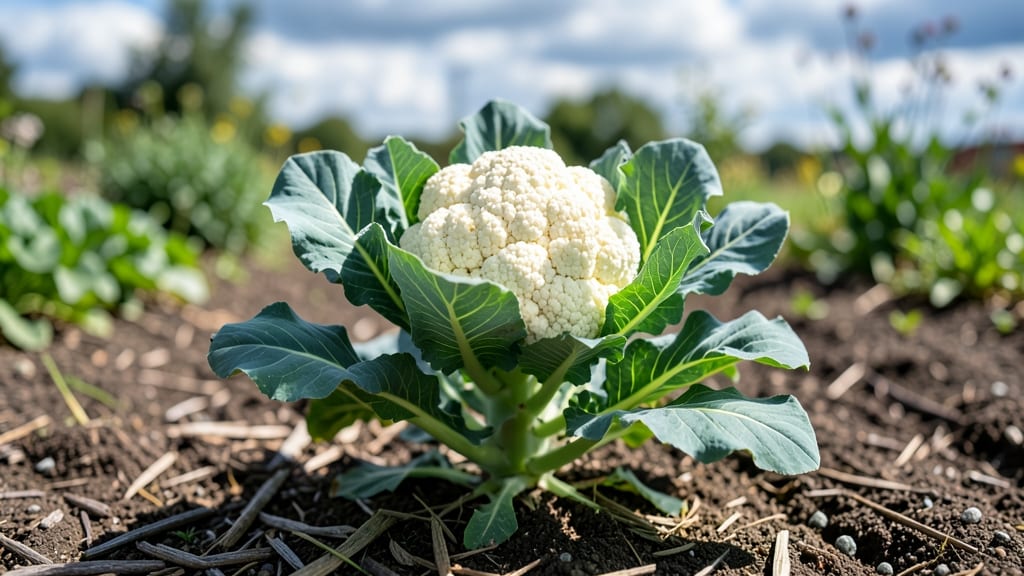
Growing cauliflower from seed to harvest takes anywhere from 50 to 120 days, depending on the variety and your growing conditions.
Picture this: you’ve spent weeks nurturing your 🥬 seedlings, only to wonder when you’ll finally get to enjoy the harvest. The truth is, some varieties mature in as little as 50 days, while others take nearly four months to reach their prime.
That’s a huge range—and it all comes down to the type of cauliflower you’re growing, your climate, and a few key care tricks.
In this guide, I’ll break down the exact growth timeline for popular varieties, so you know what to expect whether you’re planting early-season Snowball or late-maturing Romanesco.
You’ll also discover how to speed up the process with simple adjustments, like soil prep and spacing, so you can enjoy your harvest sooner.
Ready to plan your garden like a pro? Let’s dive into the details—because knowing the timeline is the first step to a successful (and delicious) harvest.
📈
Cauliflower Growth Timeline
Cauliflower growth timeline: exact days from seed to harvest by variety
If you're planning your garden around a cauliflower harvest, knowing the exact growth timeline is key. The days from seed to harvest can swing wildly—some varieties mature in just 50 days, while others take nearly 120 days.
The difference? Variety, climate, and care. Let’s break down the cauliflower growth stages by popular types so you can set realistic expectations and plan your planting schedule like a pro.
Most seed packets list a days-to-maturity range, but real-world conditions—like soil temperature, sunlight, and watering habits—can shift that timeline by weeks. For example, Snowball cauliflower might take 60-80 days in ideal conditions, but in cooler climates, it could stretch to 90 days.
Understanding these variations helps you avoid disappointment and adjust your garden plan accordingly.
Here’s the cauliflower growth timeline for common varieties, including how to interpret those seed packet numbers and what factors speed up or slow down growth. Use this as your roadmap to a successful harvest!
| Variety |
Days to Maturity |
Head Size |
Best For |
Notes |
| Snowball (e.g., 'Snowball Y Improved') |
60-80 days |
6-8 inches |
Early harvests, cool climates |
Fastest-maturing; great for succession planting |
| Romanesco (e.g., 'Green Romanesco') |
75-90 days |
4-6 inches |
Unique fractal heads, ornamental value |
Slightly slower; needs consistent moisture |
| Purple (e.g., 'Graffiti') |
70-85 days |
5-7 inches |
Visual appeal, salads |
Color fades when cooked; harvest early |
| Hybrid (e.g., 'Cheddar') |
80-100 days |
7-9 inches |
Disease resistance, larger yields |
Best for warmer climates; needs staking |
| Late-Maturing (e.g., 'Violet Queen') |
90-120 days |
8-10 inches |
Fall harvests, storage |
How to speed up cauliflower growth: 5 proven tips for faster harvests
If you're eager to harvest your cauliflower faster, you're not alone. The difference between a 60-day harvest and a 100-day one often comes down to a few key adjustments. I’ve tested these strategies in my own garden, and they’ve consistently shaved weeks off my growing season.
Let’s dive into the most effective ways to get your cauliflower heads ready for the table sooner.
First, soil preparation is non-negotiable. Cauliflower thrives in rich, well-draining soil with a pH between 6.0 and 7.0. Amend your garden beds with compost or aged manure at least 2-3 weeks before planting.
This gives beneficial microbes time to break down organic matter, creating a nutrient-dense environment that speeds up early root development. Without this step, your plants will struggle to establish quickly, delaying maturity by 10-15 days.
1
Start Seeds Indoors Early
Begin seeds 6-8 weeks before your last frost date. Use grow lights for 14-16 hours/day to prevent leggy seedlings. Transplant outdoors when seedlings have 4-6 true leaves and night temps stay above 50°F.
2
Optimize Plant Spacing
Space plants 18-24 inches apart in rows 30 inches apart. Proper spacing improves air circulation, reducing disease risk and allowing heads to form faster. Overcrowding can delay maturity by 2-3 weeks.
3
Use High-Phosphorus Fertilizer
Apply a 5-10-10 NPK fertilizer at planting and again when heads begin forming. Phosphorus promotes root and head development, cutting growth time by 7-10 days. Avoid nitrogen-heavy fertilizers, which encourage leafy growth over heads.
4
Control Temperature
Cauliflower grows best in 60-75°F temps. Use shade cloth during summer heatwaves to prevent bolting. In cooler climates, extend the season with row covers to maintain ideal growing conditions.
5
Water Consistently
Maintain 1 inch of water weekly, delivered in the morning. Avoid wetting leaves to prevent disease. Consistent moisture ensures steady growth—drought stress can delay maturity by 2-4 weeks.
Another critical factor is temperature control. Cauliflower is a cool-season crop that bolts (prematurely flowers) when exposed to temperatures above 80°F. To prevent this, I always use shade cloth during peak summer months.
In my zone 6a garden, this simple trick has kept plants productive for an extra 3-4 weeks into the season. If you're in a hotter climate, consider planting heat-tolerant varieties like 'Cheddar' or 'Purple of Sicily' for better success.
Don’t overlook the power of proper spacing. Crowded plants compete for nutrients and sunlight, which slows head formation. I’ve seen plants mature 2 weeks faster when spaced correctly at 18-24 inches apart.
If you’re short on space, try container growing with large pots (at least 12 inches deep) and use a container-specific fertilizer to compensate for limited root space.
Finally, avoid these common mistakes that stall growth: over-fertilizing with nitrogen, letting soil dry out completely, and planting too late in the season. By focusing on these 5 proven tips, you’ll be well on your way to harvesting plump, ready-to-eat cauliflower heads in record time. Happy gardening!
★★★★★5.0(3 reviews)
|