
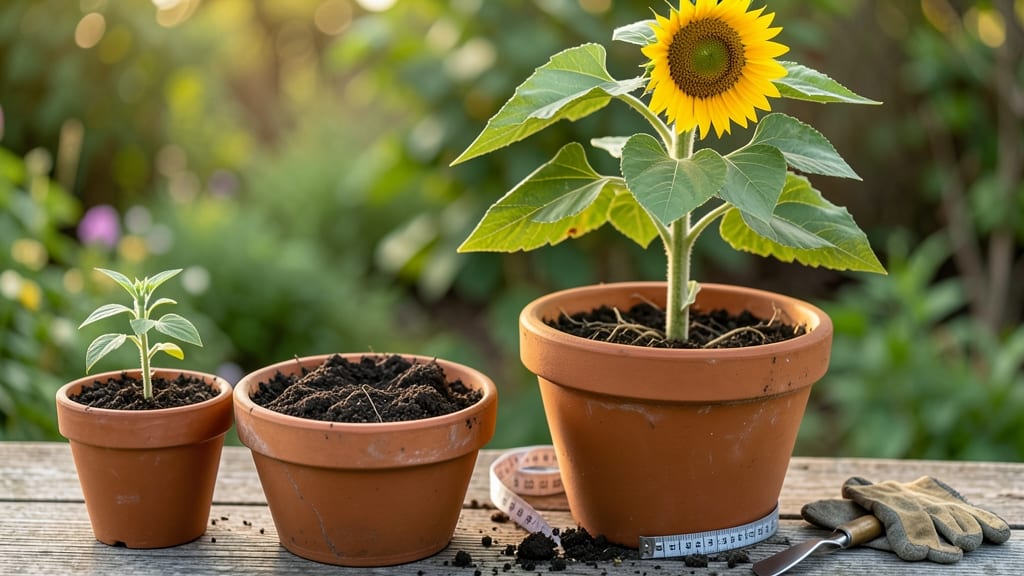
How Big of a Pot for Sunflowers: Space Requirements by Height and Variety

Container Gardens

How Big of a Pot for Sunflowers: Space Requirements by Height and Variety

To grow sunflowers in pots, you’ll need containers that match their height and root depth—skimp on space and you’ll end up with leggy stems or top-heavy blooms that flop over before they even open.

Picture this: a 10-foot-tall ‘Mammoth’ sunflower teetering in a 5-gallon pot, its roots circling like a caged animal. That’s the kind of mistake we’ve seen too many gardeners make—and the frustration of watching a plant struggle is why we’re breaking down the exact pot sizes you need by variety.

Sunflowers aren’t one-size-fits-all. A dwarf variety like ‘Teddy Bear’ (2–4 feet) thrives in a 5-gallon container, while a giant like ‘Russian Giant’ (10–14 feet) demands a 20-gallon pot or larger to keep it upright.

Below, we’ll walk you through the science behind root space, drainage tricks to prevent soggy soil, and how to choose between fabric, ceramic, or self-watering pots for longer blooms.

You’ll also discover the 5 biggest mistakes that stunt sunflower growth in containers—and how to fix them mid-season without shocking the plant. Whether you’re balancing a pot on a balcony or filling a raised bed, these tips will ensure your sunflowers reach their full potential without the guesswork.

Sunflower pot size guide by height: minimum container requirements

Sunflowers bring joy to any garden, but container-grown varieties need careful pot sizing to thrive. Unlike in-ground plants, potted sunflowers can't expand roots freely, so root depth and diameter become critical.

I've grown everything from dwarf 'Teddy Bear' to giant 'Mammoth' varieties, and trust me—skipping this step leads to toppling stems and stunted growth. The key is matching your sunflower height to the pot's volume and stability.

For dwarf varieties (2–4 ft tall), a 5-gallon pot with 12-inch depth works perfectly. These compact beauties like 'Moulin Rouge' or 'Teddy Bear' produce multiple stems, so spread roots horizontally in wider containers.

Medium-height sunflowers (4–8 ft) need 10–15 gallons with 18-inch depth—think of 'Autumn Beauty' or 'Russian Giant' dwarfs. The root ball must extend 2–3 times wider than the pot's diameter to prevent tipping.

Here’s the non-negotiable rule: Giant sunflowers (8–16 ft) require 20+ gallons with 24-inch depth. Varieties like 'Mammoth' or 'American Giant' need sturdy, wide pots (18+ inches in diameter) to support their heavy seed heads.

I once watched a 12-foot sunflower topple because its 5-gallon pot was too small—a lesson I won’t repeat! Always check the variety’s mature height before choosing a container.

Variety Height (ft) Min Pot Size Root Depth (in) Diameter (in) Notes
Teddy Bear 2–3 5 gallons 12 10–12 Multi-stemmed; needs wide pot
Moulin Rouge 3–4 7 gallons 14 12–14 Bicolor blooms; sturdy stems
Autumn Beauty 4–5 10 gallons 16 14–16 Color-changing petals
Russian Giant Dwarf 5–6 12 gallons 18 16–18 Large single blooms
Mammoth 10–14 20+ gallons 24 18–20 Heavy seed heads; needs support
American Giant 12–16

How to choose between fabric pots, ceramic, and self-watering containers for sunflowers

Not all containers are created equal when it comes to sunflowers. The material you choose directly impacts root health, water retention, and even bloom longevity.

Fabric pots, for example, prevent root circling—a common issue in rigid containers—while ceramic pots offer aesthetic appeal but require more frequent watering. Self-watering systems, on the other hand, can extend your sunflower’s bloom time by keeping roots consistently moist during dry spells.

Let’s break down the pros and cons of each container type so you can pick the best fit for your sunflowers—and your space. Whether you’re dealing with a balcony’s weight limits or a hot summer drought, the right pot makes all the difference.

Fabric Pots vs. Ceramic vs. Self-Watering Containers for Sunflowers

Fabric Pots

  • Pros: Prevents root circling, lightweight, breathable
  • Cons: Dries out faster, less durable, limited decorative options

Best for: Dwarf varieties or balcony gardens where weight matters.

Ceramic Pots

  • Pros: Aesthetic appeal, retains moisture longer, durable
  • Cons: Heavy, can crack in freezing temps, root circling risk

Best for: Medium varieties in ground-level gardens with stable temperatures.

Self-Watering Containers

  • Pros: Extends bloom time, reduces watering frequency, ideal for drought-prone areas
  • Cons: More expensive, heavier than fabric, requires maintenance

Best for: Giant varieties or hot climates where consistent moisture is critical.

For fabric pots, I recommend using them for dwarf or semi-dwarf varieties like ‘Teddy Bear’ or ‘Moulin Rouge’. The breathable material mimics natural soil conditions, reducing stress on roots. Just be prepared to water more frequently—especially in full sun—since fabric dries out faster than ceramic.

If you’re growing taller varieties, opt for fabric pots with 10-gallon capacity or more to accommodate deeper root systems.

Ceramic containers shine when you prioritize style over function, but they’re best suited for medium-height sunflowers like ‘Autumn Beauty’ (5–7 feet). Their weight makes them ideal for ground-level gardens, but avoid placing them on balconies or elevated surfaces.

Pro tip: Add a layer of pebbles at the bottom to improve drainage and prevent root rot—a common issue in heavy clay pots.

Self-watering containers are my go-to for giant sunflowers like ‘Russian Giant’ or ‘Mammoth’. These systems keep roots hydrated for up to 7–10 days, which is a game-changer during summer heatwaves. Just ensure the reservoir is large enough—15–20 gallons for 10-footers—to support the plant’s water needs without frequent refills.

Swap out containers seasonally: Use self-watering pots in summer and switch to lighter fabric pots in fall to simplify care.

One final tip: Always prioritize drainage holes, regardless of the material. Stagnant water leads to root rot, which can kill sunflowers faster than underwatering.

If your ceramic pot lacks holes, drill them yourself or line the bottom with a cauldron liner to protect roots while allowing excess water to escape.

★★★★★4.5(1 review)
Categories Container Gardens