
Planting
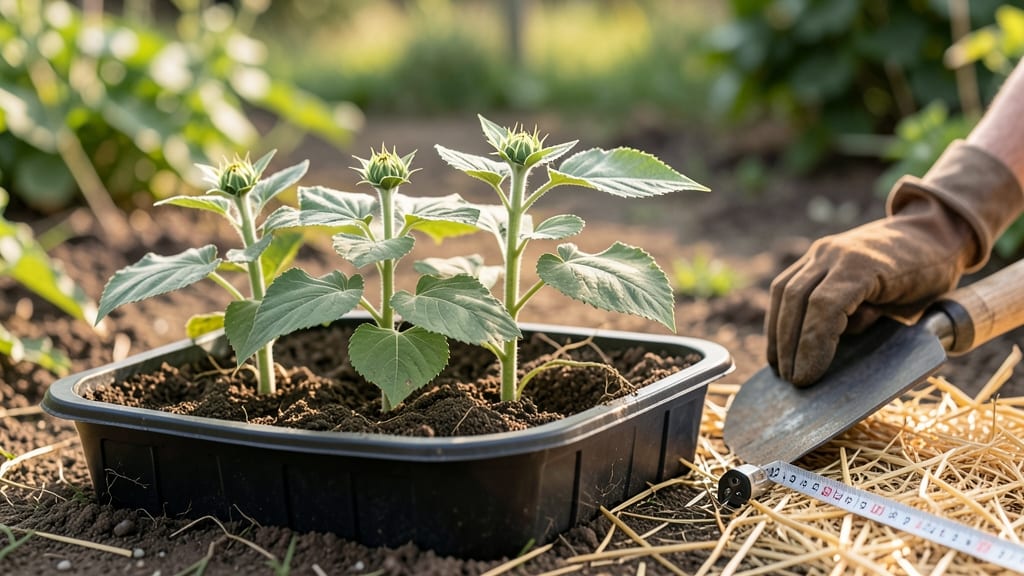
Planting sunflowers too close will leave you with a jungle of weak stems and half-sized blooms—so spacing them just right is the secret to those towering, sturdy stalks you dream of.
Imagine sinking hours into your garden, only to watch your 🌻 sunflowers lean into each other like drunken dancers, their heads never quite reaching the sky. That’s what happens when you crowd them together, and it’s a mistake even experienced gardeners make.
The good news? With the right spacing—whether you’re growing dwarf varieties or giants—you can maximize sunlight, airflow, and root space for healthier, stronger plants. Below, I’ll break down the exact distances for every type, plus how to fix common mistakes before they derail your harvest.
Skip the guesswork and learn how to plant sunflowers for maximum height, beauty, and yield—no tangled messes in sight.

Optimal sunflower spacing by variety: dwarf vs. Giant vs. standard heights
Sunflowers come in three distinct height categories—dwarf, standard, and giant—each requiring different spacing to prevent competition and ensure strong stems. The wrong spacing can lead to weak stems, yellowing leaves, or even fungal diseases like powdery mildew.
Let’s break down the science-backed spacing rules for each type, so your sunflowers grow tall, healthy, and stunning.
Dwarf sunflowers (like ‘Moulin Rouge’) reach just 12–24 inches tall, making them perfect for containers or small gardens. Standard varieties (such as ‘Autumn Beauty’) grow 3–6 feet, while giants (like ‘Russian Giant’) can tower 10–16 feet—nearly the height of a basketball hoop!
Each size needs a unique approach to spacing to avoid overcrowding and maximize sunlight exposure.
Proper spacing isn’t just about aesthetics—it directly impacts stem strength, flower size, and disease resistance. Crowded sunflowers compete for nutrients and water, leading to leggy stems that snap in wind or rain.
Meanwhile, over-spaced plants waste garden real estate. Let’s dive into the exact distances for each variety, plus how to adjust for your garden’s size.
Here’s a quick comparison of dwarf, standard, and giant sunflower spacing, including real-world examples and key considerations for your planting plan:
| Variety Type | Height Range | Optimal Spacing (inches) | Example Variety | Key Considerations |
|---|---|---|---|---|
| Dwarf | 12–24 inches | 6–12 inches apart | ‘Moulin Rouge’ | Ideal for containers; thin seedlings to 8–10 inches for best blooms. |
| Standard | 3–6 feet | 18–24 inches apart | ‘Autumn Beauty’ | Provide 2 feet of space for strong stems; avoid planting in rows tighter than 18 inches. |
| Giant | 10–16 feet | 36–48 inches apart | ‘Russian Giant’ | Space 3–4 feet apart to prevent stem breakage; stake tall varieties for support. |
Spacing adjusts for soil fertility: Richer soil allows slightly closer planting.
For dwarf sunflowers, like the popular ‘Teddy Bear’ or ‘Moulin Rouge’, aim for 6–12 inches between plants. These varieties thrive in containers or small garden beds, but even they need room to breathe.
If planting in a 5-gallon pot, limit to 1–2 plants per container to avoid root competition. Thin seedlings early—after the first true leaves appear—to prevent overcrowding.
Standard-height sunflowers (3–6 feet) need 18–24 inches of space to develop strong stems and large blooms. Varieties like ‘Autumn Beauty’ or ‘ProCut’ (great for cutting) benefit from this spacing. If you’re growing them in rows, maintain 24-inch gaps between plants and 36-inch rows for easy access and airflow. Poor airflow increases the risk of powdery mildew, a common fungal issue in dense plantings.
Giant sunflowers are the showstoppers of the garden, but they demand the most space—36–48 inches apart. Varieties like ‘Russian Giant’ or ‘Mammoth’ can reach 12–16 feet, so their roots need room to anchor deeply. Plant them in well-draining soil and consider staking or caging to prevent stems from toppling in wind or rain. In small gardens, opt for 1–2 giant sunflowers as focal points rather than crowding them.
Beyond spacing, soil quality plays a critical role in stem strength. Amend your soil with compost before planting to ensure sunflowers get the phosphorus they need for strong roots. Avoid over-fertilizing with nitrogen—it promotes leafy growth at the expense of flower production.
A balanced 10-10-10 fertilizer applied every 4–6 weeks during the growing season keeps your sunflowers healthy without encouraging weak stems.
One final tip: Stagger your planting if you’re growing multiple varieties. Plant dwarfs first (they mature faster), followed by standards, and finally giants. This ensures you enjoy continuous blooms from summer through fall.
And remember—thinning is key. If you skip this step, your sunflowers will compete for sunlight, leading to smaller blooms and leggy stems. A little effort now saves headaches later!
With the right spacing, your sunflowers will reward you with towering stems, vibrant blooms, and years of admiration. Whether you’re a beginner or a seasoned gardener, these guidelines will help you grow sunflowers that steal the show—literally! 🌻
5 Common sunflower spacing mistakes that stunt growth (and how to fix them)
Even experienced gardeners accidentally crowd sunflowers, turning their dreams of golden giants into a tangled mess of weak, leaning stems. The problem? Too little space means plants compete for sunlight, nutrients, and airflow, leading to stunted growth and disease.
Let’s fix this with science-backed spacing rules and early warning signs.
Sunflowers need room to stretch their roots deep and their stems tall. When you plant them too close, they’ll fight for resources, resulting in yellowing leaves, powdery mildew, or stems that flop like overcooked noodles. The good news? Adjusting spacing can save your plants—and your sanity—mid-season.
🚨 How Close to Plant Sunflowers?
- 🌱 Dwarf varieties (2-4 ft): 12-18 inches apart (e.g., 'Teddy Bear').
- 🌿 Standard varieties (6-10 ft): 18-24 inches apart (e.g., 'Moulin Rouge').
- 🌳 Giant varieties (10-16 ft): 24-48 inches apart (e.g., 'Russian Giant').
- 🪴 Containers: 1 plant per 5-gallon pot (use dwarf types).
- 💧 Rows: Space rows 3 feet apart for airflow and easy weeding.
Pro Tip: Thin seedlings early to avoid overcrowding—weak stems can’t recover later!
Mistake #1: Ignoring variety-specific spacing. Giant sunflowers like 'Russian Giant' need 4 feet between plants, while dwarf 'Teddy Bear' can huddle at 1 foot apart. Mixing varieties without adjusting spacing leads to uneven growth—tall ones block sunlight for shorter ones.
Mistake #2: Skipping row spacing. Planting sunflowers in tight rows (less than 2 feet apart) traps moisture, inviting powdery mildew. Space rows 3 feet apart for airflow and easier maintenance. Think of it like a breeze-friendly skyscraper—plants need room to sway.
Mistake #3: Overlooking container constraints. One sunflower per 5-gallon pot is the rule—any smaller, and roots will circle and strangle each other. Use dwarf varieties or trellis tall ones to save space, but never cram two giants into a 10-gallon pot.
Mistake #4: Planting too deep. Burying seeds deeper than 1 inch delays germination, while shallow planting (½ inch) risks drying out. Aim for 1 inch deep, then thin seedlings to the correct spacing once they’re 4 inches tall.
Mistake #5: Forgetting companion plants. Sunflowers steal nutrients from neighbors like tomatoes or peppers. Instead, pair them with beans or borage, which improve soil and deter pests—without competing for space. It’s a win-win for small gardens!