
Flowers
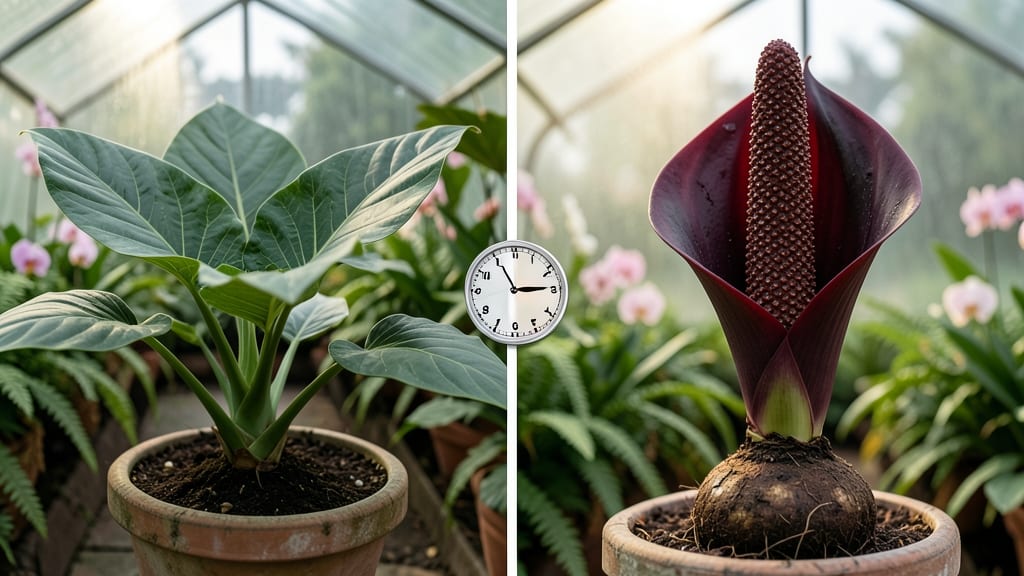
Corpse flowers bloom for just 24 to 48 hours—a fleeting but unforgettable spectacle that turns your greenhouse into a scene straight out of a sci-fi movie.
Picture this: a towering 🌺 plant in your General (Tropical Indoor/Greenhouse) space suddenly heats up to 90°F while releasing an odor like rotting meat. That’s the corpse flower’s signature performance, and it only lasts a day or two. Miss it, and you’ll be waiting years for the next show.
Why does it bloom so briefly? The corpse flower (Amorphophallus titanum) evolved to attract carrion flies in its native tropical habitats. In 10-12 (or indoor/controlled environments), this rare event becomes even more dramatic—especially when you’re the only one in the room for the full experience.
In this guide, I’ll break down the exact timeline from bud to bloom, what to expect during those critical hours, and how to give your plant the best shot at putting on its next show. Spoiler: patience and the right conditions are everything.
Corpse flower bloom duration: exact timeline from bud to flower
The corpse flower (Amorphophallus titanum) is famous for its dramatic, short-lived bloom—often lasting just 24-48 hours. This fleeting window is preceded by months of preparation, making every second of the bloom a rare spectacle.
Understanding the exact timeline helps you prepare for the experience, whether you're growing one at home or visiting a botanical garden.
Unlike most flowers, the corpse flower’s bloom cycle is divided into distinct stages: pre-bloom bud formation, the actual bloom, and the post-bloom recovery. Each stage has unique characteristics, and timing can vary based on the plant’s age, health, and environmental conditions.
Younger plants, for example, may take longer to reach maturity before blooming.
| Stage | Duration | Key Characteristics | What to Expect |
|---|---|---|---|
| Pre-Bloom Bud Formation | Weeks to months | Bud swells rapidly, emits faint odor | Monitor for rapid growth and slight foul scent |
| Full Bloom | 24-48 hours | Intense heat (up to 90°F), strong rotting meat odor | Prepare for strong smell; bloom opens fully in hours |
| Post-Bloom Recovery | Weeks to months | Bud wilts, plant enters dormancy | Reduce watering; plant may not bloom again for years |
| First Bloom Age | 5-10 years | Younger plants take longer to mature | Patience is key; blooming frequency varies |
The pre-bloom stage is the longest part of the cycle, often lasting weeks to months. During this time, the bud swells dramatically, and you may notice a faint, unpleasant odor.
This is your first clue that the bloom is imminent. The bud itself can grow up to 3 feet long and emit a slight heat, preparing for the main event.
When the full bloom arrives, it’s a spectacle unlike any other. The flower typically opens in the morning and reaches peak intensity within 24-48 hours.
During this time, the temperature around the flower can spike to 90°F (32°C), and the smell—often compared to rotting meat—can be overpowering even from several feet away.
The post-bloom recovery phase is just as critical as the bloom itself. After the flower wilts, the plant enters a dormancy-like state, where it focuses on recovering energy for future growth.
This phase can last weeks to months, depending on the plant’s health and care. During this time, reduce watering and avoid fertilizing to let the plant rest.
One of the most fascinating aspects of the corpse flower’s bloom is how timing varies by plant age. Younger plants, particularly those under 5 years old, may take longer to reach maturity before blooming.
Older, well-established plants in ideal conditions (high humidity, warm temperatures) tend to bloom more frequently, though even then, it’s still a rare event.
Environmental conditions also play a role in bloom duration. For example, plants grown in greenhouse settings with controlled humidity and temperature often have more predictable bloom cycles. In contrast, those in outdoor tropical climates may experience shorter blooms due to fluctuating conditions.
If you’re growing a corpse flower at home, maintaining 70-90°F temperatures and 80% humidity can help ensure a successful bloom.
If you’re lucky enough to witness a corpse flower in bloom, the experience is unforgettable. The combination of its intense heat, foul odor, and dramatic appearance makes it a standout event in any garden.
Just remember: the bloom is fleeting, so be prepared to enjoy it while it lasts—typically just one or two days—before the plant returns to its dormant state.
For gardeners, the corpse flower’s bloom cycle is a reminder of nature’s unpredictability. While the 24-48 hour bloom is the most exciting part, the months of preparation and recovery are just as important.
By understanding each stage, you can better appreciate this extraordinary plant and increase your chances of witnessing its rare and spectacular bloom.
🌺
What to expect during the corpse flower’s short-lived bloom
The corpse flower’s bloom is a once-in-a-lifetime event that lasts just 24 to 48 hours, making preparation key. During this time, your 🌺 Amorphophallus titanum will transform from a dormant-looking plant into a dramatic spectacle.
The first sign? A sudden heat spike to 90°F—hot enough to feel like a sauna near the plant.
This extreme warmth isn’t just for show—it mimics the tropical decay of its native habitat, tricking insects into pollinating it. The plant’s spathe (the leaf-like structure) will also turn a deep maroon or purple, signaling the bloom’s peak.
If you’re growing one at home, this is your cue to step back and observe—the show is about to begin.
- 🌡️ Heat Spike: Plant warms to 90°F (32°C) to mimic decay
- 👃 Foul Odor: Releases smell like rotting meat to attract flies
- 🌸 Full Bloom: Lasts 24-48 hours—spathe splits open
- 🌿 Post-Bloom: Plant wilts; no flowers for 5-10 years
- 📅 Frequency: Blooms once every 5-10 years (if conditions are perfect)
The odor is the most shocking part—imagine walking into a room and smelling decaying flesh. This isn’t just unpleasant; it’s the plant’s evolutionary trick to lure carrion flies for pollination.
If you’re visiting a botanical garden, expect crowds to gather, cameras out, and possibly even face masks for the brave souls up close.
Visually, the spadix (the central spike) will emerge, covered in tiny yellow flowers that look like a bizarre, alien landscape. The spadix can grow up to 3 feet tall, and its heat makes the air shimmer around it.
For gardeners at home, this is your chance to document the experience—photos and videos capture the surreal beauty of the moment.
After the bloom, the plant will crash hard. The leaves may wilt and turn brown, and the entire structure will collapse within days. Don’t panic—this is normal!
The corpse flower is not a perennial bloomer; it may take 5 to 10 years before it flowers again, if ever. This is why patience and perfect conditions are everything when growing one.
If you’re planning to witness this in person, arrive early—botanical gardens often limit access due to the odor. Bring earplugs or a mask if you’re sensitive, and consider ventilating your space if you’re hosting one at home.
The experience is unforgettable, but it’s not for the faint of heart—or nose! 🌺