
Watering
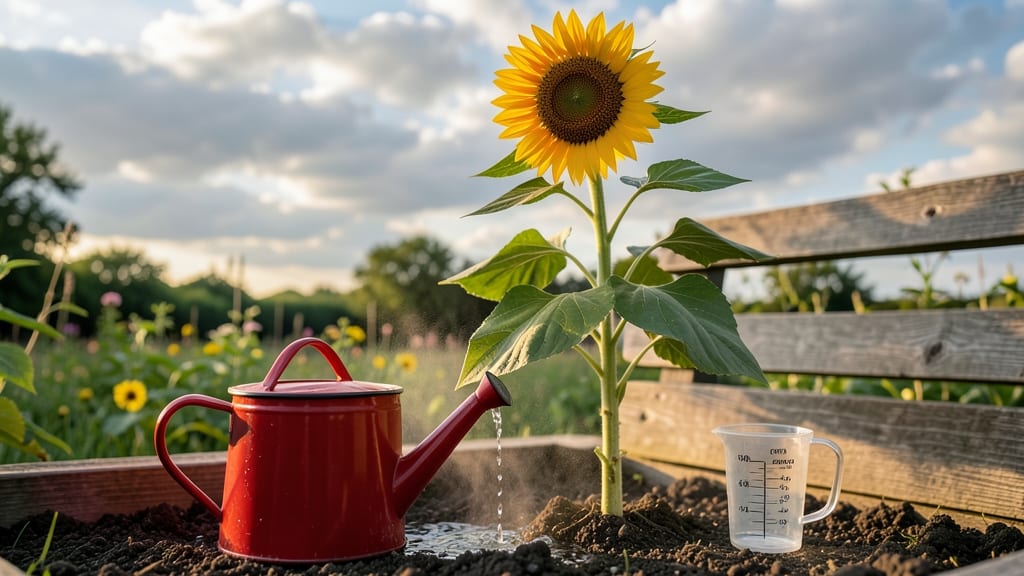
Sunflowers need the right amount of water per day—about 1 to 2 inches of water per week to grow strong and tall, but daily needs depend on soil, heat, and growth stage.
Picture this: you walk out to your garden and see your 🌻 sunflowers drooping midday, even though you watered them yesterday. That’s not thirst—it’s heat stress. Sunflowers drink deeply, not often, and their roots need room to breathe.
In USDA Zone 6a, where most gardeners grow them, young seedlings need consistent moisture, while mature plants can handle drought once established. Overwatering is just as dangerous as underwatering—root rot sneaks in when soil stays soggy.
Here’s what you’ll discover: the exact watering schedule for each growth phase, how to tell if your sunflowers are thirsty or drowning, and smart tricks to cut water use by half without sacrificing those towering blooms.
Daily watering requirements for sunflowers: deep roots demand smart hydration
Sunflowers thrive on consistent moisture, but their deep taproots mean they hate soggy soil. The key is deep, infrequent watering—not daily light showers—that encourages strong root systems. As a gardener, I’ve learned that overwatering is just as harmful as underwatering, especially during their critical growth stages.
New seedlings need daily moisture to establish roots, while mature plants can survive weekly deep waterings once established. Soil type plays a huge role: sandy soil drains fast, requiring more frequent watering, while clay soil holds moisture longer.
Let’s break down exactly how much water your sunflowers need at each stage of growth.
| Growth Stage | Water Frequency | Amount per Session | Soil Depth | Key Notes |
|---|---|---|---|---|
| Seedling (0-2 weeks) | Daily | 1/4 inch | Top 1-2 inches | Keep soil consistently moist; avoid wetting leaves |
| Vegetative (2-6 weeks) | Every 2-3 days | 1/2 inch | Top 4-6 inches | Encourage deep root growth; water early morning |
| Flowering (6-10 weeks) | Every 3-5 days | 3/4 inch | Top 8-12 inches | Critical for bud development; reduce if rainy |
| Mature (10+ weeks) | Weekly | 1 inch | Top 12+ inches | Drought-tolerant; reduce watering before harvest |
During the seedling stage, I water my sunflowers daily with just 1/4 inch of water to keep the topsoil moist. This mimics natural rainfall and prevents the seeds from drying out.
Use a gentle spray nozzle or watering can to avoid disturbing the delicate sprouts. Overhead watering can spread disease, so I always aim for the soil.
As sunflowers enter their vegetative growth phase (2-6 weeks), they need more water—about 1/2 inch every 2-3 days. This is when their taproots grow rapidly, so deep watering is essential.
I test soil moisture by sticking my finger 2 inches deep; if it’s dry, it’s time to water. Sandy soils may need daily checks, while loamy soils hold moisture longer.
When sunflowers begin flowering (6-10 weeks), their water needs peak. At this stage, I provide 3/4 inch every 3-5 days, ensuring the water reaches 8-12 inches deep.
This supports bud formation and prevents heads from cracking. If your area experiences high heat, increase frequency to every 2-3 days—but always check soil moisture first.
Mature sunflowers (10+ weeks) are drought-tolerant and only need 1 inch of water weekly. At this point, their deep roots can access moisture from lower soil layers.
I reduce watering 2 weeks before harvest to improve seed flavor and prevent mold. Overwatering at this stage can lead to rotten stems or weak structures.
Soil type drastically changes watering needs. In sandy soil, water drains quickly, so I water more frequently but less deeply. In clay soil, I water deeply but less often to prevent waterlogging. A simple test: Dig down 6 inches after watering—if it’s still damp, wait before watering again.
Morning watering is ideal because it allows foliage to dry before evening, reducing fungal risks like powdery mildew. Avoid watering at night, as damp leaves create a breeding ground for pests.
If you’re using a drip irrigation system, place emitters at the base of the plant, not on leaves.
Weather plays a huge role. In hot, dry climates, I increase watering by 30-50% compared to cooler regions. During rainy seasons, I skip watering entirely and focus on mulching to retain moisture.
Always adjust based on your local climate—sunflowers are resilient but need smart hydration to reach their full potential.
Remember, sunflowers send you visual cues about their water needs. Wilting leaves mean it’s
Signs of overwatering vs. underwatering: how to spot sunflower stress before it’s too late
Your sunflowers might look thirsty when they’re actually drowning—or vice versa. Yellowing leaves and drooping stems can mean either extreme, so how do you tell the difference? The key lies in the texture of the leaves, the soil condition, and the timing of wilting.
Overwatered sunflowers often show signs within hours of excess moisture, while underwatered ones struggle after days of dryness.
Start by checking the soil moisture—stick your finger 2 inches deep. If it feels damp, your plant is likely overwatered. If it’s bone-dry, it’s thirsty. But don’t rely solely on this test; leaf color and stem firmness are equally revealing.
A soggy, mushy stem or leaves with brown, crispy edges? That’s a red flag for overwatering.
Overwatering
Underwatering
- Soil stays moist for deep root growth
- Prevents wilting in extreme heat
- Ideal for seedling stage
- Root rot from soggy soil
- Yellow, mushy leaves
- Fungal diseases like powdery mildew
- Encourages deep root systems
- Reduces fungal risks
- Drought-tolerant once established
- Wilting and stunted growth
- Dry, crispy leaf edges
- Flower buds may fail to open
If your sunflowers show yellow leaves with green veins, you’re likely overwatering. This classic sign means the roots are suffocating. On the other hand, crispy, brown leaf edges or leaves that curl inward during the day (but recover at night) signal thirst.
Test this by gently tugging on a leaf—if it resists, it’s likely underwatered.
Seasonal adjustments are critical. In summer heat, sunflowers may need watering every 2-3 days, while in spring or fall, weekly watering often suffices. Always water at the base of the plant, not the leaves, to avoid fungal issues.
A 1-inch layer of mulch can reduce evaporation and keep roots stable.
Don’t panic if you spot stress—sunflowers are resilient. For overwatered plants, let the soil dry out completely between waterings and consider adding sand or perlite to improve drainage. For underwatered ones, give them a deep soak in the morning and monitor closely for recovery.
With the right balance, your sunflowers will reward you with vibrant blooms and towering stalks.
Pro tip: Use a moisture meter to track soil conditions. Aim for 60-70% moisture in the top 6 inches of soil during active growth. This tool takes the guesswork out of watering and helps you spot issues before they become severe.
Your sunflowers will thank you with healthy roots and show-stopping flowers.