
Flowers
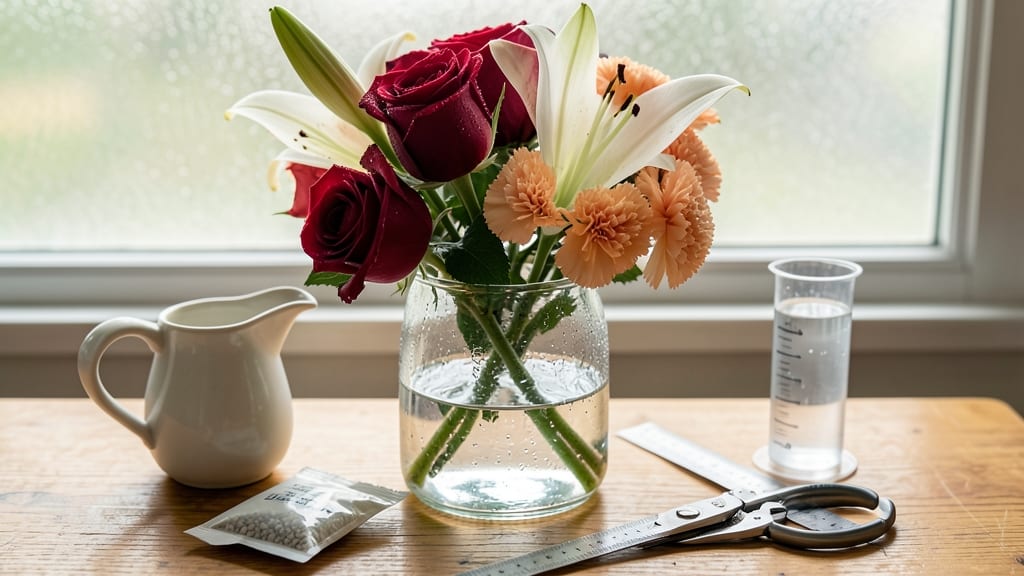
Watering cut flowers 🌸 the right way means filling your vase with 1 to 2 inches of fresh water—enough to cover stems without drowning them, and enough to keep them thriving for days.
Struggling to keep your cut flowers fresh and vibrant? The right amount of water in your vase isn’t just about aesthetics—it’s the secret to extending their lifespan by days, even weeks.
But how much is too much or too little? Let’s break down the exact measurements by flower type so you never waste water—or your blooms.
Most flowers need about 1 cup per 6-8 stems, but roses and sunflowers drink more, while delicate blooms like tulips prefer less. Vase size matters too—a narrow vase holds less water than a wide bowl, so adjust accordingly to avoid soggy stems or thirsty flowers.
Below, I’ll show you how to measure water perfectly, spot the signs of over- or underwatering, and keep your bouquets looking fresh for at least a week—or even longer with a few pro tips.
Exact water measurements for common flowers: the science behind hydration
Cut flowers drink water like thirsty gardeners on a hot day—but not all blooms need the same amount. The stem thickness, arrangement size, and even the flower species determine how much water your vase should hold.
Too little, and your flowers wilt faster. Too much, and you risk bacterial growth. Let’s dive into the science so you can keep your bouquets fresh for days (or even weeks).
Water isn’t just hydration—it’s a delivery system for nutrients. Flowers absorb water through their stems, but blocked vessels (from air bubbles or bacteria) can starve them. That’s why trimming stems at an angle and using room-temperature water matters.
Some flowers, like sunflowers, guzzle water faster than delicate lilies. Understanding these needs means your vase stays perfectly balanced.
Here’s the golden rule: cover stems by 1-2 inches of water, but adjust based on the flower type. A single rose stem might need just 8 oz of water, while a sunflower’s thick stalk can drink 24 oz or more.
The table below breaks it down by popular flowers, including how arrangement size changes the equation.
Why do some flowers need more water than others? It boils down to stem anatomy and transpiration rates. Sunflowers have wide, porous stems that suck up water like a straw, while tulips have narrow vessels that limit intake.
Even within a species, stem thickness varies—thicker stems always require more water. For example, a hybrid tea rose with 0.5-inch stems will drink twice as much as a spray rose with 0.25-inch stems.
Arrangement size matters just as much as flower type. A small bouquet of 3 tulips might only need 12 oz of water, but a large mixed arrangement of 15 stems could require 100+ oz.
Pro tip: weigh your vase before adding water. A 1-pound increase in vase weight often means enough water for a medium bouquet. For tall arrangements (like sunflowers), use a deep vase to ensure stems stay submerged.
Don’t forget about water quality. Tap water often contains chlorine or fluoride, which can damage stems. Let water sit out for 24 hours before using, or add a commercial floral preservative to extend life.
Another trick? Recut stems every 2 days to prevent blockages. This simple step can add 3–5 extra days of freshness to your bouquet.
Seasonal adjustments are key. In summer heat, flowers transpire faster and need daily water changes. In winter, reduce to every 3–4 days since evaporation slows. Even humidity plays a role—dry indoor air makes flowers wilt quicker,
How to adjust water levels for different vase sizes and flower arrangements
Not all vases are created equal—and neither are all flower arrangements! The right water level depends on your vase shape, flower density, and even the types of blooms you're displaying.
A shallow bowl filled with sunflowers needs a completely different approach than a tall, narrow vase holding delicate roses. Let’s dive into the specifics so you can customize your water levels like a pro.
First, consider your vase’s capacity. A general rule is to fill the vase with enough water to cover the flower stems by 1-2 inches. However, this changes dramatically based on the vase’s height-to-width ratio.
For example, a tall, slender vase (like a cylinder) can hold more water without spilling, while a wide, shallow bowl requires less water to avoid overflowing. Always leave at least 1 inch of space at the top to prevent spills when adding preservatives or adjusting stems.
Don’t forget to account for flower density. A tightly packed arrangement with 20+ stems will absorb water faster than a sparse, airy bouquet. For dense arrangements, add 1 extra inch of water to compensate.
Pro tip: Use a hydrating floral preservative (like Flower Food) to slow water evaporation and extend freshness by up to 50%.
Another critical factor is stem length. Long-stemmed flowers (like delphiniums or eucalyptus) need deeper water to stay hydrated, while short-stemmed blooms (like gypsophila) only require a shallow dip.
If you’re mixing stems of varying lengths, trim the longest ones to 6-8 inches to create a uniform water level for all flowers.
Finally, refill frequency depends on your setup. In hot, dry climates, shallow bowls may need water daily, while tall vases in cool rooms can last 3-4 days between refills.
Always use room-temperature water—cold water can shock stems and cause wilting. With these adjustments, your arrangements will stay fresh and vibrant for weeks! 🌸