
Plants
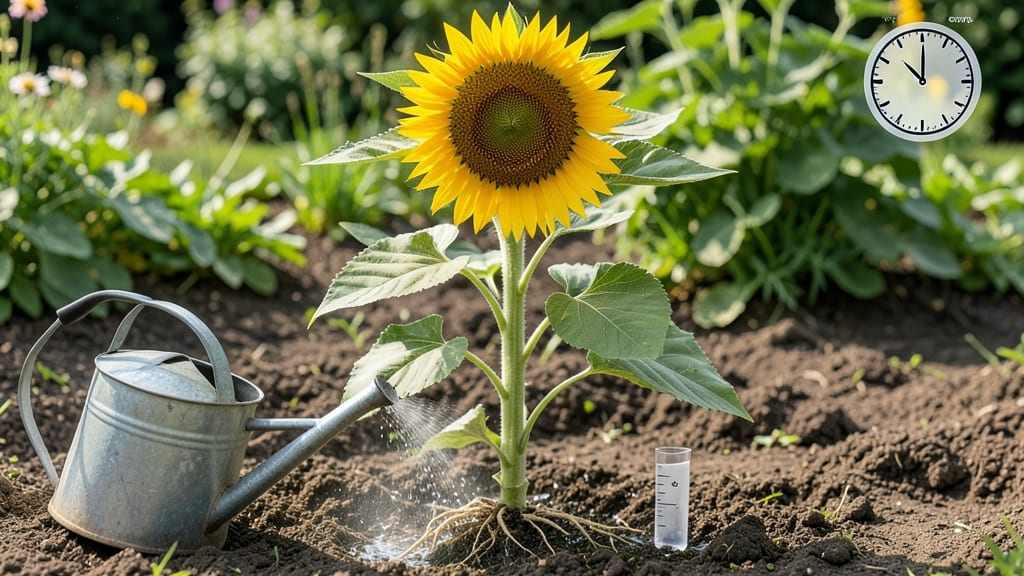
To water a sunflower plant properly, aim for deep, infrequent soaks rather than light daily sprinkles—this ensures roots grow strong and reach their towering 10-foot potential.
Picture this: your 🌻 seedlings wilt by noon because the soil dried out overnight, or your mature plant’s leaves yellow and droop from soggy roots. The right watering routine makes all the difference, and it’s simpler than you think.
Sunflowers in USDA Zone 6a need about 1-1.5 inches of water per week during spring planting, but that changes as they grow. Young sprouts crave consistent moisture, while established plants thrive on drought-like conditions—just don’t let them wilt completely.
Below, I’ll break down the exact watering schedule by growth stage, how to tell if you’re over- or under-watering, and seasonal tweaks to keep your sunflowers flourishing from April through September.
Sunflower watering schedule by growth stage: deep-soil rules explained
Sunflowers are surprisingly drought-tolerant once established, but their early growth stages demand precise hydration. The key to success lies in deep-soil watering—encouraging roots to grow downward rather than staying shallow.
I’ve learned that overwatering kills more sunflowers than underwatering, so let’s break it down by their four critical growth stages.
Each stage has unique moisture needs: seedlings crave consistent dampness, while mature plants thrive with infrequent deep watering. Your local climate plays a huge role too—arid regions need less frequent but deeper watering, while humid areas may require more frequent light watering to prevent fungal issues.
Let’s explore the exact schedule for each phase.
During the seedling stage (0-3 weeks), your sunflowers need consistent moisture to establish roots. I water mine every 2-3 days in humid climates, keeping the top 1-2 inches of soil moist.
In drier regions, extend this to every 3 days—overwatering here leads to fungal diseases like damping-off. Use a spray bottle for delicate seedlings to avoid disturbing the soil.
Once your sunflowers hit the vegetative stage (3-6 weeks), they’ll grow rapidly—up to 2 inches per day in ideal conditions. Here, I switch to deep watering every 3-4 days, letting the soil dry slightly between sessions.
The goal is to encourage roots to grow 6+ inches deep. In my Zone 6a garden, I’ve found that watering in the early morning prevents evaporation and fungal risks.
The flowering stage (6-10 weeks) is where many gardeners make mistakes—either overwatering to "help" the blooms or underwatering due to false drought tolerance. I water every 4-5 days, focusing on the root zone rather than the leaves.
In humid summers, I reduce frequency slightly to every 4 days to prevent powdery mildew, while in arid climates, I stretch it to every 7 days with deep soaks.
Finally, during seed development (10+ weeks), sunflowers need consistent moisture but less frequency. I water every 5-7 days, ensuring the soil stays moist to 6+ inches deep.
This stage is critical for seed production—underwatering here shrinks seed size, while overwatering can cause premature seed drop. In my experience, mulching with straw helps maintain even moisture levels.
One pro tip I’ve learned: always water at the base of the plant, not overhead. This prevents leaf diseases and ensures water reaches the roots where it’s needed most.
For container-grown sunflowers, check soil moisture daily—they dry out faster than in-ground plants. With this stage-specific approach, your sunflowers will grow taller, stronger, and more resilient.
Remember, sunflowers are deep-rooted plants—aim for 1-2 gallons per watering once established. The deeper the roots, the more drought-resistant your sunflowers become. Happy growing!
5 Common sunflower watering mistakes that stunt growth (and how to fix them)
Even with full sun exposure, sunflowers can suffer when watering goes wrong. The most common mistake? Watering based on a schedule instead of soil conditions. Young plants need frequent moisture, but mature sunflowers prefer deep, infrequent drinks to develop strong roots.
Another frequent error is watering at night, which promotes fungal diseases like powdery mildew. Wet foliage sitting overnight creates the perfect breeding ground for pathogens, while morning watering lets leaves dry quickly under the sun.
Let’s tackle these mistakes head-on with actionable fixes. Whether you’re battling root rot from overwatering or wilting leaves from drought stress, these solutions will keep your sunflowers thriving.
⚠️ How Often Should You Water a Sunflower Plant?
Rule #1: Water deeply every 3-5 days during spring and summer. Stick your finger 2-3 inches into soil—if it’s dry, water thoroughly until moisture reaches 6 inches deep.
Rule #2: Adjust frequency by season and age:
- Seedlings: Keep soil consistently moist (water daily)
- Vegetative stage: Water every 3-4 days
- Flowering: Reduce to every 5-7 days
Rule #3: Morning watering only—never at night—to prevent fungal growth.
Mistake #1: Overwatering seedlings leads to yellowing leaves and stunted growth. Seedlings need moisture, but soggy soil suffocates roots. The fix? Use a well-draining mix with perlite and water only when the top inch feels dry.
Mistake #2: Underwatering mature plants causes drooping leaves and cracked stems. Established sunflowers store water in their thick stems, but prolonged drought stresses them. Water deeply when the soil is bone-dry 2-3 inches down—this mimics natural rainfall patterns.
Mistake #3: Ignoring seasonal changes throws off your routine. In summer heat, water every 2-3 days, while spring showers may require skipping watering entirely. Always check soil moisture before watering.
Mistake #4: Surface watering only encourages shallow roots. Instead, use a soaker hose or drip irrigation to deliver water directly to the root zone. This encourages deep root growth for taller, sturdier stems.
Mistake #5: Using sprinklers wastes water and wets leaves, inviting diseases. Focus on the base of the plant and avoid overhead watering. Mulch with straw to retain moisture and suppress weeds.
By fixing these mistakes, your sunflowers will grow stronger, taller, and healthier—ready to reach their 10-foot potential by harvest season. 🌻