
Watering
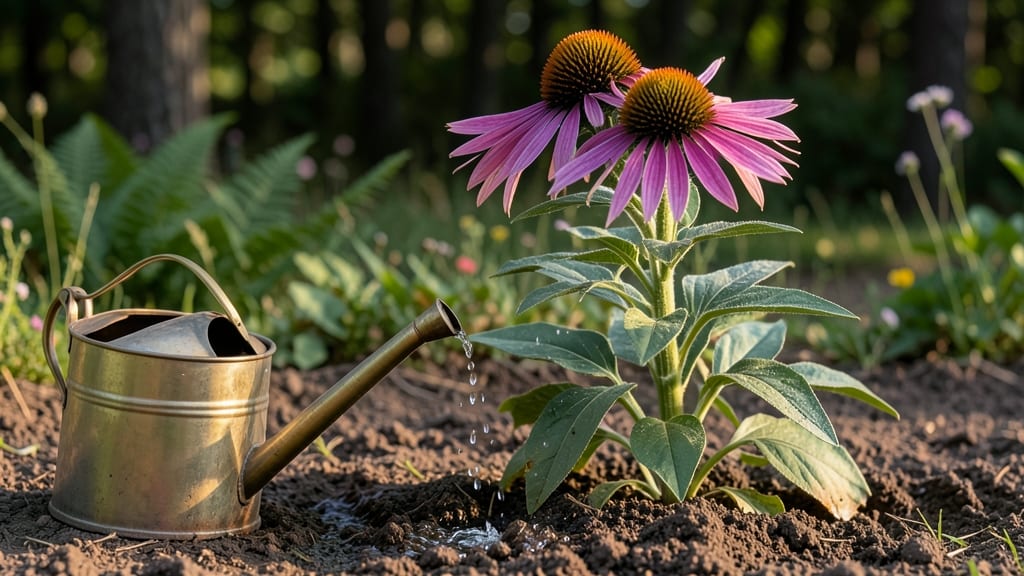
Watering coneflowers often enough keeps them thriving with bold blooms and sturdy stems, but overdoing it can drown their drought-resistant roots.
Struggling to keep your coneflowers vibrant without drowning them in water? These hardy perennials thrive with surprisingly little care—but timing your watering perfectly is the secret to bold blooms and lush foliage.
In Zone 6a, where many gardeners grow coneflowers, the key is deep, infrequent watering. Once established, these plants can go 10-14 days between drinks, but young plants need more frequent moisture to take root.
Below, I’ll break down the exact watering schedule by season, how to tell if your 🌼 needs a drink, and the one mistake that kills more coneflowers than drought ever could.
Coneflower watering schedule by season: expert guidelines for optimal growth
Coneflowers (Echinacea) are famously drought-tolerant, but that doesn’t mean they’re carefree. Overwatering or underwatering can stress these perennials, leading to weak stems or poor blooms. The key lies in understanding their seasonal needs and soil moisture preferences.
Mature plants store water efficiently, while young seedlings need consistent dampness. Let’s break down the ideal watering schedule for each season to keep your coneflowers thriving.
Spring is when coneflowers wake up from dormancy, so moderate watering kickstarts growth. Aim for 1 inch of water weekly, delivered deeply to encourage root development. Avoid soggy soil—coneflowers hate waterlogged roots.
In USDA Zone 6a, where frost lingers until mid-April, wait until the soil warms before resuming watering. A simple finger test works: stick your finger 2 inches deep; if dry, it’s time to water.
| Season | Watering Frequency | Depth | Soil Moisture Test | Notes |
|---|---|---|---|---|
| Spring | Weekly (1 inch) | 6-8 inches | 2" deep dry | Encourage root growth |
| Summer | Every 5-7 days | 6-10 inches | 3" deep dry | Critical for blooms |
| Fall | Bi-weekly | 4-6 inches | Top 1" dry | Reduce as temps drop |
| Winter | Monthly (if no snow) | 2-3 inches | Frozen soil | Dormant; minimal water |
Summer is the most demanding season for coneflowers, especially in full sun conditions. Increase watering to every 5-7 days, delivering 1.5 inches of water per session. Mature plants can handle brief droughts, but prolonged dry spells cause drooping stems.
Mulch with 2-3 inches of organic matter (like straw) to retain moisture and regulate soil temperature. Water deeply in the early morning to prevent fungal diseases like powdery mildew.
Fall marks a gradual reduction in watering as coneflowers prepare for dormancy. Shift to a bi-weekly schedule and reduce depth to 4-6 inches. By October, most regions in Zone 6a see cooler temps, so water only if the top 1 inch of soil feels dry.
This mimics natural rainfall patterns and prevents root rot before winter. Remove mulch in late fall to avoid trapping moisture against stems.
Winter care is minimal for coneflowers. In snowy climates, nature provides hydration—no supplemental watering is needed. In drier winters, a monthly light watering (if soil isn’t frozen) keeps roots from drying out completely.
Protect young plants with extra mulch (4-6 inches) to insulate roots. Avoid watering if the ground is frozen; ice can damage tender foliage.
Young coneflowers (first year) are more sensitive to drought. Water them every 3-5 days in summer, keeping soil consistently moist but not soggy. Mature plants, however, thrive on drought tolerance. Once established (after 2 years), they need water only during extended dry spells.
Always water at the base of the plant, not overhead, to reduce disease risk and encourage deep root growth.
Use these visual cues to adjust your schedule: Wilted leaves signal thirst, while yellowing foliage or moldy stems mean overwatering. Coneflowers in containers dry out faster—check soil daily in summer.
For garden beds, a soil probe or your finger is the best tool. Adjust based on your local climate; humid regions may need less water than arid areas.
Pro tip: Group coneflowers with similar water needs, like lavender or black-eyed Susans, to simplify care. Drip irrigation systems work wonders for consistent moisture without waste. With this seasonal approach, your coneflowers will reward you with vibrant blooms from summer through fall—minimal effort, maximum impact! 🌼
Signs your coneflowers need water: 5 visual cues to avoid over/under-watering
Coneflowers are famously drought-tolerant, but even these tough perennials show clear signs when their water needs aren't met. The key is learning to read their visual cues—wilting leaves, drooping stems, or soil cracks all signal it's time to water, while yellowing leaves or mold mean you're overdoing it.
I’ve grown coneflowers for years in Zone 6a, and the biggest mistake I see is watering based on a schedule rather than the plant’s actual needs. Let’s break down the 5 unmistakable signs your coneflowers are thirsty—or drowning—and what to do about each one.
- Spring: Weekly (1-1.5 inches) – Encourages root growth
- Summer: Every 5-7 days (1-2 inches) – Heat increases evaporation
- Fall: Bi-weekly (0.5-1 inch) – Reduce as temps drop
- Winter: Monthly (0.25 inch) – Prevents drought stress
- Young Plants: Every 3-5 days – Keep soil consistently moist
First, check for wilting leaves—this is your coneflower’s way of saying it’s thirsty. Unlike some plants, coneflowers won’t perk back up immediately after watering. Instead, they’ll slowly regain rigidity over 12-24 hours if the soil moisture is adequate.
Next, look for drooping stems or flower heads that sag toward the ground. This is a more advanced sign of drought stress, especially in hot weather. If you notice this, water deeply right away and mulch around the base to retain moisture.
I’ve seen coneflowers bounce back from this in just a few days with proper care.
Don’t ignore cracked or dry soil around the base of your plants. Coneflowers prefer well-draining soil, but if the top 2-3 inches feel powdery or pull away from the pot (if container-grown), it’s time to water.
Stick your finger in the soil—if it’s drier than a slightly damp sponge, your plant needs hydration.
On the flip side, yellowing leaves—especially if they’re soft or mushy—signal overwatering. This is often accompanied by white mold or a foul smell at the soil line. If you see this, stop watering immediately and let the soil dry out completely.
I’ve saved many overwatered coneflowers by moving them to a sunnier spot and improving drainage.
Finally, watch for pale or limp foliage combined with stunted growth. This could mean either underwatering or poor soil health. Test your soil’s pH (coneflowers prefer 6.0-7.0) and consider adding compost if your plants look lackluster despite regular watering.
Mastering these visual cues will help you keep your coneflowers thriving with minimal effort. Remember: deep, infrequent watering is the golden rule for these drought-resistant beauties. 🌼