
Planting
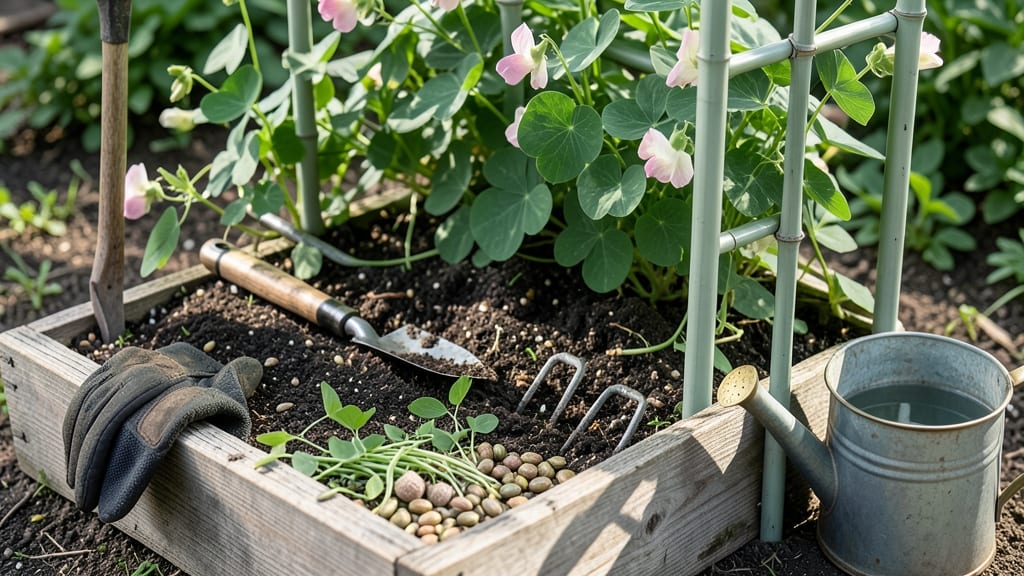
To plant sweet pea flowers 🌸 successfully, start by sowing seeds just half an inch deep in well-draining soil during March or April for the best results in USDA Zone 6.
Sweet peas aren’t just beautiful—they’re fragrant, fast-growing climbers that can transform any garden into a romantic retreat. But planting them wrong means weak vines and sparse blooms, so getting the soil depth and timing right is the key to vibrant blooms.
If you’ve ever watched your sweet pea seeds take forever to sprout or seen vines struggle to climb, it’s likely because the soil wasn’t prepped correctly. The right balance of moisture, sunlight, and spacing makes all the difference in how quickly—and how fragrant—your flowers will be.
In this guide, I’ll walk you through the exact steps for planting sweet peas, from soil prep to trellis setup, so you can enjoy lush, fragrant vines all summer long.

Optimal sweet pea planting depth and soil conditions for strong growth
Sweet peas thrive when planted at the correct depth and in ideal soil conditions. Unlike many flowers, these delicate climbers demand precise care to develop strong roots and fragrant blooms. The secret lies in a ½-inch planting depth and a well-prepared, nutrient-rich bed.
Too deep, and your seeds may rot; too shallow, and they won’t germinate properly. Let’s break down the science-backed approach to planting sweet peas for maximum vigor.
Your soil must be loamy and well-draining—think of it as the perfect balance between sand and clay. Heavy clay soils can suffocate roots, while sandy soils drain too quickly, starving plants of moisture. Aim for a 6.0-7.5 pH balance, slightly acidic to neutral.
Test your soil before planting; adjusting pH with lime (to raise) or sulfur (to lower) ensures your sweet peas get the nutrients they crave. Without the right soil, even the best seeds won’t reach their full potential.
| Requirement | Specification | Notes |
|---|---|---|
| Planting Depth | ½ inch (1.25 cm) | Too deep = rot; too shallow = poor germination |
| Soil Type | Loamy, well-draining | Avoid heavy clay or pure sand |
| pH Level | 6.0–7.5 | Test and amend if needed |
| Drainage | Excellent | Raise beds if soil is compacted |
| Organic Matter | 20–30% | Mix in compost before planting |
Before planting, prepare your soil by mixing in 2–3 inches of compost or well-rotted manure. This boosts organic matter, improves drainage, and provides essential nutrients for root development. Sweet peas are hungry feeders, especially during their first growing season, so don’t skimp on this step.
If your soil is poor, consider planting in raised beds filled with a mix of garden soil, compost, and perlite for the perfect growing medium.
Sweet peas also love a slightly elevated planting bed. If your garden has poor drainage, mound soil into a ridge and plant seeds on top. This prevents waterlogging, which can lead to root rot and stunted growth.
A 5–10% slope in the bed helps excess water drain away naturally. For container growers, use a fast-draining potting mix with added perlite or vermiculite to mimic ideal soil conditions.
One often-overlooked factor is seed chitting before planting. Soak your seeds overnight in lukewarm water, then place them in a damp paper towel in the fridge for 3–5 days. This mimics winter stratification and speeds up germination by 30–50%.
Plant the chitted seeds at your ½-inch depth in early spring (after the last frost) or late summer for fall blooms. The key is consistency—sow seeds 1 inch apart in rows spaced 12–18 inches apart for easy trellising later.
For maximum fragrance, ensure your sweet peas get full sun (6+ hours daily) and consistent moisture. Water deeply after planting to settle the soil around seeds, then maintain even moisture (but avoid soggy soil).
Mulch with straw or shredded leaves to retain moisture and suppress weeds, which compete for nutrients. This simple step can double your bloom production by reducing stress on young plants.
If your soil tests outside the 6.0–7.5 pH range, act quickly. For acidic soil (below 6.0), sprinkle pelletized lime over the bed and work it into the top 6 inches.
For alkaline soil (above 7.5), mix in elemental sulfur at a rate of 1 pound per 100 square feet. Re-test after 2–3 months to confirm adjustments. Sweet peas are forgiving, but they reward precise care with vibrant blooms and intoxicating fragrance.
Remember, the first 4 weeks are critical for sweet pea development. During this time, focus on keeping the soil moist but not waterlogged and protecting seedlings from pests like slugs. Once vines reach 6 inches tall, provide a sturdy trellis or fence for support.
Proper soil prep now means healthier vines, more blooms, and a garden that smells like spring all season long.
Sweet peas aren’t just about beauty—they’re about scent and structure. By mastering the right planting depth and soil conditions, you’re setting the stage for vines that climb, bloom, and perfume your garden for months.
Start with these science-backed steps, and you’ll enjoy a sweet pea paradise that’s the envy of the neighborhood. 🌸
Step-by-step sweet pea planting guide: when, where, and how to sow for best results
Sweet peas thrive when planted at the right time of year and in the perfect garden location. Unlike many flowers, they grow best when sown directly into the garden soil rather than started indoors.
The key is timing—plant them 6-8 weeks before your last frost for spring blooms or late summer for fall flowers. In USDA Zone 6, that means March-April for spring or August-September for fall.
Choose a sunny spot with well-draining soil and install a trellis or fence nearby—sweet peas need support to climb. Their vines can reach 6-8 feet tall, so secure your trellis before planting.
For best results, pair them with companion plants like lettuce or radishes, which thrive in the same cool-season conditions but won’t compete for space.
How to Plant Sweet Pea Flowers
- Soak seeds overnight in lukewarm water to speed up germination. This step is critical for breaking seed dormancy.
- Prepare 1/2-inch-deep furrows in your garden bed, spacing them 12-18 inches apart for proper airflow.
- Place 2-3 seeds every 4 inches along the furrow, then cover lightly with soil. Avoid burying too deep—1/2 inch max ensures faster sprouting.
- Water gently but thoroughly to settle soil around seeds. Use a fine mist to avoid displacing them.
- Install a trellis or stakes immediately after planting. Sweet peas twine naturally but need support early to prevent flopping.
- Mulch around plants with straw or compost to retain moisture and suppress weeds. Keep mulch 2 inches away from stems.
- Monitor soil moisture—water when the top 1 inch feels dry. Avoid overhead watering to prevent fungal diseases.
For fall planting, aim for late summer to give seedlings time to establish roots before cooler weather. Sweet peas are hardy to frost, but young plants need protection if temperatures drop below 20°F.
If your climate is warm year-round, you can even plant every 2-3 weeks for continuous blooms.
One of my favorite companion planting tricks is interspersing sweet peas with low-growing herbs like thyme or oregano. The herbs deter pests while the sweet peas provide shade, creating a low-maintenance, fragrant garden. Just avoid planting near potatoes or tomatoes, which can stunt their growth.
After planting, watch for first sprouts in 7-14 days. Thin seedlings to 4 inches apart once they’re 2 inches tall, keeping the strongest stems. This step ensures better airflow and reduces competition for nutrients.
With proper care, your sweet peas will reward you with vibrant blooms in just 8-10 weeks!
Remember, sweet peas are annuals, so plan to replant each year. But the effort pays off with fragrant, cuttable flowers that last for weeks in vases. Happy planting—your garden will thank you with a romantic, fragrant display! 🌸🌿