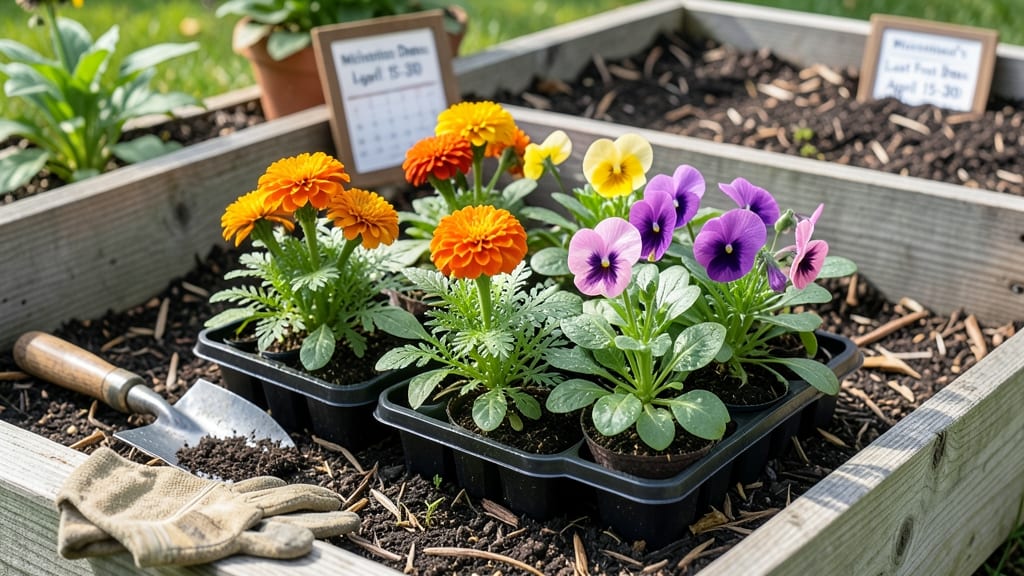
Best flower varieties to plant by Michigan’s planting timeline
Michigan’s cool springs and variable frosts demand strategic planting—some flowers thrive in early cool weather, while others need to wait for warmth. I’ve organized these top varieties by their ideal planting windows to maximize blooms and minimize frost damage.
Whether you’re planting hardy perennials or tender annuals, timing is everything.
For cool-season bloomers, like pansies and snapdragons, I start seeds indoors in March or transplant them outdoors after the last frost date (typically mid-April to early May). These flowers handle light frosts, making them perfect for Michigan’s unpredictable spring.
Meanwhile, warm-season favorites like petunias and marigolds need to wait until soil temperatures hit at least 55°F, usually around late May or early June.
Don’t forget bulbs like tulips and daffodils—they’re planted in fall (September-October) for spring blooms, but some varieties, like alliums, can also be tucked in early spring for late-season color.
Below, I’ve broken down the best flower varieties by their planting timeline, so you can plan ahead for a year-round garden.
🌱 Michigan Flower Planting Timeline
- 1.
Early Spring (March-April): Plant cool-season bulbs (crocuses, hyacinths) and hardy perennials like coneflowers and daylilies. Use row covers for extra protection.
- 2.
Late Spring (May): Transplant tender annuals (petunias, marigolds) after last frost (check local USDA Zone 5-6 dates). Start warm-season veggie flowers like nasturtiums.
- 3.
Summer (June-July): Sow heat-loving annuals (zinnias, sunflowers) and divide perennials like black-eyed Susans for fall blooms. Use mulch to retain moisture.
- 4.
Fall (September-October): Plant spring-blooming bulbs (tulips, daffodils) and cool-season annuals (pansies, snapdragons). Extend seasons with cold frames for late blooms.
To extend Michigan’s short growing season, I rely on row covers and cold frames for early or late plantings. For example, a floating row cover can protect petunias from a late frost in May, while a cold frame lets me grow pansies into early December.
Even hardy perennials like bee balm benefit from a little extra insulation during Michigan’s unpredictable fall weather.
For warm-season annuals, like geraniums and impatiens, I wait until the soil temperature consistently stays above 60°F, usually around early June in most of Michigan. These flowers wilts quickly in cool soil, so patience pays off.
Meanwhile, cool-season annuals like stock flowers and calendulas can handle light frosts down to 25°F, making them ideal for early spring or fall plantings.
Pro tip: Use a soil thermometer to check temperatures before planting warm-season flowers. If the soil is still below 55°F, wait another week—your marigolds and zinnias will thank you with vibrant blooms all summer long.
And don’t forget to mulch around perennials to protect roots during Michigan’s freeze-thaw cycles.
With this planting timeline, you’ll avoid the heartbreak of frost-nipped blooms and enjoy a continuous display of color from spring through fall. Happy planting! 🌷
★★★★★4.9(11 reviews)
|