
Planting
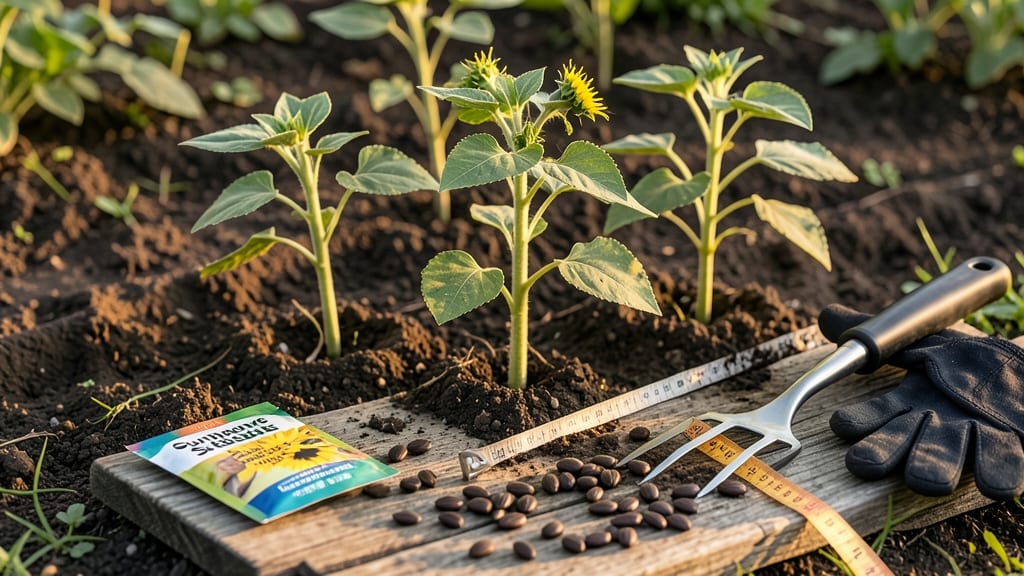
Direct sowing sunflowers at the right time ensures strong, healthy plants that reach their full 10-foot potential without wasting seeds or space.
Picture this: you’ve waited all winter for that first 🌻 to crack through the soil, only to watch it wilt under a late frost or bolt in the heat. Timing isn’t just about avoiding frost—it’s about giving sunflowers the 60-70°F soil warmth they need to germinate reliably.
Too early, and they’ll rot; too late, and you’ll miss their late-summer glory.
In USDA Zone 6a, that perfect window opens after your last frost—typically mid-April to early June—but soil temperature is the real game-changer. A simple soil thermometer (or your elbow, if you’re old-school) tells you when it’s safe to sow.
Skip the guesswork, and you’ll enjoy sunflowers that grow 3-16 feet tall with minimal fuss.
Below, I’ll walk you through how to read your local frost dates, adjust for early vs. late varieties, and avoid the 5 biggest timing mistakes that kill germination. Ready to plant with confidence?
Ideal soil temperature and frost-free timing for direct-sown sunflowers
Direct-sowing sunflowers (Helianthus annuus) requires precise timing—get it right, and you’ll enjoy vibrant blooms towering over your garden. The key factors are soil temperature and frost-free dates, which vary dramatically by USDA zone and local microclimates.
Sunflower seeds need warm soil (60–70°F) to germinate, and seedlings are frost-sensitive until they reach 4–6 inches tall. Plant too early, and frost will kill them; too late, and your sunflowers may bolt before flowering.
To pinpoint your planting window, start by checking your last frost date (available on USDA hardiness maps) and wait until the soil warms to at least 55°F at a depth of 2 inches.
In most regions, this means sowing 2–4 weeks after the last frost, typically between mid-April and early June. For example, gardeners in USDA Zone 3 (like Minnesota) may wait until late May, while those in Zone 10 (like Southern California) can sow as early as February.
| USDA Zone | Last Frost Date | Soil Temp Threshold | Ideal Planting Window | Notes |
|---|---|---|---|---|
| Zones 3–5 (Cold Climates) | Mid-April to early May | 60–70°F (wait until late May) | Late May to early June | Use black plastic mulch to warm soil faster. |
| Zones 6–7 (Temperate) | Early to mid-April | 55–65°F (early May) | Mid-April to early May | Stagger sowings for continuous blooms. |
| Zones 8–9 (Warm Climates) | Mid-February to early March | 50–60°F (early March) | February to early April | Watch for heat stress in summer. |
| Zones 10–11 (Hot Climates) | None (year-round growth) | 50–60°F (sow anytime) | October–March (avoid summer heat) | Plant in partial shade to prevent bolting. |
Use a soil thermometer to confirm your soil’s warmth—sunflowers won’t germinate in cold soil, even if the air feels warm. For example, in Zone 5, I test my soil in early May and often find it’s still too cool (below 55°F) until late May.
If your soil is slow to warm, try black plastic mulch or planting in a south-facing bed where the ground absorbs more heat. This can advance your planting window by 1–2 weeks.
Northern climates (Zones 3–5) face the biggest challenges with short growing seasons. To maximize your sunflower’s potential, choose early-maturing varieties (50–60 days to harvest) like ‘Teddy Bear’ or ‘Moulin Rouge.’
These can be sown as early as 2 weeks before your last frost date, provided the soil is workable and protected from frost with row covers. In contrast, giant varieties (like ‘Russian Giant’) need 100+ days and should only be planted after all frost risk has passed.
In southern climates (Zones 8–11), the biggest risk is heat stress or premature bolting. To avoid this, sow seeds in fall (October–November) or early spring (February–March), when temperatures are cooler.
If you live in a desert climate (e.g., Arizona), provide afternoon shade for seedlings until they’re established. I’ve found that drip irrigation helps maintain consistent moisture without overheating the soil.
Pro tip: Check your local weather forecasts for a 5-day warm spell (above 60°F) before sowing. This ensures your seeds stay moist and warm enough to germinate consistently.
I also recommend planting sunflowers in blocks rather than rows—this creates a microclimate that retains heat and moisture, giving seedlings a better chance to thrive. For example, a 3x3 foot block of sunflowers will warm the soil faster than a single row.
If you’re unsure about your local frost dates, use the National Weather Service’s frost prediction maps or ask your local Cooperative Extension office for data tailored to your county. Many gardeners also swear by planting sunflowers alongside heat-loving companions like beans or corn, which share similar soil and warmth preferences.
This not only improves your timing but also boosts pollination and garden productivity.
Remember, sunflowers are photoperiod-sensitive, meaning their flowering time is triggered by daylight length. In northern latitudes, they’ll bloom earlier than in southern regions, even if planted at the same time.
For instance, a sunflower sown in Juneau, Alaska (Zone 5), might flower in August, while one in Tucson, Arizona (Zone 9), could take until October—both planted at the same soil temperature. Adjust your expectations based on your location!
Finally, keep a gardening journal to track your sunflower planting dates, soil temperatures,
How to adjust planting time for early vs. late varieties
Not all sunflowers bloom at the same time—some varieties mature in just 50-60 days, while others take 90-120 days to reach their full glory. This difference means you can strategically plant different types to enjoy sunflowers from early summer through fall.
For example, early varieties like 'Teddy Bear' (55 days) are perfect for late May sowings, while late varieties like 'Russian Giant' (120 days) thrive when planted in early May for fall harvests.
Staggering your plantings creates a continuous bloom timeline that keeps your garden vibrant. I recommend starting with dwarf varieties (like 'Moulin Rouge') in late May for quick summer color, then follow with standard varieties in early June for late-season blooms.
This approach works especially well in USDA Zones 4-7, where summer days are long but fall frosts arrive early.
| Variety Type | Mature Time | Best Planting Window | Height Range | Season Extension Tip |
|---|---|---|---|---|
| Early Varieties | 50-60 days | Late May - Early June | 1-4 ft | Use row covers for Zone 3 gardeners |
| Mid-Season Varieties | 70-80 days | Early May - Mid-June | 4-8 ft | Plant near tall crops to extend height |
| Late Varieties | 90-120 days | Early April - Early May | 8-16 ft | Use black plastic mulch to warm soil |
| Dwarf Varieties | 55-65 days | Late May - June | 1-3 ft | Great for container gardening in Zone 5+ |
| Giant Varieties | 100-120 days | Early April - Mid-May | 10-16 ft | Stake early to prevent wind damage |
For cooler climates like USDA Zone 4, extend your season by using row covers or cold frames to protect early plantings. I’ve had success with early varieties planted in mid-April under protective covers, which gives them a 2-week head start before removing the cover.
In southern climates (Zone 8+), you can even plant late varieties in September for winter blooms, though they’ll need frost protection.
Another clever trick is to sow seeds every 2 weeks from May through July. This creates a rolling harvest of sunflower seeds and blooms. For example, plant 'Autumn Beauty' (90 days) in early May, then follow with 'ProCut' (60 days) in late June.
This ensures you’ll have sunflowers at peak bloom from July through September, even in the same garden bed.
Don’t forget to account for local microclimates. A south-facing wall or paved area can warm soil by 5-10°F, allowing earlier plantings. I’ve planted late varieties near my driveway in early April and seen them germinate 10 days earlier than in cooler garden spots.
Always test your soil temperature with a soil thermometer—sunflowers need at least 60°F to germinate reliably.
With this staggered approach, you’ll enjoy sunflowers in bloom for 3-4 months, from early summer through fall. Plus, the mix of heights and colors creates a stunning vertical garden display that attracts pollinators all season long.
Just remember: dwarf varieties need less space between plants (12-18 inches), while giant varieties require 2-3 feet of clearance for their towering stems.