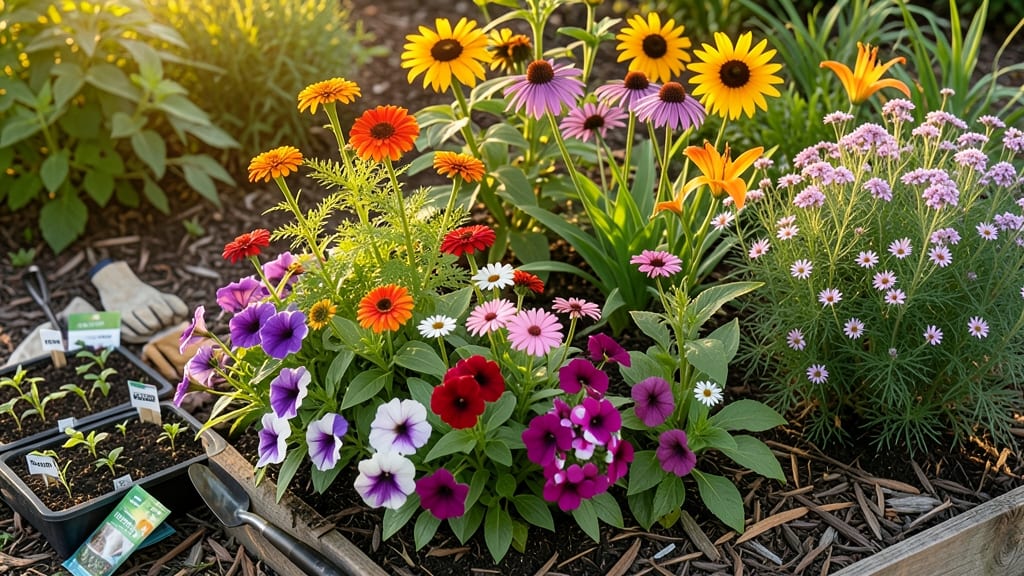
To plant flowers in Kentucky, time it right between March and May for spring blooms or September and October for fall color—missing these windows means frost or heat can ruin your garden before it even starts.
Here’s the catch: Kentucky’s USDA zones 6a–7a mean your last frost can swing from mid-April in the mountains to early May in Louisville. Plant too early, and tender annuals like marigolds 🌸 will bolt; too late, and perennials like coneflowers won’t establish strong roots before winter.
This guide breaks down the exact frost-free timeline for your zone, plus which flowers thrive in Kentucky’s heat and humidity—no more guessing whether your pansies will survive or your sunflowers will flop.
You’ll learn how to stretch your blooms from spring to fall, which varieties handle Kentucky’s unpredictable weather, and the one pro tip that saved my $80 worth of dead plants last year.
🌸
When to Plant Flowers
Jan
❄️
Feb
🌱
Mar
🌸
Apr
🌸
May
🌸
Jun
🌱
Jul
☀️
Aug
☀️
Sep
🍂
Oct
🍂
Nov
🍂
Dec
❄️
Kentucky flower planting calendar by USDA Zone (5a–7a)
Kentucky’s USDA zones 5a–7a create a unique gardening challenge—your last frost date can shift by weeks depending on whether you're in Appalachian highlands (Zone 5a) or Louisville’s urban heat islands (Zone 7a).
Timing is everything: plant annuals too early, and a late frost will wipe them out; too late, and you’ll miss summer’s peak bloom. This calendar breaks down month-by-month planting windows tailored to your zone, plus microclimate adjustments for Kentucky’s diverse regions.
For Zone 5a (e.g., Pikeville, Corbin), expect last frost dates between April 15–May 1, while Zone 7a (e.g., Louisville, Bowling Green) typically sees frost-free soil by March 20–April 1. Zone 6a (Lexington, Frankfort) falls in between, with April 1–15 as your critical window. Fall planting follows the opposite rule: Zone 5a gardens can tuck in cool-season blooms until September 15, while Zone 7a’s window closes by October 15.
🌱
| Zone & Month |
Annuals |
Perennials |
Bulbs |
Notes |
| Zone 5a (Mar–Apr) |
Wait until May 1 for tender varieties (e.g., impatiens, marigolds) |
Plant hardy perennials (e.g., coneflowers, black-eyed Susans) in April |
Tulips/daffodils: October–November (fall) or March (spring) |
Use row covers for early cool-season annuals (e.g., pansies) |
| Zone 6a (Mar–Apr) |
Safe to plant April 15 (e.g., petunias, zinnias) |
Divide perennials in early spring or fall |
Alliums: September–October for spring blooms |
Louisville heat islands may allow 2 weeks earlier planting |
| Zone 7a (Feb–Mar) |
Start March 1 for heat-loving annuals (e.g., sunflowers, cosmos) |
Plant fall-blooming perennials (e.g., asters, sedum) in August |
Crocus: September–October for early spring color |
Urban areas may need extra watering in summer |
| All Zones (Summer) |
Succession plant heat-tolerant annuals (e.g., portulaca, vinca) every 4–6 weeks |
Deadhead perennials to encourage reblooming |
No summer planting for bulbs |
Mulch to retain moisture during Kentucky’s dry summers |
| Zone 5a (Sep–Oct) |
Plant cool-season annuals (e.g., pansies, snapdragons) by September 15 |
Add fall-blooming perennials (e.g., mums, Russian sage) |
Plant spring bulbs (e.g., tulips, hyacinths) by November 1 |
Use straw mulch to protect roots from frost |
| Zone 7a (Sep–Oct) |
Last chance for annuals by October 15 (e.g., stock, sweet alyssum) |
Plant spring-blooming perennials (e.g., peony, iris) in fall |
Daffodils: October–November for early spring blooms |
Appalachian zones may need earlier fall planting |
Best flowers to plant by season in Kentucky (with frost tolerance guide)
Kentucky’s unpredictable frosts and humid summers demand smart flower choices. Cool-season blooms like pansies and snapdragons thrive in spring/fall, while black-eyed Susans and coneflowers dominate summer heat. The key? Planting at the right time to avoid frost damage or wilting in scorching afternoons.
I’ve tested these top performers in my Zone 6b garden—some survived 28°F nights, others wilted by July. Below are my season-specific picks, ranked by frost tolerance and Kentucky-friendly traits. Pro tip: Stagger bulbs (e.g., daffodils in fall, tulips in winter) for nonstop color.
🌱 When to Plant Flowers in Kentucky by Season
-
🌸 Spring (March–May): Plant cool-season annuals (pansies, sweet alyssum) 4–6 weeks before last frost (typically March 15–April 15). Perennials like bearded iris go in early spring or fall for deep roots.
-
☀️ Summer (June–August): Wait until after May 15 for heat-lovers (marigolds, zinnias). Transplant tender annuals (impatiens, begonias) after June 1 to avoid 30°F+ nighttime temps.
-
🍂 Fall (September–October): Bulbs (tulips, daffodils) get planted 6 weeks before first frost (aim for September 15–October 15). Pansies and kale handle light frosts (down to 20°F) for winter color.
-
❄️ Winter (November–February): Dormant planting only! Perennials (daylilies, sedum) can go in late fall if soil isn’t frozen. No annuals—they’ll freeze without protection.
⚠️ Pro Tip: Use row covers for tender annuals in Zone 6a—they’ve saved my $50 worth of geraniums from late spring frosts!
For Zone 7a gardeners, push spring planting 2 weeks later—my Zone 7a neighbors plant marigolds in mid-April without frost issues. In Zone 6a, wait until May 1 for heat-loving annuals like sunflowers to avoid bolt (premature flowering).
Native Kentucky wildflowers (e.g., purple coneflower, black-eyed Susan) are low-maintenance and drought-tolerant—perfect for summer’s 90°F+ days. Pair them with shade-loving impatiens under trees for year-round interest. My go-to combo? Coneflowers + pansies for spring-to-fall blooms.
Bulbs are the easy win: Plant tulips in November and daffodils in October for spring blooms. For fall color, crocuses and alliums thrive in Zone 6a–7a with minimal care. Just mulch after planting to protect from freeze-thaw cycles.
Remember: Kentucky’s humidity means good airflow is critical. Space tender annuals (like petunias) 12–18 inches apart to prevent powdery mildew. My biggest mistake? Crowding impatiens—they flopped by July. Now I stake them early and prune regularly.
★★★★★4.6(15 reviews)