
Flowers
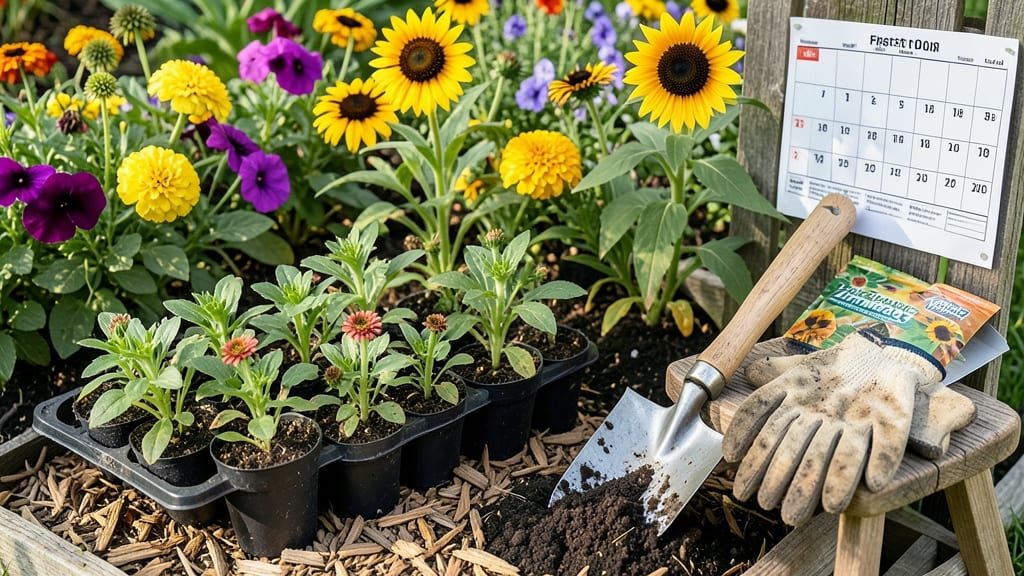
Planting flowers in Oklahoma at the right time means the difference between a garden bursting with color and one that struggles to take hold.
Timing your flower planting in Oklahoma’s USDA Zone 7b can mean the difference between vibrant blooms and a season of disappointment—get it wrong, and you risk late frosts or stunted growth.
Most annuals, like zinnias and marigolds, thrive when planted after the last frost date, typically around mid-March, while perennials like coneflowers do best in early spring or fall.
Below, I’ll break down the best months for planting by flower type, how to adjust for Oklahoma’s climate quirks, and a simple checklist to keep your garden on track.
Oklahoma’s last frost dates by region: critical planting windows for flowers
Oklahoma’s last frost dates vary dramatically between its northern and southern regions, creating distinct planting windows for your annuals, perennials, and bulbs.
In the Panhandle (Zone 7b), the average last frost arrives around March 15, while southeastern Oklahoma (Zone 8a) can see frost-free conditions by March 1.
These dates dictate whether you can plant heat-loving zinnias or frost-tolerant pansies—getting it wrong means wilting blooms instead of vibrant gardens. 🌱
For northern Oklahoma (including Oklahoma City and Tulsa), the last average frost date hovers around March 22.
This means annual flowers like marigolds and petunias should wait until mid-April for safe planting, while hardy perennials like coneflowers can go in the ground as early as February under frost cloth. Southern Oklahoma, with its earlier frost-free dates, allows earlier planting of heat-sensitive flowers like impatiens. ☀️
Understanding these regional frost windows helps you align your flower varieties with Oklahoma’s climate.
For example, early bloomers like tulips should be planted in fall (October-November) to beat the first frost, while summer annuals like sunflowers thrive when planted after April 15 in most regions. Microclimates—like urban heat islands or sheltered garden beds—can shift these dates by 1-2 weeks, so always monitor local forecasts. 🌿
| Region | Last Frost Date | First Frost Date | Best Planting Window | Example Flowers |
|---|---|---|---|---|
| Northern OK (Panhandle, Zone 7b) | March 15 | November 1 | April 15–May 15 (annuals), Feb 1–March 15 (perennials/bulbs) | Zinnias, Marigolds, Coneflowers, Tulips |
| Central OK (Oklahoma City, Tulsa, Zone 7a) | March 22 | October 31 | April 1–May 1 (annuals), Feb 15–March 30 (perennials) | Petunias, Dahlias, Black-Eyed Susans, Pansies |
| Southern OK (Arkansas River Valley, Zone 7b-8a) | March 1 | November 15 | March 15–April 30 (annuals), Feb 1–March 15 (perennials) | Impatiens, Snapdragons, Coreopsis, Native Wildflowers |
| Southeastern OK (Zone 8a) | February 28 | December 15 | February 15–April 15 (annuals), Jan 15–March 1 (perennials) | Geraniums, Vinca, Salvia, Camellias |
Your planting schedule also depends on whether you’re growing annuals vs. perennials. Annual flowers like zinnias and marigolds need warm soil and frost-free nights, so wait until after your region’s last frost date—even if the ground looks dry. Perennials, however, benefit from early spring planting (February-March) to establish roots before summer heat. Bulbs like tulips and daffodils should be planted in fall (October-November) for spring blooms. ✂️
Don’t overlook late summer/fall planting for cool-season flowers. Regions with first frosts after November 1 (like southeastern OK) can still plant pansies and snapdragons in September for winter color.
In northern OK, aim for September 15 to avoid early frosts. Native wildflowers are excellent choices here—they thrive in Oklahoma’s hot summers and adaptable soils. 🌼
Pro tip: Use row covers or cold frames to extend your spring planting window by 2-3 weeks in northern Oklahoma. This lets you plant heat-loving annuals like tomatoes and peppers earlier, while also protecting tender flowers from late frosts.
For southern Oklahoma, focus on shade-tolerant varieties to combat summer heat stress. Always check soil temperatures—most flowers need 60°F+ soil to germinate. 🌡️
Mistakes like planting too early (risking frost damage) or too late (missing the bloom window) are common. For example, cosmos seeds sown in March in northern OK may bolt before flowering, while late April plantings often produce robust blooms. Track your local frost dates
Best flowers to plant in Oklahoma by season: month-by-month guide
Oklahoma’s variable climate—from hot summers to chilly winters—means choosing the right flowers for each season is key. I’ve tested these varieties in my own Zone 7b garden and found that timing matters just as much as the plant itself.
For example, spring-blooming bulbs like daffodils need to be planted in fall, while heat-loving annuals like zinnias thrive when planted after the last frost in mid-March.
Below, I’ll walk you through the best flowers to plant each month, along with frost-tolerant and heat-resistant options that perform well in Oklahoma’s extremes. Whether you’re a beginner or a seasoned gardener, this guide will help you maximize blooms all year long.
🌱 When to Plant Flowers in Oklahoma: Month-by-Month Highlights
- February: Plant cool-season annuals like pansies and snapdragons. Start perennial bulbs (e.g., tulips) indoors for spring blooms.
- March: After the last frost (mid-March), plant heat-loving annuals like zinnias, marigolds, and sunflowers. Divide overcrowded perennials like coneflowers.
- April: Sow warm-season veggie flowers (e.g., nasturtiums) and transplant tender perennials like salvia. Deadhead spent blooms to encourage reblooming.
- May: Focus on succession planting for annuals like cosmos and sweet alyssum. Mulch to retain moisture during peak heat.
- June-July: Plant fall-blooming bulbs (e.g., daffodils, crocuses) and heat-resistant perennials like black-eyed Susans. Deadhead regularly to prolong blooms.
- August-September: Prepare for fall by planting cool-season favorites like asters, chrysanthemums, and calendulas. Sow winter-hardy annuals like sweet peas.
- October-November: Plant spring-blooming bulbs (tulips, hyacinths) and winter pansies for early color. Add organic mulch to protect roots.
One of my favorite Oklahoma-friendly flowers is the native black-eyed Susan, which blooms from summer to fall and thrives in full sun. In contrast, winter jasmine adds early spring color and handles light frosts beautifully.
For summer heat, I swear by lantana—it’s drought-tolerant and attracts pollinators like crazy.
Don’t overlook fall planting either! Many perennials, like Russian sage and sedum, establish roots in cool weather and reward you with stunning fall foliage. I’ve had the best luck planting these in September, giving them time to root before winter dormancy.
If you’re new to Oklahoma gardening, start with low-maintenance annuals like marigolds or native wildflowers such as Indian blanket. These handle our unpredictable weather like champions and require minimal fuss. For long-lasting color, mix early bloomers (e.g., columbine) with late-season stars like goldenrod.
Pro tip: Always check your local frost dates—they can vary by 1-2 weeks across Oklahoma. Use row covers for early spring plantings to shield tender shoots from late frosts, and mulch heavily in winter to protect perennial roots.