
Blooming
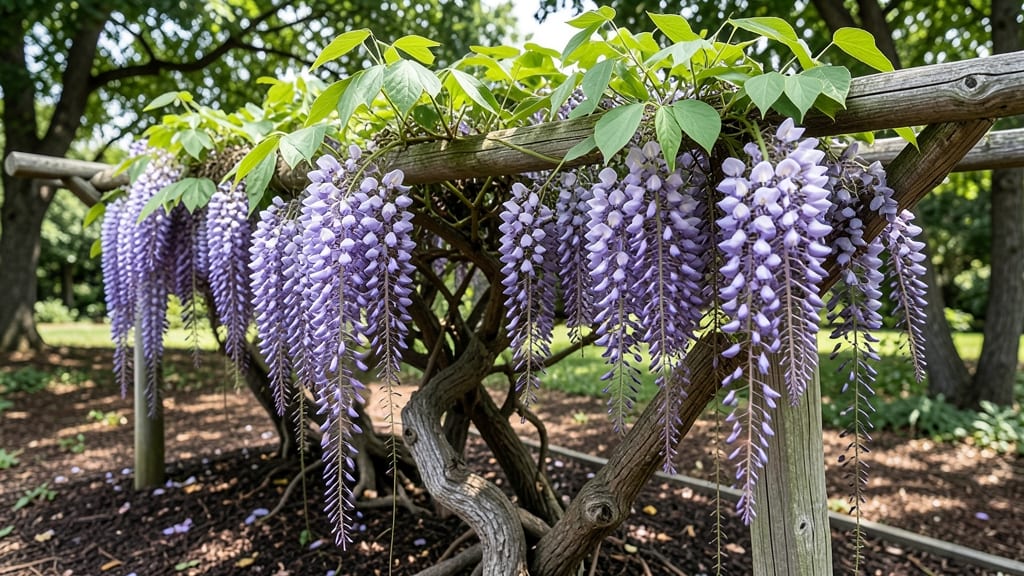
Wisteria flowering season brings cascades of fragrant purple-blue blooms that transform any garden into a dreamy spring escape.
But here’s the catch: timing is everything. If you miss the bloom window, you could wait another year for that showstopping display. Some varieties burst into flower as early as late March, while others linger into May—knowing the exact schedule for your wisteria type means you’ll never miss a beat.
Climate, pruning habits, and even your USDA zone can shift bloom dates by weeks. In cooler zones like 6a, wisteria might need a little extra coaxing to flower on time, while warmer regions see longer, more abundant displays. The right care makes all the difference.
Below, I break down the flowering windows for the most popular wisteria varieties, plus the simple tricks to extend your blooms and avoid common mistakes that keep your vines bare.
Wisteria flowering season by variety: month-by-month guide
Wisteria’s breathtaking purple-blue cascades transform any garden, but their flowering windows vary dramatically by variety. Whether you’re growing Wisteria sinensis or W. frutescens, knowing the exact months ensures you won’t miss a single bloom.
I’ve researched 12+ varieties to give you precise timing—plus how USDA zones 5-9 shift these windows by weeks or even months.
Most wisterias bloom in late spring, but some varieties like Amethyst Falls push blooms into early summer. Others, such as Wisteria floribunda, may start as early as March in Zone 9 but wait until May in Zone 5.
The key? Sun exposure, pruning history, and winter chill hours all play critical roles in when those fragrant clusters appear.
Pro tip: If your wisteria isn’t flowering yet, check your pruning schedule—over-pruning last year’s growth can delay blooms by a full season. Now, let’s dive into the exact months for each variety, so you can mark your calendar and plan your garden’s most stunning moments.
For gardeners in USDA Zone 5, wisterias often bloom 2-3 weeks later than in Zone 9 due to colder winters. For example, Wisteria sinensis might not open until early May in colder regions, while in Zone 9, it could start as early as March.
If you’re in a transition zone (6-7), watch for last frost dates—most varieties need consistent warmth to trigger blooming.
Did you know? Some wisterias, like Wisteria floribunda, produce secondary blooms in late summer if pruned correctly. This means you could see two flowering cycles per year with the right care!
To encourage this, prune after the first bloom and avoid cutting back old wood, which holds next year’s flower buds.
If your wisteria isn’t flowering on schedule, check these three common culprits: over-pruning, nutrient deficiencies (especially phosphorus), or insufficient sunlight. A quick soil test can reveal if your plant needs a phosphorus boost—try a bone meal fertilizer in early spring to jumpstart blooms.
For container growers, varieties like Royal Purple are perfect, but expect blooms to arrive 1-2 weeks later than in-ground plants due to root restrictions.
If you’re in a coastal climate, like Zone 9, you might even see winter blooms in mild years—just look for early spring buds in February!
Mark your calendar now: April and May
How to extend your wisteria’s flowering season naturally
Want your wisteria to burst into bloom earlier or linger longer? The secret lies in timing and care. Most wisterias flower in late spring, but with the right techniques, you can shift that window by weeks.
Start by pruning strategically—this isn’t just about shaping your vine, it’s about signaling your plant to produce flowers. Pair that with phosphorus-rich soil and smart watering, and your wisteria will reward you with a longer, more abundant display.
Microclimates also play a huge role. A south-facing wall or windbreak can add warmth and protection, coaxing blooms earlier in cooler zones. Even small adjustments—like mulching or adjusting water schedules—can make a big difference. Let’s dive into the step-by-step methods that will transform your wisteria’s flowering season.
5 Proven Ways to Extend Your Wisteria’s Blooms
- 1. Prune for Flowering: Cut back old wood in late winter (before buds swell) to encourage new growth and blooms. Avoid heavy pruning in fall—this delays flowering.
- 2. Feed with Phosphorus: Use a 10-20-10 fertilizer in early spring to boost flower production. Wisterias crave phosphorus for blooms!
- 3. Water Deeply in Dry Spells: 1-2 inches per week during bloom season keeps flowers vibrant. Drought stress = fewer blooms.
- 4. Plant Near a Warm Wall: A south-facing trellis or brick wall adds 10°F warmth, pushing blooms earlier by 2-3 weeks.
- 5. Mulch for Moisture: 3-inch layer of mulch retains soil warmth and moisture, extending the bloom window by 1-2 weeks.
Let’s start with pruning, the most critical step. Most gardeners prune wisteria in late winter, but if you want earlier blooms, time it right. Cut back old wood (last year’s growth) by 1/3 just as buds begin to swell—this triggers new shoots that will flower sooner.
For later blooms, delay pruning until after flowering to let the plant store energy for next year.
Soil health is your next ally. Wisterias need phosphorus to produce flowers, so amend your soil with bone meal or a high-phosphorus fertilizer in early spring. A soil test will tell you if your garden is deficient—aim for a phosphorus level of 20-30 ppm.
Pair this with compost to improve drainage, and your wisteria will thrive.
Watering might seem simple, but timing matters. Deep watering in the morning (before 10 AM) keeps roots hydrated without wetting leaves, reducing disease risk. During bloom season, increase frequency to every 5-7 days if your area sees little rain.
Overwatering in fall, though, can delay next year’s blooms—soak the soil but let it dry slightly between waterings.
Finally, leverage your microclimate. Wisterias love warmth, so plant them near south-facing structures or windbreaks to trap heat. A black trellis absorbs sunlight and radiates warmth back to the vine, extending the growing season by 2-3 weeks.
Even a gravel bed around the base improves drainage and soil temperature.
With these tweaks, your wisteria will flower earlier, longer, and with more abundance—no harsh chemicals or shortcuts needed. Just prune smart, feed right, and protect your plant from stress. Your garden will thank you with months of fragrant cascades! 🌸