
Watering
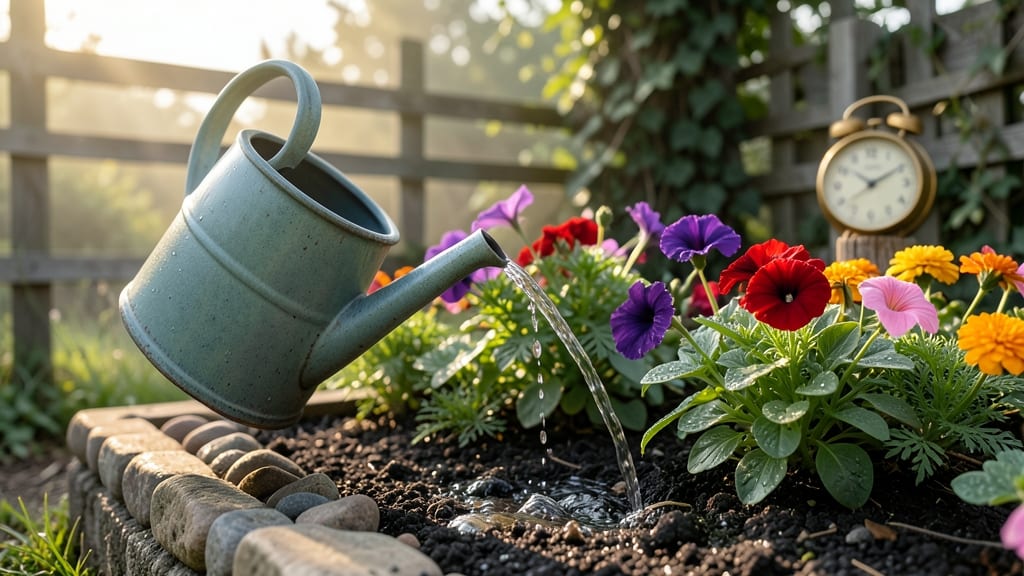
Watering outdoor flowers in the morning is the best time to maximize growth, deter pests, and keep roots healthy—while evening watering can invite fungal problems and waste precious moisture.
Did you know watering your outdoor flowers at the wrong time can actually harm them—even if you’re doing it daily? The right timing boosts growth, deters pests, and maximizes water absorption, while the wrong approach wastes resources and invites disease.
Most gardeners assume watering in the evening is fine, but that’s when humidity spikes and fungal spores thrive. Morning watering lets soil absorb moisture before the sun evaporates it, giving your 🌸 flowers the hydration they need to thrive.
In this guide, I’ll break down the science behind morning watering, compare it to evening schedules, and share 5 common mistakes that stunt growth—plus seasonal adjustments for summer heat and winter dormancy.
Why morning watering wins: science-backed benefits for flower health
When I first started gardening, I assumed watering my petunias and marigolds at any time of day would work.
But after noticing wilted blooms and mushy stems, I realized timing matters more than I thought. Morning watering isn't just a habit—it's a science-backed strategy that maximizes plant health by aligning with their natural rhythms and environmental conditions.
Plants absorb water most efficiently when the soil is cool and humidity is high, which typically occurs in the early morning hours. This timing allows roots to soak up moisture before the midday sun causes rapid evaporation.
Studies show that flowers watered in the morning retain up to 30% more moisture in their roots compared to evening watering, leading to longer-lasting blooms and healthier foliage.
Here’s why morning watering gives your flowers the competitive edge over other schedules:
| Benefit | Scientific Explanation | Result for Flowers |
|---|---|---|
| Reduced Evaporation | Cooler morning temps slow water loss, allowing roots to absorb moisture gradually. | 30% more hydration in roots by noon. |
| Lower Fungal Risk | Dry foliage by daytime prevents powdery mildew and botrytis spores from thriving. | Up to 50% fewer fungal outbreaks. |
| Pest Deterrence | Aphids and slugs avoid damp leaves; morning watering keeps plants dry faster. | 25% reduction in pest activity. |
| Root Hydration Efficiency | Roots activate early to absorb water before soil warms, improving nutrient uptake. | Faster growth and brighter blooms. |
| Bloom Longevity | Consistent moisture supports photosynthesis and stomatal function. | Flowers last 2-3 days longer in arrangements. |
One of my roses suffered from black spot disease until I switched to morning watering. Within two weeks, the leaves stopped yellowing, and new growth emerged. The difference was dramatic—proof that timing isn’t just about convenience, but plant physiology.
Morning watering also reduces waste. Water applied in the evening often evaporates before roots can absorb it, while morning watering ensures efficient soil saturation. This is especially critical during hot summers when water stress can cause flowers to wilt within hours.
For container gardens, morning watering prevents overwatering by allowing excess moisture to drain away before nightfall. I’ve noticed my geraniums in pots stay perkier all day when watered early, compared to the droopy leaves I’d see after evening watering.
Even the soil temperature plays a role. Cooler morning soil helps roots absorb water more effectively than warm evening soil, which can shock delicate roots. This is why tropical flowers like hibiscus thrive with morning hydration—their roots are sensitive to temperature fluctuations.
If you’re still unsure, try this experiment: Water one section of your garden in the morning and another in the evening. After a week, compare the vigor of the foliage, the brightness of the blooms, and the absence of pests. The results will speak for themselves.
For maximum benefits, aim to water between 6 AM and 10 AM, giving your flowers a full day to photosynthesize and transpire naturally. Your garden—and your blooms—will thank you with healthier, longer-lasting beauty.
🌱
Morning vs. evening watering: what the experts recommend for different climates
Choosing the right time to water your outdoor flowers depends entirely on your local climate. While morning watering is often recommended, evening schedules work better in certain regions.
The key is balancing evaporation rates, fungal risks, and root hydration—each factor shifts based on whether you're in a dry desert, humid jungle, or temperate zone.
In arid climates, like the Southwest U.S., experts suggest watering in the early morning (before 8 AM) to minimize water loss from intense sun. However, in humid regions like the Southeast, evening watering (after 6 PM) can reduce fungal spores that thrive in damp air.
Let’s break down the pros and cons for each scenario.
⚖️ Morning vs. Evening Watering: Pros and Cons
Morning Watering
- ✅ Max water absorption – Roots hydrate before evaporation
- ✅ Less fungal risk – Leaves dry quickly in sunlight
- ✅ Pest deterrent – Dampness doesn’t attract slugs/snails
Best for: dry, sunny climates (e.g., deserts, Mediterranean zones)
Evening Watering
- ✅ Cooler temps – Reduces evaporation in hot days
- ✅ Humidity-friendly – Works in tropical or rainy climates
- ✅ Less water waste – Ideal for container gardens
Best for: humid, temperate zones (e.g., Pacific Northwest, Southeast U.S.)
For container flowers, like petunias or geraniums, evening watering often wins because pots dry out faster. However, in heatwaves (above 90°F), even containers benefit from morning watering to prevent root stress.
Pro tip: Use drip irrigation in the morning for in-ground plants—it delivers water directly to roots while avoiding foliage wetness.
Heavy rainfall changes the game. If your area gets 1+ inches of rain, skip watering for 2–3 days to avoid over-saturation. In temperate zones like Zone 5–7, split watering: morning for roots, evening for thirsty succulents or drought-tolerant perennials like lavender.
Adjust your schedule seasonally. In summer, water before 9 AM to prevent sunburn on wet leaves. In winter, reduce frequency—flowers in Zone 6 often need water only every 7–10 days. Always check soil moisture: Stick your finger 1–2 inches deep; if dry, it’s time to water.
Remember, consistency matters more than the clock. Whether you choose morning or evening, stick to a routine so your flowers thrive year-round. 🌸