
Light Requirements
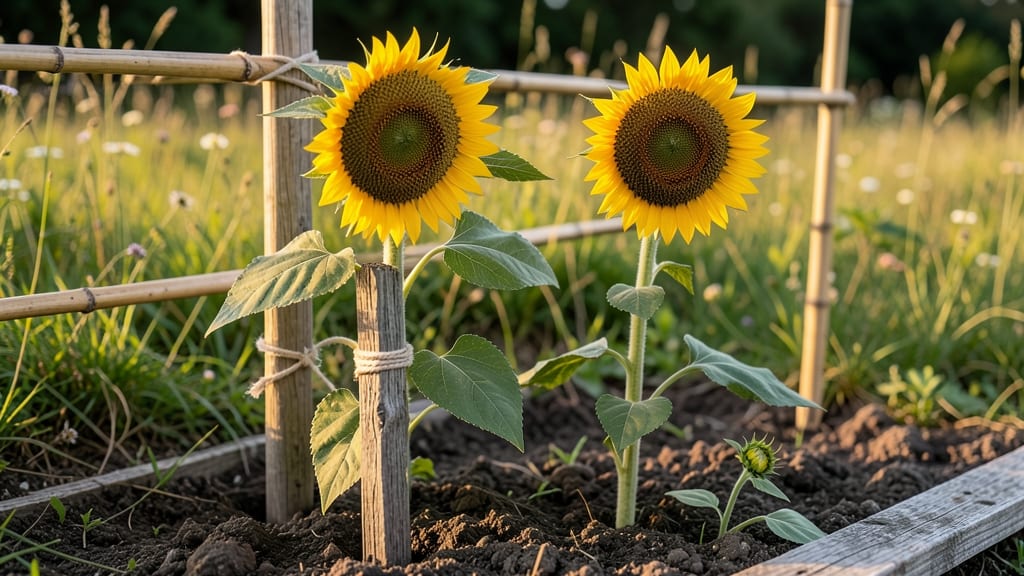
Sunflowers need support when they grow taller than 6 feet—especially varieties like Mammoth or Russian Giant that can reach 12+ feet—but shorter types like Teddy Bear often stand strong on their own.
Picture this: a 10-foot sunflower 🌻 bending dramatically in a summer storm, its heavy bloom dragging the stem to the ground. That’s the moment you’ll wish you’d staked it—unless you’ve chosen a compact variety or taken steps to strengthen its stem naturally.
Most gardeners assume all sunflowers need support, but the truth depends on height, wind exposure, and soil conditions. Tall varieties planted in exposed areas will topple without stakes, while shorter ones in sheltered spots often stand firm.
Below, I’ll break down when to stake (and when to skip it), plus 3 height-based support methods that keep your sunflowers upright—no guesswork required.
When sunflowers Actually Need Support (And When They Don’t)
Sunflowers are often called the giants of the garden, but their need for structural support depends entirely on their variety and growing conditions. While some towering Mammoth sunflowers can reach 12+ feet tall and require staking, others like Teddy Bear varieties stand proudly without any help.
The key lies in understanding stem strength, bloom weight, and wind exposure—not just height alone.
I’ve learned from experience that tall, thin-stemmed varieties (like Russian Giant) often lean or snap under heavy blooms or strong winds, while bushier, shorter types (like ProCut) develop thicker stems naturally.
Even 6-foot sunflowers can benefit from support if planted in exposed areas. Let’s break down the critical factors to decide when to stake—and when to skip it.
Comparison Table: Sunflower Support Needs by Variety
The stem thickness is your first clue—thinner stems (like Russian Giant) need support, while thicker stems (like Teddy Bear) rarely do. But even medium-height varieties (like ProCut) may need light staking in windy climates.
I’ve seen 6-foot sunflowers topple over in 30 mph winds despite sturdy stems, so location matters just as much as variety.
Another <
3 Height-based staking solutions for tall sunflowers (with DIY tips)
If you’re growing sunflowers taller than 6 feet, support isn’t optional—it’s a necessity. Without it, a 10-foot stem can snap under the weight of its heavy bloom or bend permanently in windy conditions.
The good news? You don’t need expensive garden centers for sturdy solutions. With the right DIY staking method, you can keep your sunflowers upright using materials you likely already have.
Your choice of support depends entirely on the sunflower variety and its mature height. A 3-foot Teddy Bear variety might never need help, but a 12-foot Russian Giant will topple without proper reinforcement.
Below, I’ll show you how to match the right support to your sunflower’s height—plus how to install it without damaging delicate stems.
Step-by-Step Staking Guide for Sunflowers
-
1
Choose the right stake for your height:
- Under 6ft: No stake needed (unless windy)
- 6-9ft: Use bamboo stakes or tomato cages
- 10ft+: Install a spiral support or cage system
-
2
Install stakes at planting:
- Drive stakes 6 inches deep beside each plant
- Use soft ties (old t-shirts or garden twine) to avoid stem damage
- Avoid plastic ties—they can girdle stems as they grow
-
3
Adjust ties as the plant grows:
- Loosen ties every 2 weeks to prevent constriction
- Add secondary stakes for extra support at 6 feet
- For cages, ensure they’re buried 12 inches deep
-
4
DIY alternatives for cost savings:
- Use repurposed PVC pipes as stakes (cut to height)
- Create cages from chicken wire or old wire fencing
- Bamboo stakes can be split lengthwise for wider support
💡 Pro Tip: For extra stability, bury stakes at a 45-degree angle to create a wider base.
For sunflowers under 6 feet, staking is rarely necessary unless your garden is exposed to strong winds. Varieties like Autumn Beauty or Moulin Rouge typically stand on their own, but adding a bamboo stake can prevent minor bending.
The key is to monitor stem thickness—thicker stems (over 1 inch in diameter) are far more self-supporting.
When dealing with 6-9 foot varieties like Mammoth or Russian Giant, a single bamboo stake (3-4 feet tall) isn’t enough. Instead, opt for a spiral support made from flexible plastic or even a repurposed wire coat hanger.
These wrap around the stem, providing 360-degree support without restricting growth. Install these when the plant reaches 3 feet tall to avoid damaging the stem.
For sunflowers over 10 feet, cages or multiple stakes are your best bet. A tomato cage (buried deep) works well for medium heights, but for giants, consider building a DIY wire cage using chicken wire and wooden stakes.
This creates a protective tunnel that shields the stem from wind while allowing full access to sunlight. Remember to secure the base—even the sturdiest cage will fail if the bottom isn’t anchored properly.
One common mistake gardeners make is waiting until the sunflower is already top-heavy before adding support. By then, the stem may have already weakened or bent. The best time to install stakes is at planting, even if you don’t plan to use them immediately.
This gives you the flexibility to adjust as the plant grows without disturbing the roots later.