
Planting
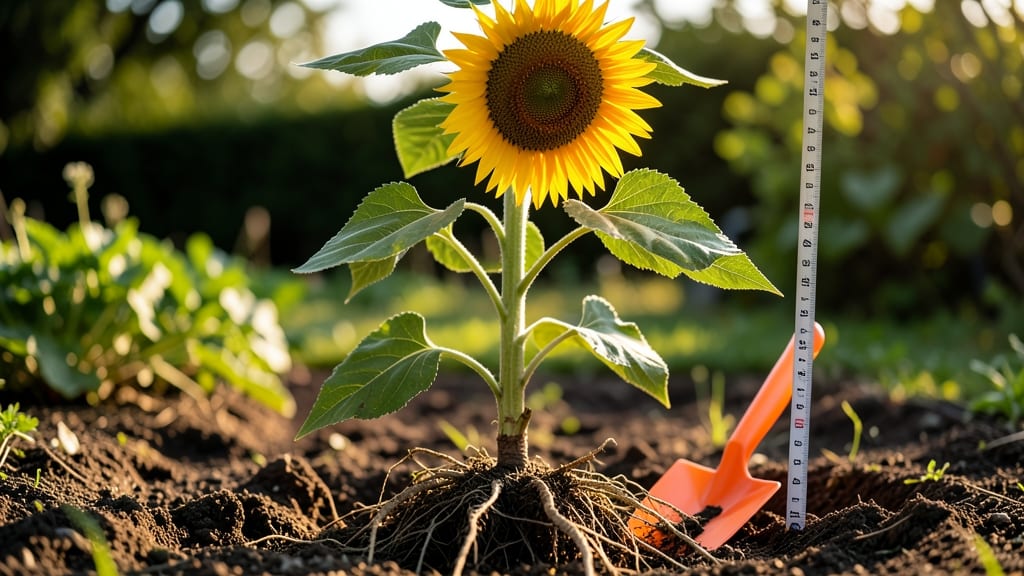
How deep are sunflower roots? The answer might surprise you—some varieties can reach 6 feet or more—making them far more resilient than most gardeners realize.
Picture this: a 12-foot sunflower standing tall in a summer breeze, its roots anchored like a tree’s, while nearby annuals wilt from shallow roots. That’s the power of a sunflower’s taproot system, which digs deep for stability and water, especially in USDA Zone 6a where droughts can strike unexpectedly.
But here’s the catch: planting too shallow can leave your 🌻 sunflowers top-heavy, prone to snapping in storms or bending under their own weight. The right soil depth isn’t just about roots—it’s about giving your plants the foundation they need to thrive from April planting through October harvest.
In this guide, I’ll break down exactly how deep those roots go, how to plant for maximum strength, and why soil prep matters more than you think—so you can grow sunflowers that stand proud all season long.
Sunflower root depth explained: how deep do they grow?
Sunflowers develop one of the most impressive root systems in the garden world, with their primary taproot diving deep to anchor the plant and access nutrients. This deep root structure isn't just fascinating—it directly impacts how you should plant, water, and care for your sunflowers.
Understanding these root depths helps prevent common issues like top-heavy stems or poor nutrient absorption, especially in tall varieties.
The average sunflower root depth ranges from 3 to 6 feet, though some giant varieties like 'Mammoth' can exceed 8 feet under ideal conditions. Their root systems consist of a dominant taproot with secondary lateral roots spreading outward.
This dual structure allows sunflowers to thrive in both deep, loose soil and shallow garden beds, though their stability improves with proper depth.
| Sunflower Type | Taproot Depth | Lateral Spread | Key Impact |
|---|---|---|---|
| Dwarf Varieties (e.g., 'Teddy Bear') | 1.5–3 feet | 1–2 feet wide | Compact growth, ideal for containers |
| Standard Varieties (e.g., 'Russian Giant') | 3–5 feet | 2–3 feet wide | Balanced stability for 6–10 ft stems |
| Giant Varieties (e.g., 'Mammoth') | 5–8+ feet | 3–4 feet wide | Requires deep soil, windbreaks |
| All Varieties (Early Growth) | 0.5–1 foot | 0.5–1 foot wide | Critical for seedling establishment |
The taproot is the powerhouse of sunflower root systems, accounting for up to 70% of total root biomass in mature plants. This deep-reaching root penetrates soil layers to access water and nutrients that shallow-rooted plants miss.
During drought conditions, this adaptation helps sunflowers survive with less frequent watering once established. However, their early growth stages rely heavily on surface moisture, making consistent watering essential in the first 4–6 weeks.
Lateral roots, which spread horizontally, play a crucial role in stability and nutrient absorption. These roots branch out from the taproot and can extend 2–4 feet from the plant's base, creating a wide network.
This spread helps anchor the plant against wind and supports the heavy flower heads that can weigh up to 2 pounds in giant varieties. Proper spacing between plants (typically 12–24 inches apart) allows these lateral roots to develop fully without competing for resources.
One common misconception is that sunflowers can grow in shallow containers despite their deep roots. While dwarf varieties thrive in 5-gallon pots, standard and giant sunflowers need at least 18–24 inches of soil depth to reach their full potential.
Shallow planting can lead to top-heavy growth, weak stems, and poor nutrient uptake. To prevent this, always plant seeds at least 1 inch deep and provide loose, well-draining soil to encourage deep root penetration.
The depth of sunflower roots also affects their companion planting strategies. Deep-rooted sunflowers make excellent soil looseners and can be planted alongside shallow-rooted crops like lettuce or radishes. Their extensive root systems help break up compacted soil, improving aeration and water infiltration for neighboring plants.
However, avoid planting sunflowers too close to competitive deep-rooted plants like corn or tomatoes, as they'll vie for the same nutrients and water.
For gardeners in urban or container settings, choosing dwarf or semi-dwarf varieties is a smart solution. These sunflowers develop shallower root systems (typically 1.5–3 feet deep) while still producing vibrant blooms.
Varieties like 'Sunspot' or 'Autumn Beauty' are perfect for balcony gardens or small spaces, as they don't require the same depth of soil as their towering cousins. Even in these cases, providing a minimum of 12 inches of soil depth ensures healthy root development and better stability.
Understanding sunflower root depth also helps with seasonal care. In early spring, focus on keeping the soil moist to encourage deep root growth. As temperatures rise, reduce watering frequency but increase depth—aim for 1–2 inches of water per week—to promote root expansion.
Mulching around the base of the plant helps retain moisture and regulates soil temperature, creating an optimal environment for root development throughout the growing season.
If you're growing sunflowers for seed production, deeper roots contribute to higher yields by accessing more nutrients and water. The taproot's depth directly correlates with the plant's ability to support heavy flower heads and produce plump, high-quality seeds.
For maximum seed production, prioritize deep, fertile soil and avoid disturbing the roots during the growing season. Even gentle cultivation can damage these delicate structures, leading to stunted growth or reduced yields.
In summary, sunflower root depth is a critical factor in their success, influencing everything from planting techniques to watering schedules. Whether you're growing dwarf varieties for containers or giant sunflowers for cutting flowers, tailoring your care to their root systems ensures healthier plants, stronger stems, and more abundant blooms.
With the right approach, you'll unlock the full potential of these sun-loving giants in your garden. 🌻
Planting depth secrets: how to optimize sunflower root growth
Sunflowers thrive when planted at the right depth—too shallow, and their roots struggle to anchor properly, leading to weak stems that topple in wind or storms. The key lies in understanding how sunflower roots develop and how planting depth directly impacts their growth.
Most gardeners overlook this critical step, assuming deeper is always better, but sunflowers actually prefer a moderate planting depth that encourages strong root penetration without crowding.
For optimal growth, sunflower seeds should be planted 1 inch deep in loose, well-draining soil. This depth allows the primary taproot to establish quickly while preventing seed rot—a common issue when seeds are buried too deep.
The taproot alone can reach 3-5 feet deep, but lateral roots spread horizontally to support the plant’s towering stature. Balancing these factors is essential for preventing shallow root syndrome, which weakens stems and reduces yield.
Sunflower roots need 1 inch depth to avoid two critical issues: shallow roots (from planting too close to the surface) and seed rot (from burying too deep). Giant varieties like 'Mammoth' require slightly deeper soil (up to 1.5 inches) to support their massive height, while dwarf varieties like 'Teddy Bear' thrive at standard depth. Always loosen soil to 6 inches deep before planting to encourage root penetration.
Soil preparation is just as critical as planting depth. Sunflowers despise compacted or clay-heavy soil, which restricts root growth. Amend your soil with compost or aged manure to improve drainage and aeration.
A loose, crumbly texture at the planting site allows the taproot to descend effortlessly, while lateral roots spread outward to stabilize the plant. Avoid tilling too deeply—sunflowers don’t need roots deeper than 12-18 inches for most varieties, though their taproots can extend beyond that.
Adjusting planting depth for sunflower types makes a noticeable difference. Giant sunflowers (8+ feet tall) benefit from a slightly deeper planting zone—aim for 1.5 inches deep in loose soil to compensate for their height and wind vulnerability.
In contrast, dwarf sunflowers (under 3 feet) can be planted at the standard 1 inch depth without risking weak stems. The rule of thumb? The taller the variety, the deeper (but not excessively) you should plant to encourage a robust root system.
Preventing shallow root syndrome starts before you even plant. Water the soil thoroughly 24 hours before sowing to ensure seeds don’t dry out during germination. After planting, maintain consistent moisture—sunflowers need 1-1.5 inches of water per week—but avoid waterlogging, which can suffocate roots.
Mulch around the base with straw or wood chips to retain moisture and regulate soil temperature, creating ideal conditions for root development.
By mastering planting depth and soil prep, you’ll grow sunflowers with thicker stems, better wind resistance, and higher yields. The secret isn’t just how deep you plant, but how well you prepare the soil to support their natural rooting habits.
With these adjustments, your sunflowers will stand tall and proud all season long. 🌻