
Trees
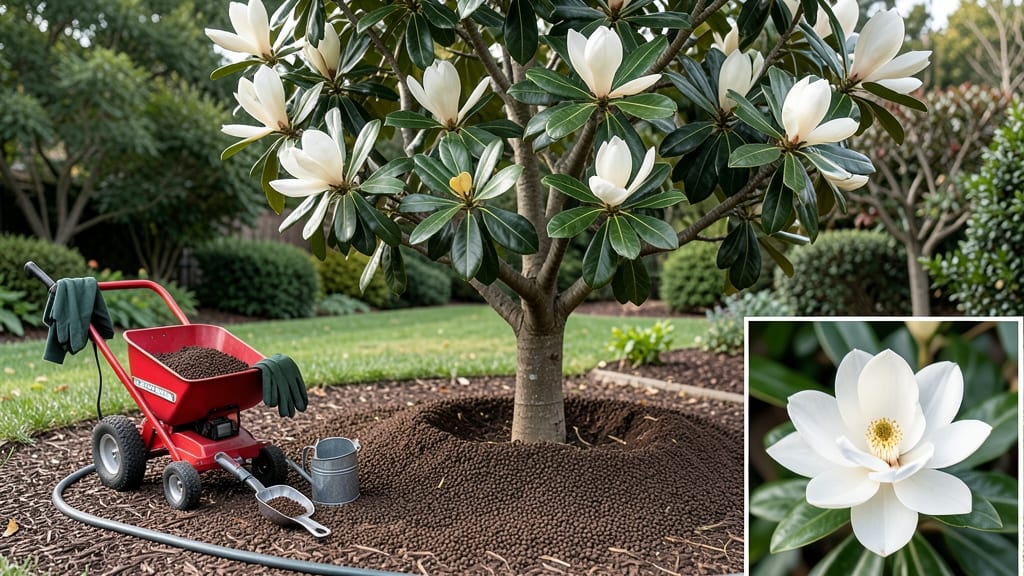
To fertilize flowering trees at the right time means spring and early summer are your best bets—when roots wake up hungry and blooms are just around the corner 🌸.
Picture this: You’ve waited all winter for those cherry blossoms or magnolia petals to burst into color, only to see them underwhelming or sparse. The difference?
Timing. Feed too early, and you’ll push leafy growth instead of flowers. Too late, and the tree won’t have the energy to bloom at all.
Most flowering trees—like azaleas, dogwoods, and crape myrtles—thrive when you fertilize in early spring, right as buds swell but before they open. A second light feeding in early summer keeps them strong without overstimulating late-season blooms.
But here’s the catch: Fall and winter are off-limits unless you’re in a mild climate like Zone 6a, where a late-summer boost can prep roots for next year’s show.
Below, I’ll break down the exact 4-6 week window for spring feeding, the best fertilizers to use (and which to avoid), and how to spot over-fertilization before it’s too late. Your tree’s next bloom season starts with this one move.
Spring fertilization timing for flowering trees: the critical 2-Week window
Getting your spring fertilization timing right is the secret to stunning blooms on trees like cherry blossoms, magnolias, and azaleas. The 2-week window after dormancy—when buds swell but haven’t yet burst—is when trees need nutrients most to fuel their flowering energy.
Miss this window, and you might end up with sparse blooms or stressed trees. I’ve learned this the hard way with my Kwanzan cherry—skipping the early spring feed left it weak during its big bloom season.
This critical window typically falls in late March to early April in most USDA zones (4-8), but exact timing depends on your last frost date and local climate.
For example, in Zone 7, I aim to fertilize by March 20th, while in cooler Zone 5, waiting until April 10th works better.
The key is to fertilize after the ground thaws but before buds open—this gives roots time to absorb nutrients while the tree isn’t yet focused on flowering.
Soil temperature plays a huge role here. When soil reaches 50°F (10°C), microbial activity kicks into gear, breaking down organic fertilizers and making nutrients available. A simple soil thermometer ($10 at garden centers) takes the guesswork out.
I test mine every 3 days in early spring—once it hits that 50°F mark, it’s go time for fertilization. Cold soil locks out nutrients, so rushing it can waste your fertilizer and stress the tree.
Now, let’s talk fertilizer types. Organic options like composted manure, fish emulsion, or slow-release granules are my go-to for flowering trees because they feed roots steadily without burning.
Synthetic fertilizers (like 10-10-10) deliver quick results but require more precision—overdoing it can lead to fertilizer burn or excessive leafy growth at the expense of blooms. For acid-loving trees like azaleas, I always opt for peat-based or pine bark fertilizers to maintain the right pH (4.5-6.0).
⚠️ NON-NEGOTIABLE: Soil prep matters just as much as timing. Before applying fertilizer, I test my soil’s pH (a $15 kit from garden centers does the trick) and amend it if needed. Flowering trees thrive in slightly acidic to neutral soil (6.0-7.0), except for camellias and rhododendrons, which prefer acidic soil (5.0-5.5). If your soil is compacted, I recommend aerating the top 6 inches with a garden fork to help roots access nutrients. A 2-inch layer of compost worked into the soil also improves structure and microbial activity.