
Planting
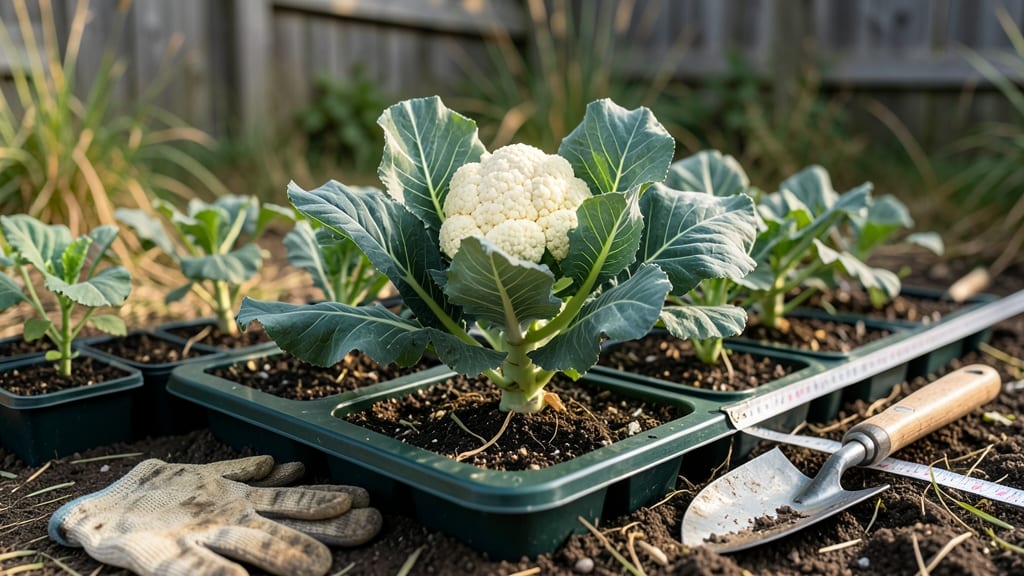
To plant cauliflower properly, you must know how far apart cauliflower should be planted—space them 18 to 24 inches apart in rows that are 24 to 36 inches apart—this is the secret to avoiding stunted heads and fungal trouble.
Picture this: you’ve spent weeks nurturing your seedlings, only to watch them fight for sunlight or suffocate in crowded soil. That’s not just bad luck—it’s spacing gone wrong. Too close, and you’ll battle powdery mildew; too far, and you waste precious garden real estate.
The right distance keeps airflow humming and heads plump, whether you’re growing compact varieties or towering giants.
But here’s the catch: your soil, climate, and even the type of cauliflower (heading vs. ornamental) tweak those numbers. A raised bed? Adjust for drainage. Hot summers? Stretch the spacing a little wider.
I’ll walk you through the exact adjustments for your garden, plus how to squeeze in extra plants without sacrificing health or yield.
By the end, you’ll know not just how far to plant cauliflower, but why those inches matter—and how to turn your bed into a disease-resistant, high-yielding powerhouse.
Optimal cauliflower plant spacing by variety and growth type
Cauliflower spacing isn't one-size-fits-all—it depends on whether you're growing heading varieties (like Snowball or Purple of Sicily) or ornamental types (such as Graffiti or Romanesco). The wrong spacing leads to stunted heads or disease outbreaks, so let's break down the exact distances for each type.
I'll also cover how to adjust spacing for raised beds and container gardening to maximize your yield.
For most standard heading cauliflower varieties, the general rule is 18-24 inches apart in rows with 24-36 inches between rows. This gives plants enough room to develop large, firm heads without competing for nutrients.
However, compact or dwarf varieties (like Miniature Snowball) can thrive with 12-18 inches apart, making them perfect for small gardens or containers.
Here's why spacing matters so much: Cauliflower plants need good airflow to prevent black rot and powdery mildew. Crowded plants also struggle to access sunlight, leading to smaller heads or poor color development.
In my own garden, I once planted Snowball cauliflower too closely, and the outer heads were misshapen and diseased—a lesson I won't repeat!
| Variety Type | In-Row Spacing | Row Spacing | Container Spacing | Raised Bed Adjustment |
|---|---|---|---|---|
| Standard Heading (e.g., Snowball) | 18-24" | 24-36" | 1 plant per 12" pot | Reduce in-row by 20% |
| Dwarf/Compact (e.g., Miniature Snowball) | 12-18" | 18-24" | 1 plant per 8-10" pot | No adjustment needed |
| Ornamental (e.g., Graffiti, Romanesco) | 12-16" | 18-24" | 1 plant per 10" pot | Reduce in-row by 10% |
| Giant Varieties (e.g., Mammoth) | 24-36" | 36-48" | Not recommended | Increase spacing by 10% |
If you're growing cauliflower in raised beds, you can reduce in-row spacing by 10-20% because the soil stays warmer and drains better. For example, standard varieties can be spaced 16-20 inches apart in a raised bed instead of 18-24 inches.
The key is to ensure the bed is at least 12 inches wide per plant to avoid overcrowding.
For container gardening, choose dwarf or compact varieties like Purple of Sicily or Mini Romanesco. Each plant needs its own 5-gallon pot minimum, with 12-16 inches of space between containers.
I once tried growing a standard variety in a 10-gallon pot with two plants—big mistake! The heads were tiny and deformed because the roots competed for space.
When planting in rows or blocks, always space rows 24-36 inches apart to allow for easy access and airflow. If you're using a square foot gardening method, place 1 plant per square foot for standard varieties or 2 plants per square foot for dwarf types.
This method works surprisingly well for small urban gardens!
One final tip: If you're growing multiple varieties, plant the tallest types (like Mammoth) on the north side of your garden to avoid shading smaller plants. I learned this the hard way when my Snowball cauliflower struggled to get enough sunlight because of towering broccoli plants nearby.
Proper spacing isn't just about fitting more plants into your garden—it's about giving each plant the best chance to thrive. With these guidelines, you'll avoid the frustration of stunted heads and disease issues while maximizing your harvest. Happy planting! 🥬
Why proper spacing prevents common cauliflower problems
Cauliflower plants need room to breathe—literally! When you crowd them too closely, you’re inviting a host of problems like black rot and powdery mildew. These diseases thrive in damp, shaded conditions created by overcrowded foliage.
Without proper airflow circulation, moisture lingers on leaves, creating the perfect environment for fungal spores to spread. Even pest infestations like cabbage worms become more aggressive when plants are stressed from competition.
Poor spacing also leads to poor head formation. Cauliflower needs space to develop its signature compact head. When plants compete for nutrients and sunlight, they’ll produce small, misshapen heads—or worse, bolt prematurely.
I’ve seen gardens where cauliflower heads split open or develop unevenly because they didn’t have enough room to mature properly. Proper spacing ensures each plant gets the sunlight and nutrients it needs to form tight, market-ready heads.
Here’s the hard truth: crowding stunts growth. When roots tangle, they can’t access the moisture and minerals they need. This leads to yellowing leaves, stunted stems, and plants that struggle to support their own weight.
In extreme cases, crowded cauliflower plants may even fall over, leaving you with a harvest of broken stems and bruised heads. The solution? Follow the spacing guidelines tailored to your cauliflower variety.
⚠️ Spacing Crisis Alert!
18-24 inches apart is the minimum for most cauliflower varieties. If your plants are closer than this, you’re risking:
- Black rot (spreads via water droplets)
- Powdery mildew (white fungal growth)
- Stunted heads (smaller, uneven harvests)
- Pest magnets (cabbage worms love crowded plants)
Fix it now: Thin seedlings to the correct spacing or transplant extras to a new bed. Don’t wait—diseases spread fast!
Let’s talk airflow. Cauliflower leaves need to dry quickly after watering to prevent fungal infections. When plants are too close, humidity builds up between them, creating a greenhouse effect. This slows evaporation and traps moisture—ideal conditions for powdery mildew to take hold.
I’ve seen entire beds of cauliflower covered in white powder within weeks of planting too densely. The fix? Space plants so their outer leaves don’t touch, allowing air to circulate freely.
Sunlight is another critical factor. Cauliflower needs 6+ hours of direct sun daily to develop properly. When plants are crowded, the inner ones get shaded, leading to leggy growth and weak stems.
Shaded cauliflower also produces smaller heads because the plant diverts energy to stretching toward light instead of forming a head. Even in partial shade, proper spacing ensures every plant gets its fair share of sunlight, leading to stronger, healthier crops.
If you’ve already planted too closely, don’t panic! Start by thinning seedlings to the correct spacing as soon as they’re 4-6 inches tall. For stubbornly crowded beds, consider transplanting extras to a new location or even a container.
And if you’re dealing with an existing disease issue, remove affected plants immediately and treat the soil with a copper fungicide to break the cycle. With the right spacing, your cauliflower will thrive—and so will your harvest! 🥬