
Planting
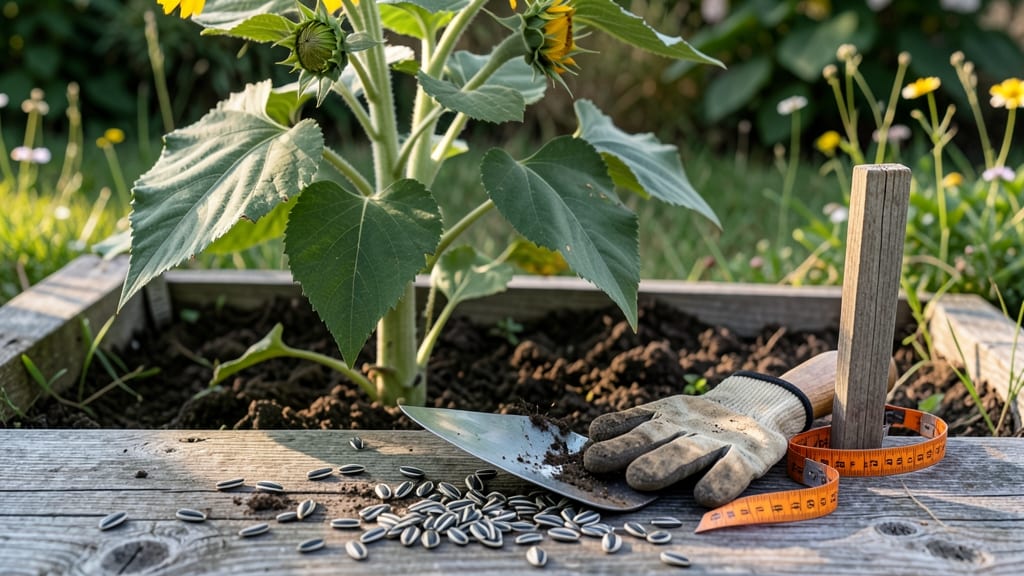
To plant sunflower seeds the right distance apart ensures they grow tall and strong without competing for sunlight or nutrients.
Sunflowers are nature’s cheerful giants—but planting them too close can turn your dream garden into a tangled mess of competing stems and stunted growth. Get the spacing right, and you’ll harvest towering blooms that steal the show.
Most varieties need 6 to 12 inches between seeds, but taller sunflowers (like Mammoth) thrive with 18 to 24 inches of space. Proper spacing also prevents disease by improving airflow, so your 🌻 garden stays healthy and vibrant.
Below, I break down the exact spacing for dwarf, standard, and giant sunflowers, plus tips for soil prep and post-planting care to maximize your harvest.

Sunflower spacing guidelines by variety: tall vs. dwarf vs. giant
Sunflowers thrive when given room to grow, but their spacing needs vary dramatically by variety. Dwarf varieties like Teddy Bear need just 6 inches between plants, while giant Mammoth sunflowers require 24 inches or more.
Proper spacing ensures maximum sunlight exposure, airflow circulation, and root development, preventing disease and maximizing yield. Let’s break down the exact distances for each type to avoid overcrowding and weak stems.
Why spacing matters isn’t just about aesthetics—it’s about plant health. Overcrowded sunflowers compete for nutrients and water, leading to pale leaves, weak stems, and even toppling in windy areas.
For example, a 12-foot Mammoth needs a 2-foot radius to avoid leaning into neighbors. Below, I’ll share the golden rule for spacing each variety, plus tips for wind-prone gardens.
| Variety Type | Plant Spacing (inches) | Row Spacing (inches) | Mature Height (feet) | Best For |
|---|---|---|---|---|
| Dwarf (e.g., Teddy Bear, Sunspot) | 6–12 | 12–18 | 1–3 | Containers, borders, pollinator gardens |
| Semi-Dwarf (e.g., ProCut, Autumn Beauty) | 12–18 | 18–24 | 3–6 | Cut flowers, small plots, urban gardens |
| Standard (e.g., Russian Giant, Giant Yellow) | 18–24 | 24–30 | 6–10 | Cut stems, bird feed, large gardens |
| Giant (e.g., Mammoth, Colossus) | 24–36 | 36–48 | 10–14 | Showstoppers, windbreaks, large plots |
Note: Adjust spacing wider in windy areas to prevent toppling.
For dwarf varieties like Teddy Bear, stick to 6–12 inches apart in rows spaced 12–18 inches apart. These compact beauties are perfect for containers or borders, but even they need room to avoid leaf blight from poor airflow.
If you’re growing them in containers, use at least a 12-inch pot per plant to prevent root competition.
Semi-dwarf varieties such as ProCut or Autumn Beauty strike a balance, needing 12–18 inches between plants and 18–24 inches between rows. These are my go-to for cut flowers because they’re tall enough for bouquets but not so massive they dominate the garden.
In small spaces, you can squeeze them into 12-inch spacing, but expect slightly smaller blooms.
Standard sunflowers like Russian Giant demand more space—18–24 inches apart in rows 24–30 inches apart. These varieties are powerhouses for pollinators and bird feed, but they’ll lean or flop if crowded. If you’re growing them for seed production, wider spacing ensures heavier, drier seeds with fewer pests.
Giant varieties like Mammoth or Colossus are the showstoppers of the sunflower world, but they need 24–36 inches between plants and 36–48 inches between rows. These giants can reach 12–14 feet tall, so treat them like small trees.
In wind-prone areas, space them even wider (36+ inches) and consider staking with bamboo poles for support.
Pro tip: If you’re growing sunflowers in rows, orient them north-south to maximize sunlight exposure. This simple trick can increase yield by 20% by reducing shading between plants.
For square-foot gardening, you can fit 4 dwarf sunflowers in a 1-square-foot area, but reduce to 1 giant per 4-square-foot area
5 Common sunflower spacing mistakes that stunt growth (and how to fix them)
Even with the best sunflower seeds, poor spacing can sabotage your garden. Overcrowding steals sunlight, weakens stems, and invites disease. I’ve seen sunflowers that looked healthy until they suddenly leaned or developed yellowing leaves—a clear sign of competition for nutrients.
Let’s tackle the top 5 spacing mistakes and how to fix them before your sunflowers become a tangled mess. The key is understanding how much space each variety needs to thrive—dwarf varieties can handle 6 inches, while giant sunflowers need 24 inches or more.
⚠️ CALLOUT WARNING: The Right Spacing for Sunflower Seeds ⚠️
- Stunted growth from nutrient competition
- Weak stems that snap in wind or rain
- Disease spread due to poor airflow
Mistake #1: Ignoring variety-specific spacing. I once planted Mammoth sunflowers just 12 inches apart, thinking they’d grow tall enough to handle it. Instead, they leaned like drunk giants, their stems weak and spindly. Always check the seed packet—tall varieties need 18-24 inches of space.
Mistake #2: Uneven spacing creates gaps where weeds thrive. Use a grid or string guide to mark rows before planting. For example, plant seeds in a 3-foot grid (18 inches apart in rows 3 feet apart) for standard sunflowers. This ensures even sunlight exposure and airflow.
Mistake #3: Planting too deep (more than 1 inch) can cause rot or slow germination. If your soil is rocky, loosen it gently with a trowel or plant in raised beds. Depth + spacing matter—stick to 1 inch deep and adjust spacing based on variety.
Mistake #4: Skipping soil prep makes roots compete for nutrients. Before planting, mix compost or aged manure into the top 6 inches of soil. This gives sunflowers a nutrient boost and reduces the need for crowded root systems to scavenge.
Mistake #5: Not thinning seedlings. Even if you space seeds correctly, some may germinate closer than others. Once seedlings have 2-3 true leaves, thin them to the recommended spacing. Use sharp scissors to avoid disturbing roots—pulling can damage neighboring plants.
To recover from overcrowding, prune lower leaves to improve airflow and reduce disease risk. If stems are already weak, stake tall varieties with bamboo poles or tomato cages.
With proper spacing, your sunflowers will reward you with bold blooms and strong stems—ready to face the elements like true giants. 🌻