
Flowers
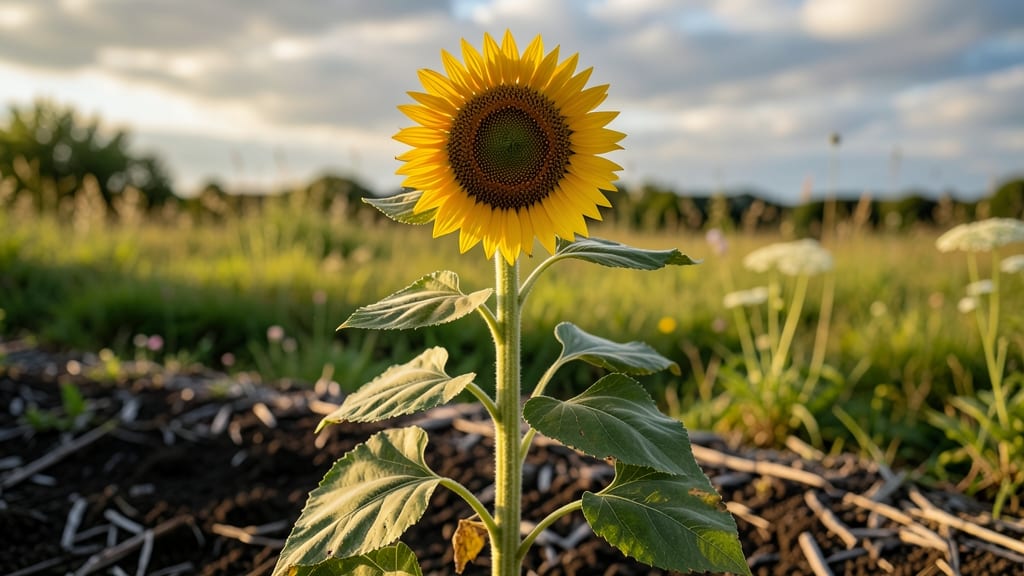
How much sun do sunflowers need? They require 6 to 8+ hours of direct sunlight daily to grow tall and vibrant 🌻 — anything less and you’ll end up with weak stems and sad blooms.
Picture this: you’ve just planted your seeds in April, full of excitement for towering 10-foot giants by summer. But by July, your sunflowers are barely waist-high, their leaves pale and stretched out like they’re reaching for something they can’t find. That something? Sunlight.
Sunflowers are called "heliotropes" because they literally follow the sun, but even they can’t compensate for a shady spot. Without enough light, their growth slows, their stems weaken, and—worst of all—their blooms never fully open.
The good news? With the right placement and a few simple adjustments, you can give your sunflowers the light they crave.
In this guide, I’ll break down exactly how many hours of sun your sunflowers need, how to spot signs of sun deprivation, and pro tips to maximize their light exposure—whether you’re working with a small urban garden or a sprawling backyard.

Optimal sunlight hours for sunflower growth by variety
Sunflowers are heliotropes, meaning they follow the sun’s movement across the sky—a behavior driven by their need for maximum photosynthesis.
But not all varieties thrive equally under the same sunlight conditions. Giant sunflowers like 'Russian Giant' demand full sun exposure, while dwarf varieties like 'Teddy Bear' can tolerate slightly less. Let’s break down the exact sunlight hours each type needs to reach its full potential.
Sunflowers are C3 plants, which means they rely heavily on direct sunlight to convert carbon dioxide into energy. When deprived of adequate light, their growth slows, stems weaken, and blooms become sparse or fail entirely.
The key is understanding how sunlight intensity and duration vary by variety and adjusting your garden layout accordingly.
Here’s how sunlight needs differ by sunflower type, including how partial shade impacts growth and bloom time:
| Variety Type | Sunlight Needs | Bloom Time Impact | Mature Height |
|---|---|---|---|
| Giant (e.g., 'Russian Giant', 'Mammoth') | 8-10+ hours daily | Delays bloom by 10-15 days in partial shade | 10-16 feet |
| Semi-Dwarf (e.g., 'ProCut', 'Autumn Beauty') | 6-8 hours daily | Reduced flower size in partial shade | 5-8 feet |
| Dwarf (e.g., 'Teddy Bear', 'Pomeranian') | 4-6 hours daily | Minimal blooms in partial shade; may not flower | 1-3 feet |
Giant sunflowers, like the 'Russian Giant', are the most demanding. They require 8-10+ hours of direct sunlight to reach their towering heights of 10-16 feet. Without this, their stems become leggy and weak, and their flower heads shrink dramatically.
These varieties are not shade-tolerant—even partial shade (defined as <4 hours of direct sun) can delay blooming by 2-3 weeks.
Semi-dwarf varieties, such as 'ProCut' or 'Autumn Beauty', are more adaptable but still thrive best with 6-8 hours of sunlight. In partial shade, they’ll grow but produce smaller, less vibrant blooms.
Their compact stature (5-8 feet) makes them ideal for smaller gardens or containers, but they won’t tolerate deep shade.
Dwarf sunflowers, like 'Teddy Bear', are the most forgiving. They can survive with as little as 4-6 hours of sunlight, making them perfect for urban gardens or areas with limited sun.
However, even these varieties may fail to bloom if exposed to less than 4 hours of direct light. Their low height (1-3 feet) also makes them great for borders or window boxes.
The science behind sunflowers’ sun-seeking behavior lies in their heliotropic response. Young sunflowers track the sun from east to west, maximizing photosynthetic efficiency. As they mature, the flower heads reorient to face east, absorbing morning sunlight to kickstart energy production for the day.
This behavior is hardwired into their circadian rhythms, but it requires ample light to function optimally.
If you’re growing sunflowers in partial shade, consider supplementing with a reflective surface, like white gravel or a mirror, to bounce extra light onto the plants. For container-grown sunflowers, place pots in the sunniest spot and rotate them daily to ensure even exposure.
Even 1-2 extra hours of sunlight can make a noticeable difference in growth and bloom quality.
Pro tip: Monitor your sunflowers’ leaf color. Healthy leaves are deep green and upright, while pale or yellowing leaves signal insufficient light.
If you notice stretched stems or small buds, it’s time to relocate your plants to a sunnier spot or invest in a grow light for indoor varieties.
For the biggest, brightest blooms, aim to plant sunflowers in a south-facing location where they’ll receive uninterrupted sunlight from mid-morning to late afternoon. In northern climates, this might mean planting them near a south-facing wall to capture reflected light.
With the right sunlight strategy, your sunflowers will grow tall, proud, and ready to turn heads—literally!
Signs your sunflowers aren’t getting enough sun (and how to fix it)
Sunflowers are sun worshippers, and when they don’t get enough light, they’ll show you in dramatic ways. If your plants are taller than they are wide, sporting pale yellow leaves, or refusing to bloom, it’s time to investigate their sunlight situation.
These are classic signs your sunflowers are starved for light, and the good news? Fixing it is easier than you think.
Sunflowers thrive on 6-8+ hours of direct sunlight daily, but even partial shade can stunt their growth. Without enough light, they’ll stretch toward any available sun, creating weak, leggy stems that can’t support their own weight.
Worse, they may never produce those show-stopping blooms you planted them for. Let’s diagnose the problem and get your sunflowers back on track.
⚠️ How Much Sun Do Sunflowers Really Need?
Minimum: 6 hours of direct sunlight daily (for dwarf varieties)
Ideal: 8+ hours of full sun (for standard/giant sunflowers)
Critical: Morning sun (6 AM–12 PM) is most important for photosynthesis
❌ Less than 4 hours? Your sunflowers are in sunlight shock—expect weak growth and no blooms.
Start by checking your garden’s sunlight map. Sunflowers planted under trees, buildings, or tall fences often get filtered or reflected light, which counts as partial shade. If your plants are in a north-facing spot, they’ll struggle unless you supplement with grow lights.
Even east or west-facing gardens may need adjustments—morning sun is gentler, while afternoon sun can scorch leaves.
One of the first signs of sun deprivation is yellowing leaves, especially on the lower stems. This happens when the plant can’t produce enough chlorophyll for photosynthesis.
Combine this with stems that bend or flop under their own weight, and you’ve got a classic case of sunlight starvation. The fix?
Relocate your sunflowers to a sunnier spot immediately, or use a reflective surface (like white paint on a fence) to bounce extra light onto their leaves.
If your sunflowers are leggy and sparse-leafed, they’re reaching for the light like a toddler stretching for a cookie. This etiolation (yes, that’s the scientific term) makes stems weak and prone to snapping.
To correct this, prune the top 2-3 inches of the main stem to encourage bushier growth. Then, move the plant to a sunnier location or add a grow light for 12-14 hours daily. For container-grown sunflowers, rotate the pot quarter-turns every few days to ensure even light exposure.
For non-blooming sunflowers, the issue is almost always insufficient sunlight. Sunflowers need bright light to trigger flowering hormones, and without it, they’ll focus all their energy on leafy growth instead.
If you’re in a low-sun area, try interplanting with shorter crops (like lettuce) to free up space for sunflowers in sunnier spots. Alternatively, choose dwarf varieties like ‘Teddy Bear’ or ‘Moulin Rouge,’ which tolerate partial shade better than giants.
Don’t forget: Evening sun doesn’t count toward your sunflower’s daily total. If your plants get 6 hours in the morning but are shaded in the afternoon, they’re still short on sunlight.
To maximize their exposure, plant in the southernmost part of your yard (in the Northern Hemisphere) and avoid overcrowding. Give each sunflower 12–24 inches of space so they’re not competing for light. With these fixes, you’ll see stronger stems, darker green leaves, and blooms in no time! 🌻