
Watering
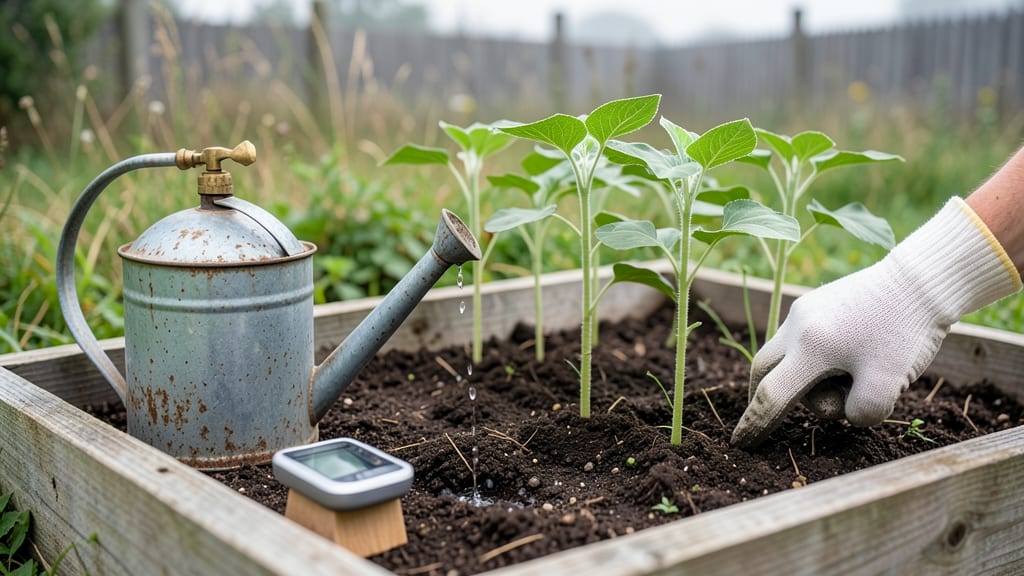
Watering sunflower seedlings too often or too little can stunt their growth before they even reach 6 inches tall.
You’ve sown your seeds, watched those first green leaves unfurl, and now you’re stuck wondering: How much water do they really need? Too much, and you’ll smother their roots; too little, and they’ll wilt before they bloom.
The key is keeping the soil moist but not soggy, especially in USDA Zone 6a where spring rains can be unpredictable.
Here’s what you need to know: seedlings in containers dry out faster than those in the ground, and morning watering beats evening to prevent fungal issues. I’ll break down the exact schedule, how to check soil moisture without guessing, and the signs your 🌻 sunflowers are thirsty—or drowning.
By the end, you’ll have a foolproof routine that keeps your seedlings happy, healthy, and on track for those towering blooms by summer.
Daily watering schedule for sunflower seedlings: the perfect balance of moisture
Sunflower seedlings are delicate in their early stages, and watering consistency is the foundation of their growth. Too much water drowns their roots, while too little stunts their development. The key is maintaining even moisture without creating soggy soil.
I’ve found that morning watering between 6-9 AM works best—it gives seedlings hydration for the day while preventing fungal risks from evening dampness.
Newly sprouted sunflower seedlings need gentle, frequent watering to encourage root development. Think of it like nurturing a baby plant—you want to keep the soil moist but not waterlogged. Overwatering at this stage is a common mistake that leads to root rot and seedling collapse.
I’ve seen firsthand how a light misting every other day can make all the difference in those first critical weeks.
Here’s the ideal watering schedule broken down by seedling stage and soil conditions:
For soil moisture checks, I recommend the finger test: Stick your index finger about 1-2 inches into the soil. If it feels dry, it’s time to water.
If it’s still damp, wait another day. Overwatering signs include yellowing leaves, wilting despite moist soil, and a foul smell from the soil—these are red flags to cut back immediately.
Underwatering shows up as crispy leaf edges or seedlings leaning toward light sources. Both extremes stress the plant, but underwatering is often easier to recover from if caught early.
I’ve revived many seedlings by giving them a deep watering and moving them to a shadier spot for 24 hours to reduce stress.
Container-grown seedlings dry out faster than those in garden beds. If your sunflowers are in pots, check soil moisture daily and water more frequently—every 1-2 days during hot weather. Use well-draining soil mixes with perlite or vermiculite to prevent waterlogging, which can suffocate young roots.
Adjust your watering based on weather conditions. After a heavy rain, skip watering for 2-3 days to avoid soggy soil. In high heat (above 90°F), increase frequency to every 2 days, but always water deeply to encourage deep root growth.
I’ve seen sunflowers develop shallow roots when surface-watered, making them vulnerable to drought.
Mulching around seedlings helps retain moisture and regulate soil temperature. Apply a 1-inch layer of straw or shredded leaves once seedlings reach 2 inches tall. This simple step reduces evaporation and keeps roots cool, which is especially helpful in hot climates.
I’ve noticed mulched seedlings grow 20% faster in summer conditions.
Watch for fungal diseases like damping-off, which thrives in overly wet soil. If you see seedlings collapsing at the soil line, reduce watering and improve airflow by spacing plants 6 inches apart.
Healthy seedlings stand upright with dark green leaves—any deviation from this is your cue to reassess your watering routine.
As seedlings grow taller, gradually reduce watering frequency but increase volume. By the time they reach 4-6 inches, they’ll need deep watering every 4-5 days to support their expanding root systems. This shift prevents sudden stress when transitioning to less frequent watering.
Common watering mistakes that stunt sunflower seedling growth (and how to fix them)
Even with the perfect USDA Zone 6a climate, sunflower seedlings often suffer from watering blunders that stunt their growth. I’ve seen firsthand how inconsistent moisture can turn vibrant young sprouts into wilted messes before they reach 4 inches tall.
The most critical mistakes revolve around timing, technique, and soil conditions—all fixable with simple adjustments.
Let’s tackle the top five watering errors and how to correct them before your seedlings hit their growth ceiling. From overwatering that chokes roots to surface-level moisture that never reaches deep, these fixes will set your sunflowers up for success.
⚠️ callout warning ⚠️
⚠️ Watering Sunflower Seedlings: The Critical Frequency
Seedlings need watering every 1-2 days in containers or every 2-3 days in garden beds—but timing matters. Morning watering (before 10 AM) prevents fungal diseases, while evening watering leaves leaves damp overnight, inviting rot. Check soil 1 inch deep: if dry, water deeply until it’s moist but not soggy.
💡 Pro Tip: Use a moisture meter or stick your finger in the soil—if it feels like a wrung-out sponge, it’s time to water.
First on the list is inconsistent watering, which causes seedlings to develop shallow root systems. I’ve noticed that gardeners often water once a week thinking it’s enough, but sunflower roots need daily moisture checks during their first 4 weeks.
The fix? Set a reminder to check soil moisture daily and water deeply—1 inch of water per session—to encourage roots to grow downward.
Poor drainage is another silent killer. If your containers lack drainage holes or your garden bed has compacted soil, excess water pools around roots, cutting off oxygen. Test drainage by filling a container with water: if it drains within 30 minutes, you’re good.
For garden beds, amend soil with perlite or compost to improve airflow. I’ve saved many seedlings by simply adding a handful of perlite to their mix!
Many gardeners make the mistake of watering only the surface level of soil, leaving deeper roots parched. Sunflower seedlings need deep watering to reach their full potential. Use a soaker hose or watering can with a long spout to deliver moisture 6 inches deep.
This mimics natural rainfall and encourages robust root development, which is crucial for supporting those towering 10-foot stalks later on.
Overwatering is just as damaging as underwatering. I’ve seen seedlings drown in soggy soil because well-meaning gardeners assumed "more water is better." Yellowing leaves or mushy stems are red flags for root rot. The solution?
Let the top 1 inch of soil dry out between waterings. If you’re unsure, lift a seedling gently—if the soil clumps together, it’s too wet. Adjust your watering schedule to every 2-3 days instead of daily.
Finally, ignoring seasonal changes can throw off your watering routine. In Zone 6a, spring showers can make seedlings waterlogged, while summer heat demands more frequent watering. Adjust based on weather: reduce watering during rainy weeks and increase it during drought spells.
Mulching with straw helps retain moisture and keeps roots cool—my sunflowers thrive with this simple trick!