
Watering
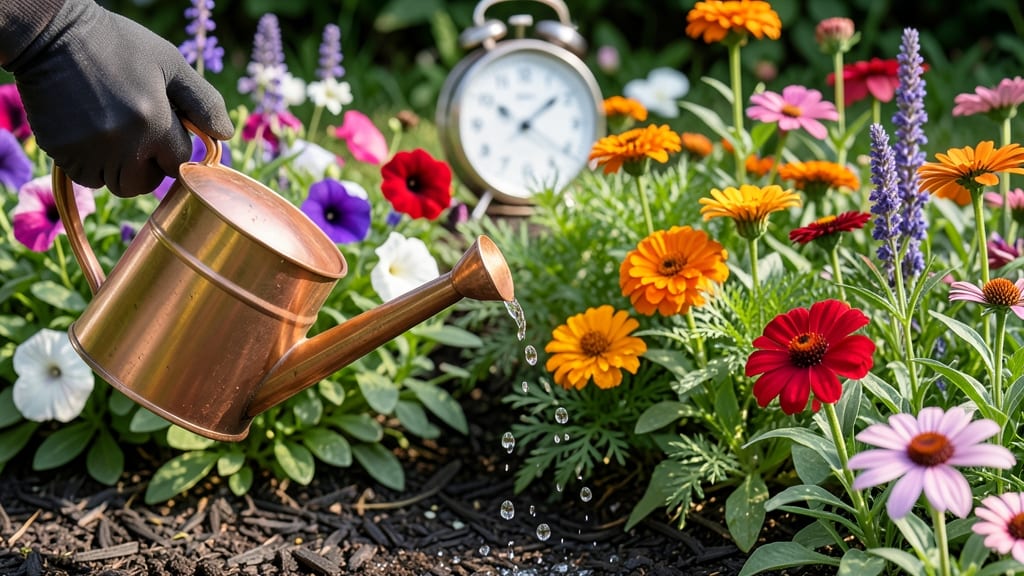
Watering your flower garden too often or too little can turn vibrant blooms into sad, droopy messes — and the right schedule depends more on your plants than on the calendar.
Struggling to keep your flower garden vibrant without overwatering or underwatering? The right watering schedule can mean the difference between blooming beauty and wilting disappointment. Most gardeners guess, but science shows that soil type, plant roots, and weather are the real game-changers.
In this guide, I’ll break down how often to water by season — from deep soaks in summer to barely anything in winter — plus the telltale signs your garden is thirsty or drowning. No more guesswork, just lush, thriving flowers.
You’ll learn the exact intervals for annuals, perennials, and drought-tolerant plants, how to check soil moisture like a pro, and when to adjust for rain or heatwaves. Ready to transform your garden’s health?
Watering frequency for flower gardens by season and plant type
Watering your flower garden isn't a one-size-fits-all task—it varies dramatically by season, plant type, and even the weather. Too much water can drown roots, while too little causes wilting and stunted blooms.
The key is understanding your garden's unique needs to create a consistent moisture balance. Let's break down how often to water based on the most common flower categories and seasonal shifts.
Seasonal changes dramatically impact how often you should water. Spring and fall often require less frequent watering than summer's scorching heat, while winter might only need occasional hydration. Even within seasons, factors like rainfall, humidity, and soil type play crucial roles.
For example, sandy soil drains quickly, while clay holds moisture longer—adjusting your schedule accordingly prevents both overwatering and underwatering.
For annual flowers, which have a single growing season, consistency is critical. Water deeply every 2-3 days in spring and daily in summer to encourage robust blooms.
Use your finger to check soil moisture—if the top 1-2 inches feel dry, it's time to water. Morning watering is ideal to reduce evaporation and fungal risks from evening moisture.
Perennials, like lavender or black-eyed Susans, are hardier and need less frequent watering. In spring, water every 4-5 days to establish roots, then adjust to every 2-3 days in summer during heatwaves. Fall watering can taper off to every 5-7 days as temperatures drop.
Always water at the base of the plant to avoid wetting foliage, which can attract pests.
Bulbs, such as tulips and daffodils, have unique needs. After they sprout in spring, water lightly every 5-7 days to prevent rot.
In summer, reduce watering to every 3-4 days once foliage yellows—this helps bulbs store energy for next year. Winter watering is unnecessary unless your region experiences extreme drought.
Drought-tolerant flowers like succulents or sedum thrive on neglect. Water these plants every 7-10 days in spring and every 5-7 days in summer, but only if the top 4+ inches of soil are bone-dry.
Overwatering is their biggest enemy—always let soil dry completely between waterings. Mulching with gravel or straw helps retain minimal moisture while preventing root rot.
Environmental factors like heatwaves or prolonged rain can disrupt even the best-laid plans. During heatwaves, increase watering frequency by 20-30
5 Signs your flower garden needs water (and when to hold off)
Your flower garden speaks volumes through subtle cues—wilting leaves, dry soil, or drooping blooms all signal thirst. But not every sign means it's time to water. Some plants, like succulents, actually thrive on neglect, while others, such as petunias, wilt fast when parched.
Learning to read these signals ensures you water just enough to keep roots happy without drowning them.
Before grabbing your hose, check the soil moisture first. Stick your finger 1-2 inches deep—if it feels dry, most flowers need a drink. But if the soil is still damp, hold off.
Overwatering is just as harmful as underwatering, especially for shallow-rooted plants like marigolds or pansies, which can rot if soggy.
Here’s how to decode your garden’s thirst signals—without guessing—so you can adjust your watering schedule like a pro:
- 1
- 2
- 3
- 4
- 5
Most flowers droop when thirsty—morning wilting usually means water now. But if leaves stay limp even after watering, it could signal root rot or pests.
Check 1-4 inches deep (depending on plant). Sandy soil dries fast, while clay stays moist longer. Drought-tolerant plants need soil bone-dry before watering.
Blooms that close midday or fall off easily may need water. But if flowers wilt permanently, it could mean heat stress or overwatering.
Stunted new growth often means root stress. Water deeply if soil is dry, but also check for compacted soil or nutrient deficiencies.
If you’ve recently mulched, hold off on watering for 1-2 weeks—mulch locks in moisture. But if mulch is cracked or dry, it’s time to hydrate.
Adjust your watering based on plant type and season. For example, annuals like geraniums need daily water in summer, while perennials like lavender can go weeks without a drink. Always water deeply—aim for 6-12 inches down—to encourage strong roots. Shallow watering keeps plants thirsty and weak.
Pro tip: Use a moisture meter or the "squeeze test"—grab a handful of soil. If it crumbles, water now. If it sticks together, wait. This method works for 90% of gardeners and eliminates guesswork. Plus, it’s free and foolproof!
Remember, overwatering kills more plants than underwatering. If you’re unsure, err on the side of less—most flowers bounce back faster from drought than from root rot. With practice, you’ll master the art of reading your garden’s thirst cues like a seasoned pro.