How To
Knowing when to harvest cauliflower means catching it at the peak of tenderness—before the curds turn tough or bitter 🥬.
Picture this: you’ve nurtured your plants for weeks, and now the moment of truth arrives. One wrong move, and you’re left with a meal of disappointment. The good news? A few simple checks—like curd size, color, and firmness—will tell you exactly when to pull the plug (or knife).
In this guide, I’ll walk you through the visual cues that mean your cauliflower is ready, plus how to cut it properly to keep your plants producing side shoots for weeks. No more guesswork, just flavor-packed harvests every time.
You’ll also learn how weather and head tightness play into the timing, so you can avoid the most common mistakes gardeners make. Let’s get started!
Cauliflower harvest checklist: curd size, color & firmness guide
Timing your cauliflower harvest perfectly ensures you enjoy crisp, tender curds instead of tough, bitter florets. The key lies in three simple checks: curd size, color consistency, and firmness. Master these, and you’ll never miss the ideal harvest window again.
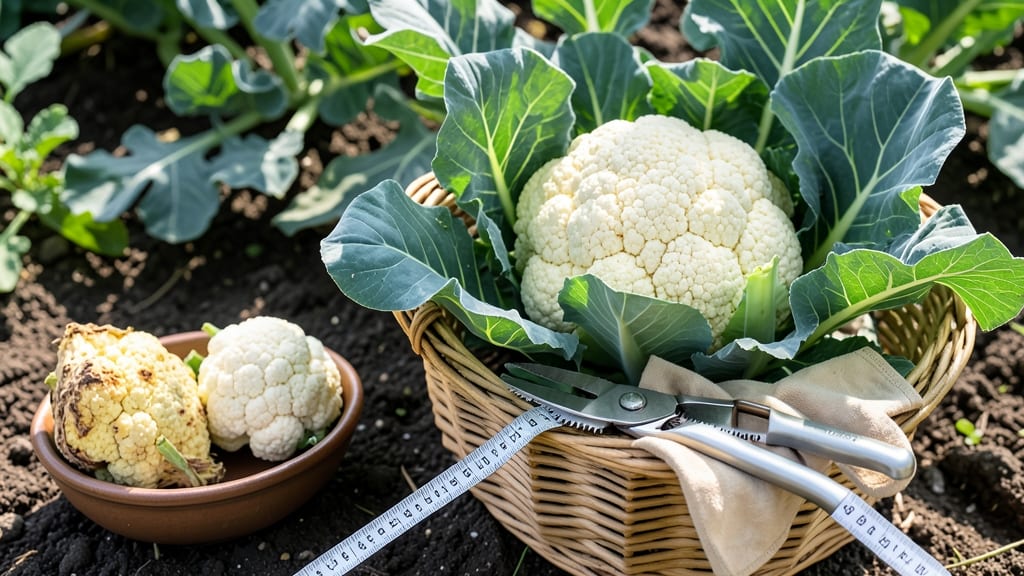
Most cauliflower varieties reach harvest readiness between 70-100 days after planting, but visual cues matter more than days alone. A 4-6 inch diameter is the sweet spot for most types, though dwarf varieties may mature slightly smaller. Don’t let the head grow beyond 6 inches—that’s when bitterness creeps in.
Here’s your visual harvest checklist to reference while inspecting your plants:
For white cauliflower varieties, aim for a creamy white hue with no green tinges. Purple varieties should maintain their rich color without fading to brown. The outer leaves should still look healthy but may start curling slightly—this is normal and indicates maturity.
Never harvest based on days alone—weather conditions and variety differences can shift timelines. For example, Romanesco cauliflower has a fractal pattern and often matures slightly later than traditional types. Always double-check with the firmness test—a soft curd means it’s overripe.
Use a sharp knife to cut the head about 1 inch below the curd. This leaves room for side shoots to develop, giving you a second harvest in 2-3 weeks. For continuous production, remove only the main head and let smaller side buds grow.
If your cauliflower heads start splitting or turning yellow, you’ve waited too long. These are clear signs the plant is redirecting energy to seeds. In this case, harvest immediately—even if the size isn’t perfect—or the curd will become woody and inedible.
Pro tip: Morning harvests are ideal because the curds are firmer after overnight cooling. Store harvested heads in the crisper drawer of your fridge for up to 5 days to maintain freshness. For longer storage, blanch and freeze the florets.
With this harvest checklist in hand, you’ll never second-guess when to pick your cauliflower again. The difference between a perfect curd and a bitter disappointment comes down to these simple checks—so make them part of your routine! 🌱
Common harvesting mistakes & how to avoid them
Waiting even a day too long to harvest cauliflower can turn your crisp florets into tough, bitter curds. The perfect harvest window is brief, and missing it means wasted effort.
I’ve seen gardeners lose entire harvests because they didn’t recognize the subtle signs of overmaturity. Let’s fix that with these key mistakes—and how to sidestep them.
One of the biggest errors is ignoring head tightness. A ready-to-harvest cauliflower head stays firmly closed, with leaves hugging the curds. If you see loose florets or yellowing outer leaves, it’s already past its prime.
Even worse, some gardeners wait until the head turns yellowish-brown, which signals it’s overripe and woody.
Another critical mistake is harvesting at the wrong time of day. Early morning is ideal because the heads are cool and crisp. Harvesting in the heat of the day can cause wilting, even if the plant is perfectly ripe.
Pro tip: Use a sharp knife to cut the stem about 1-2 inches below the head—this leaves room for side shoots to form.
⚠️ CALL OUT WARNING ⚠️
🚨 Overmature Cauliflower = Bitter Disaster
Don’t let these red flags fool you into waiting too long:
- 🟡 Yellowing outer leaves = Head is opening and toughening
- 📏 Curds larger than 8 inches = Overgrowth = Bitterness
- 🪴 Stem snaps with resistance = Head is past prime
Harvest when the head is firm, white (or variety color), and 6-8 inches wide—before these signs appear!
Many gardeners also miss the chance to harvest side shoots for continuous yield. After cutting the main head, the plant often produces smaller side shoots in the leaf axils. These are just as delicious but require regular monitoring.
Once the main head is gone, watch for new buds forming near the base—harvest these when they reach 3-4 inches in diameter.
Seasonal timing plays a huge role too. In hot climates, cauliflower matures faster and may need harvesting earlier. Conversely, in cooler zones, heads can take longer to reach harvest size.
Always check your local frost dates and adjust your harvest schedule to avoid losing plants to cold snaps before you’ve harvested.
Finally, never skip the firmness test. Gently squeeze the head—it should feel solid, like a firm apple. If it gives slightly or feels spongy, it’s overripe. With these tips, you’ll never miss the sweet spot for harvesting again. Your future meals will thank you!