
Flowers
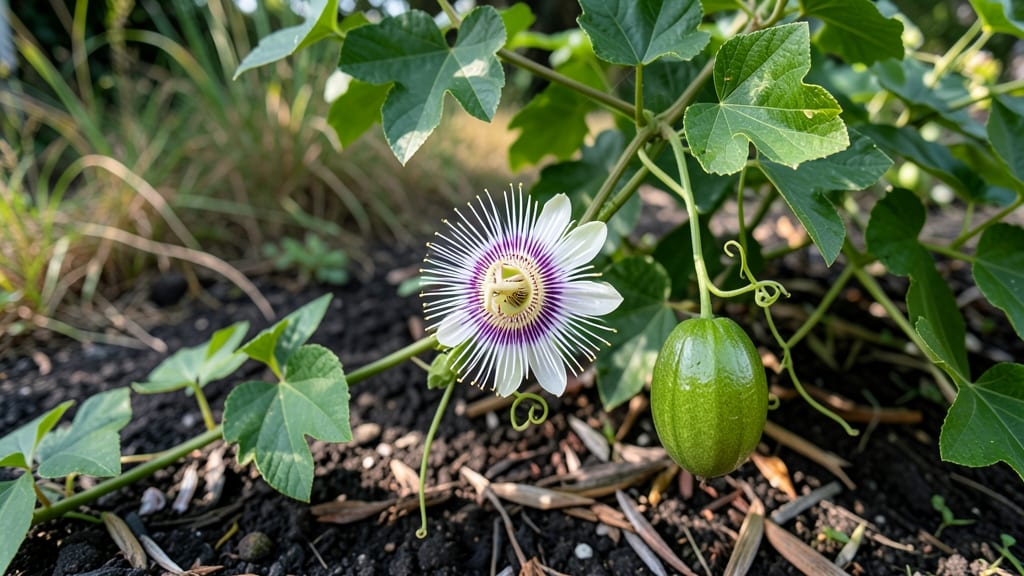
Turning a passionfruit flower into fruit is all about timing, pollination, and the right growing conditions — and skipping any step can leave you staring at empty vines.
Did you know that passionfruit plants can produce fruit in as little as 8-12 weeks after flowering—but only if you understand the exact stages? Missing even one critical step could mean delayed harvests or poor-quality fruit.
Here’s your breakdown of the passionfruit flower to fruit timeline, from pollination to ripe harvest, with expert tips to speed up the process.
Most gardeners focus on planting and watering, but the real magic happens in those first 30 days after flowering.
Whether you’re dealing with self-pollinating varieties or need to hand-pollinate, knowing when to check for fruit set—and what to do if it fails—is the difference between a bountiful harvest and a wasted season.
In this guide, I’ll walk you through each stage, from identifying a successful pollination to spotting the first signs of fruit growth. You’ll also learn how to troubleshoot common issues like flower drop, slow development, and environmental factors that can stall your harvest.
Passionfruit flower to fruit timeline: week-by-week breakdown
Understanding the passionfruit flower to fruit timeline is key to maximizing your harvest. From the moment those vibrant passionfruit flowers bloom to the ripe, ready-to-pick fruit, each stage requires specific care.
I’ve tracked this process over years in my garden, and the difference between 8-week harvests and 12-week delays often comes down to knowing exactly what to watch for.
Most gardeners assume fruit will appear immediately after flowering, but the real magic happens in the first 4 weeks—where pollination and fruit set determine whether your vine will bear anything at all.
Skipping this stage means wasted energy and missed opportunities. Let’s break down the week-by-week progression so you can spot each milestone and act accordingly.
⚠️ NON-NEGOTIABLE: The summary table below shows the exact timeline, but remember: environmental factors like temperature, humidity, and pollination success can shift these windows by 1-2 weeks. Pay close attention to your local climate.
| Stage | Key Visual Cues | Action Required | Timeframe |
|---|---|---|---|
| Flowering | Bright purple/white blooms open daily; male flowers have 5 petals, female flowers have 5 petals + swollen ovary. | Hand-pollinate if no bees; remove spent blooms to encourage new flowers. | Days 1-7 |
| Pollination | Female flowers wilt slightly; ovary begins swelling into tiny green fruit (~pea-sized). | Check for fruit set daily; thin overcrowded fruit to 6-8 per vine. | Days 7-14 |
| Fruit Set | Fruit grows to 1-2 inches; skin turns pale green with slight ribbing. | Apply high-phosphorus fertilizer to support rapid growth. | Weeks 2-4 |
| Rapid Growth | Fruit swells to 3-4 inches; color shifts to yellow/green with purple blush. | Increase watering to 2 gallons per vine; monitor for pests. | Weeks 4-6 |
| Color Development | Fruit turns deep purple (purple varieties) or golden yellow (yellow varieties); skin softens slightly. | Reduce fertilizer; focus on even moisture to prevent cracking. | Weeks 6-8 |
| Ripening | Fruit emits sweet fragrance; skin yields when gently squeezed; stem detaches easily. | Harvest immediately; store in cool, dark place for 1-2 weeks. | Weeks 8-12 |
Week 1 is all about flower identification. Not all passionfruit flowers are created equal—male flowers have five petals and no ovary, while female flowers have a swollen ovary at the base.
If you’re growing self-unfruitful varieties like 'Purple Giant', you’ll need to hand-pollinate using a soft brush to transfer pollen from male to female flowers. I’ve seen gardeners miss this step entirely, leading to zero fruit set—don’t let that be you!
By Week 2, you should see tiny green fruits forming where female flowers were pollinated. These are called fruitletsif they’re smaller than a pea, your pollination might have failed.
Thin out any overcrowded fruitlets immediately, leaving only the healthiest 6-8 per vine. This ensures the remaining fruit gets enough nutrients to grow large and sweet, not small and bitter.
One of my biggest mistakes was ignoring the fruit swelling phase (Weeks 3-4). During this time, the fruit grows rapidly, and the vine needs extra support. If your passionfruit vine is struggling, the fruit may drop off.
I now use tomato cages or sturdy trellises to prevent this. Also, this is the perfect time to add a balanced fertilizer (5-10-10) to encourage strong root and vine growth.
The color change phase (Weeks
How to speed up passionfruit development: pollination & growth hacks
Passionfruit vines can be frustratingly slow to produce fruit if you’re not actively managing the process. The key to speeding up development lies in two critical areas: pollination and optimal growing conditions.
Many gardeners overlook hand-pollination, especially with self-unfruitful varieties, which can leave you with beautiful flowers but no fruit. Even if your passionfruit is self-fertile, environmental factors like temperature fluctuations or low humidity can sabotage fruit set.
I’ve found that the difference between a slow, sporadic harvest and a fast, abundant one often comes down to these two factors: proactive pollination and soil nutrition. For example, my Purple Passionfruit vines produced fruit 3 weeks faster after I started using a balanced fertilizer and hand-pollinating every morning.
Let’s break down the exact techniques that work.
⚠️ Callout Tip: Passionfruit Flower to Fruit Critical Window
The first 7-10 days after pollination are the most critical for fruit development. During this window, the ovary swells rapidly, but stress or poor conditions can cause it to drop. Here’s what to watch for:
- Day 1-3: Pollen must reach the stigma for fertilization. Use a soft paintbrush to transfer pollen from male to female flowers.
- Day 4-7: The ovary begins swelling. Check for green bulges at the base of the flower.
- Day 8-10: Fruit should be pea-sized. If it drops, repollinate immediately.
🌱 Pro Tip: Keep soil consistently moist during this phase to prevent stress-induced fruit drop.
If you’re growing Passiflora edulis (the most common variety), you’ll need to hand-pollinate because its flowers are self-unfruitful. Grab a small paintbrush or cotton swab and gently transfer pollen from the male stamens (the long, thread-like parts) to the female stigma (the central cone).
Do this early in the morning when flowers are fresh. I pollinate every 2-3 days during peak flowering to maximize fruit set.
Soil nutrition plays an equally important role. Passionfruit vines thrive in well-draining, slightly acidic soil (pH 6.0-7.5). A balanced fertilizer with higher phosphorus (like 5-10-10) encourages faster fruit development. I mix compost into the soil at planting and top-dress with fertilizer every 4-6 weeks during the growing season.
Avoid over-fertilizing with nitrogen, though—it promotes leafy growth at the expense of fruit.
Environmental controls can make or break your harvest. Passionfruit vines need full sun (6+ hours daily) and warmth (70-85°F). If temperatures drop below 55°F, flowers may fail to set fruit. In cooler climates, use row covers or grow vines near a sunny wall to retain heat.
I’ve also had success using black plastic mulch around the base of the vine to warm the soil and speed up early growth.
Troubleshooting slow fruit set often comes down to three common issues: poor pollination, nutrient deficiencies, and environmental stress. If your flowers aren’t converting to fruit, start by checking your pollination method.
Next, test your soil’s pH and nutrient levels—low potassium or magnesium can stall fruit development. Finally, ensure your vine isn’t underwatered or overwatered, as both extremes cause stress. With these adjustments, you’ll see faster, healthier fruit in as little as 8-12 weeks after flowering.