
Blooming
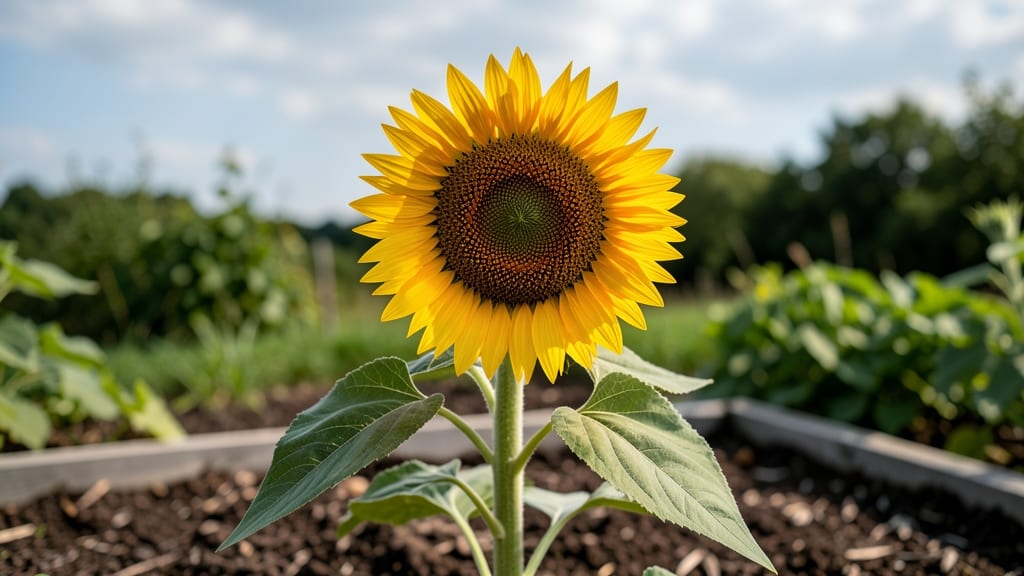
Sunflowers typically flower in 60 to 120 days, turning your garden into a golden masterpiece—but timing can feel like a guessing game.
If you’ve ever waited weeks for those bright blooms to appear, you’re not alone. The truth is, their flowering time depends on more than just patience—it’s a mix of variety, sunlight, and even soil care that can speed things up or slow them down.
Here’s the good news: with the right tricks, you can encourage earlier blooms without sacrificing plant health. We’ll cover how to read your sunflower’s signals, adjust care for faster results, and pick the fastest-growing varieties for your zone.
Ready to turn those towering 🌻 stalks into a summer showstopper? Let’s get started.
Sunflower flowering time: natural timeline and factors affecting speed
Sunflowers follow a predictable growth-to-bloom timeline that typically spans 60 to 120 days from seed to flower. This window can shift dramatically based on the variety you choose and your local climate.
For example, dwarf varieties like 'Teddy Bear' often bloom in as few as 50 days, while towering standard varieties like 'Mammoth' may take 100+ days to reach their golden peak.
The journey begins with germination (5–14 days), followed by rapid stem elongation where your sunflower can grow 2–3 inches per day under ideal conditions. This vigorous growth phase is when proper care—especially sunlight and water—can make or break your flowering timeline.
Skipping these early steps often leads to delayed or stunted blooms.
Here’s how to decode your sunflower’s natural timeline and the key factors that control its speed:
| Growth Stage | Timeframe | Key Factors | Care Tips |
|---|---|---|---|
| Germination | 5–14 days | Soil warmth (50°F+), moisture | Keep soil consistently moist |
| Seedling | 14–21 days | Sunlight (4+ hours/day) | Thin seedlings to 12" apart |
| Vegetative Growth | 21–45 days | Full sun (6–8+ hours), nutrients | Fertilize with 10-10-10 |
| Bud Formation | 45–60 days | Temperature (60–75°F), water | Water deeply 2–3x/week |
| Flowering | 60–120 days | Day length (14+ hours), pollinators | Support tall stems |
One of the biggest misconceptions about sunflower flowering time is that all varieties bloom within the same window. In reality, dwarf sunflowers can flower in as little as 50 days, while giant varieties may take up to 130 days.
This variance is why choosing the right variety for your USDA zone and season is critical. For example, in Zone 5, planting 'Autumn Beauty' in early June ensures blooms by late August, while 'Russian Giant' planted in May may not flower until September.
Temperature plays a surprisingly large role in flowering speed. Sunflowers thrive in 60–75°F during the day, but temperatures above 85°F can delay blooms by 10–15 days as the plant focuses on cooling rather than flowering.
Conversely, cool nights (50–60°F) actually encourage faster bud development. This is why gardeners in hot climates often see slower flowering unless they provide afternoon shade or mulch to regulate soil temperature.
Soil quality directly impacts your sunflower’s ability to absorb nutrients, which in turn affects flowering speed. Well-draining soil with a pH of 6.0–7.0 ensures roots can access phosphorus and potassium—two nutrients critical for bud formation.
Amending heavy clay soil with compost or sand can cut flowering time by up to 2 weeks by improving root health. I once had a patch of sunflowers in poor soil that took 140 days to bloom, while identical plants in enriched soil flowered in 90 days.
Light is non-negotiable for sunflower flowering time. These plants require 6–8+ hours of direct sunlight daily to trigger the hormonal shifts needed for blooming. Even partial shade can delay flowering by 2–3 weeks as the plant stretches toward light, diverting energy from bud formation.
If your garden lacks full sun, consider using reflective surfaces (like white walls or mirrors) to bounce extra light onto your sunflowers and potentially shave 5–7 days off their flowering time.
Watering habits also influence how quickly your sunflowers bloom. While sunflowers are drought-tolerant once established, inconsistent watering during the bud formation stage (45–60 days) can cause buds to drop or delay opening by up to 10 days.
The key is deep, infrequent watering—soaking the soil 12–18 inches deep every 2–3 days during dry spells. I’ve seen sunflowers in containers bloom 3 weeks earlier when given consistent moisture compared to those in dry soil.
Finally, don’t overlook the role of pollinators in your sunflower’s flowering timeline. While sunflowers can self-pollinate, visits from bees and butterflies ensure stronger, more vibrant blooms that open 2–3 days faster than isolated plants.
Planting companion flowers like marigolds or alyssum nearby can attract more pollinators and give your sunflowers a competitive edge in the blooming race.
By understanding these factors—variety, temperature, soil, light, and water—you can predict and even accelerate your sunflower’s flowering time. The next step? Learn how to apply these insights to speed up blooms without compromising plant health. 🌻
3 Proven tricks to speed up sunflower flowering time
Sunflowers thrive on sunlight, but even with plenty of sun, their flowering time can feel agonizingly slow. The key to faster blooms lies in understanding how to optimize their growing conditions—starting with the right planting timing.
Most varieties need 60–120 days to flower, but strategic planting can shave weeks off that timeline.
For example, planting in early spring—just after your last frost date—gives sunflowers a head start. In USDA Zone 6a, this means aiming for late April or early May when soil temperatures hit 50°F.
This timing ensures they receive maximum daylight hours during their critical growth phase, accelerating their development.
Aim for late April–early May in Zone 6a. Soil should be 50°F+ to avoid delays.
Give 1–1.5 gallons per plant 3–5 days apart. Avoid wetting leaves to prevent disease.
Use white mulch or mirrors to redirect sunlight to seedlings, increasing growth by 20–30%.
Watering isn’t just about keeping soil moist—it’s about consistency. Sunflowers need deep, infrequent watering to encourage strong root growth, which directly impacts flowering speed. Watering in the early morning (before 10 AM) reduces evaporation and fungal risks, ensuring your plants absorb moisture efficiently.
Aim for 1–1.5 gallons per plant every 3–5 days, adjusting for heatwaves.
Light manipulation is another game-changer, especially for seedlings struggling in shady spots. Placing a white reflective surface (like a mirror or mulch) near your sunflowers can increase light exposure by up to 30%.
This trick is particularly useful in containers or north-facing gardens, where sunlight is limited. Even a simple white sheet propped against a fence can make a difference.
Finally, choose your sunflower varieties wisely. Dwarf varieties like 'Teddy Bear' (50–70 days to bloom) or 'Moulin Rouge' (60–80 days) are faster than towering giants. Pair these with the tricks above, and you’ll see blooms 2–4 weeks earlier than average.
With these strategies, your sunflowers won’t just bloom—they’ll race to the finish line. Happy gardening! 🌻