
Flowers
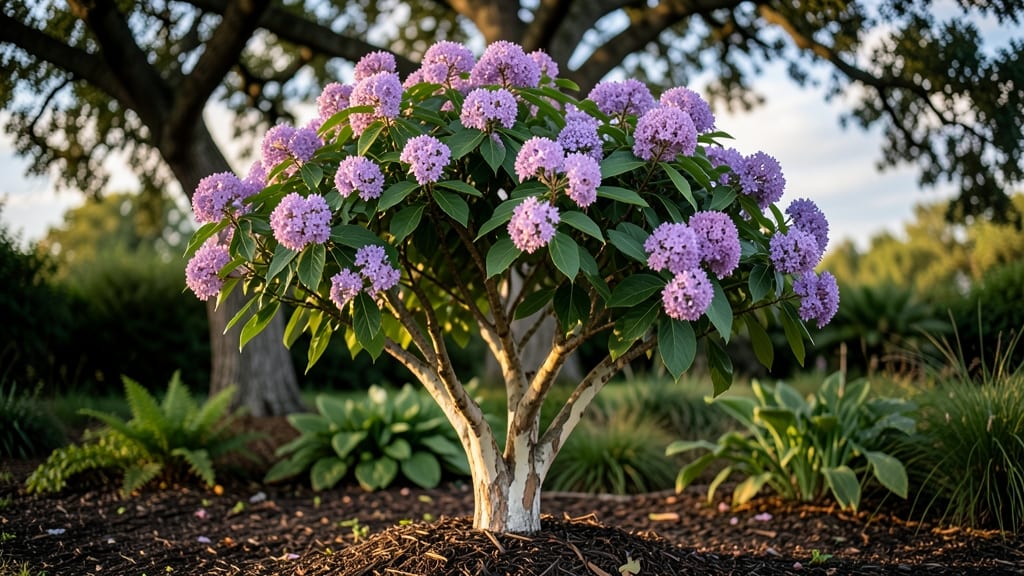
Trees with little purple flowers bring a soft, romantic charm to any garden, turning ordinary spaces into dreamy landscapes with minimal effort.
Imagine a backyard bursting with delicate purple blooms year after year—no fuss, no deadheading, just effortless color from a single tree. These hidden gems transform landscapes with their dainty flowers while requiring minimal care.
From the Japanese Snowbell with its bell-shaped blossoms to the Purple Smoke Bush that smolders with velvety hues, these trees deliver year-round visual interest without the upkeep of annuals. They thrive in full sun or partial shade, making them perfect for almost any yard.
Discover the best five varieties for your climate, how to pair them with other plants for maximum impact, and simple tips to keep them blooming beautifully for decades.
5 Best trees with tiny purple flowers for year-round beauty
If you dream of a garden filled with delicate purple blooms that require almost no effort, you're in luck! These five stunning trees offer tiny purple flowers that transform any landscape into a dreamy, romantic retreat.
Unlike high-maintenance annuals, these trees provide season-long interest with minimal care—just plant them once and enjoy their beauty for years.
The secret to their success? Low-maintenance growth, drought tolerance, and adaptability to various climates. Whether you're designing a cottage garden, a modern urban oasis, or a wildlife-friendly backyard, these trees deliver elegant purple hues that attract pollinators while keeping your garden looking effortlessly chic.
Let’s explore the top five varieties that bring year-round color with almost no fuss.
🌱 Comparison Table: Top 5 Trees with Tiny Purple Flowers
| Tree Name | Bloom Time | USDA Zones | Mature Height | Sunlight Needs | Unique Feature |
|---|---|---|---|---|---|
| Japanese Snowbell (Styrax japonica) | Late spring | 5-8 | 15-25 ft | Partial shade | Fragrant, bell-shaped blooms |
| Purple Smoke Bush (Cotinus coggygria 'Royal Purple') | Early summer | 4-8 | 10-15 ft | Full sun | Smoky purple foliage + pinkish blooms |
| Amelanchier (Serviceberry) (Amelanchier lamarckii) | Early spring | 3-9 | 15-25 ft | Full sun to part shade | Edible berries + white/pink flowers |
| Weigela (Weigela florida 'Wine and Roses') | Late spring | 4-8 | 6-10 ft | Full sun | Tubular purple-pink blooms |
| Dwarf Lilac (Syringa meyeri 'Palibin') | Early to mid-spring | 3-7 | 3-5 ft | Full sun | Compact size + fragrant lilac blooms |
First up is the Japanese Snowbell, a dramatic understory tree with bell-shaped purple flowers that hang like chimes in the breeze. This fragrant beauty thrives in partial shade, making it perfect for woodland gardens or as an accent near patios.
Its delicate blooms appear in late spring, followed by small red berries that add winter interest. With a mature height of 15-25 feet, it’s ideal for larger landscapes where you want height without overwhelming your space.
The Purple Smoke Bush steals the show with its smoky purple foliage and pinkish-purple flower plumes that resemble cotton candy. This drought-tolerant shrub (yes, it’s technically a shrub but often pruned like a small tree) loves full sun and well-draining soil.
Its unique foliage color changes with the seasons—deep purple in spring, bronze in fall, and even reddish hues in winter. Plant it as a specimen plant or in groups for a dramatic visual impact that’s hard to beat.
Next, meet the Amelanchier, or Serviceberry, a multi-season star with white to pink flowers in spring, edible blue berries in summer, and vibrant fall foliage. While its flowers aren’t technically purple, their soft pink tones pair beautifully with true purple bloomers in your garden.
This versatile tree handles full sun to part shade and is deer-resistant, making it
How to choose the perfect purple-flowering tree for your climate
Selecting the right purple-flowering tree starts with understanding your USDA hardiness zone and local conditions. Whether you're in zone 3 with harsh winters or zone 9 with mild climates, the wrong choice can mean sparse blooms or even plant death.
I’ve found that Japanese Snowbell thrives in zones 5-8, while Purple Smoke Bush handles zones 5-9 with ease—both delivering stunning purple hues.
Your tree’s sunlight needs are just as critical. Some varieties, like Dwarf Lilac, demand full sun (6+ hours daily) for vibrant blooms, while others, such as Amelanchier (Serviceberry), tolerate partial shade (3-6 hours of sun).
Skimping on sunlight often results in fewer flowers and leggy growth, so always match the tree to your yard’s light conditions.
- 🌱 Sunlight Needs: Full sun (6+ hrs) for Dwarf Lilac; partial shade (3-6 hrs) for Amelanchier
- 🌡️ Hardiness Zones: Zones 3-5: Japanese Snowbell or Weigela; Zones 6-9: Purple Smoke Bush
- 🌿 Soil Types: Well-draining soil for all varieties; amend clay soil with compost
- 💧 Water Needs: Deep watering weekly for newly planted trees; reduce to bi-weekly once established
- 🌷 Companion Plants: Pair with hostas (shade) or lavender (sun) for contrast
Don’t overlook soil types—most purple-flowering trees prefer well-draining soil with a slightly acidic to neutral pH (6.0-7.0).
If your yard has heavy clay, I recommend amending the soil with organic compost or sand to improve drainage. Purple Smoke Bush, for example, can tolerate drier soils once established, while Weigela may need consistent moisture to prevent leaf scorch.
For maximum visual impact, consider companion planting. A Dwarf Lilac planted near white hydrangeas creates a stunning purple-and-white contrast, while pairing Amelanchier with ferns adds texture to shady spots. I’ve also seen Purple Smoke Bush paired with golden ornamental grasses for a modern, low-maintenance look.
Finally, check your local microclimate. Trees near large buildings or fences may experience less wind and more heat retention, while those in open fields get more sun and wind exposure.
Adjust your choice accordingly—Weigela, for instance, handles wind better than Japanese Snowbell, which prefers sheltered spots.
With the right purple-flowering tree, your garden will burst with color for decades with minimal effort. Start by matching your climate, sunlight, and soil, then let nature do the rest! 🌳