
Orchid Care
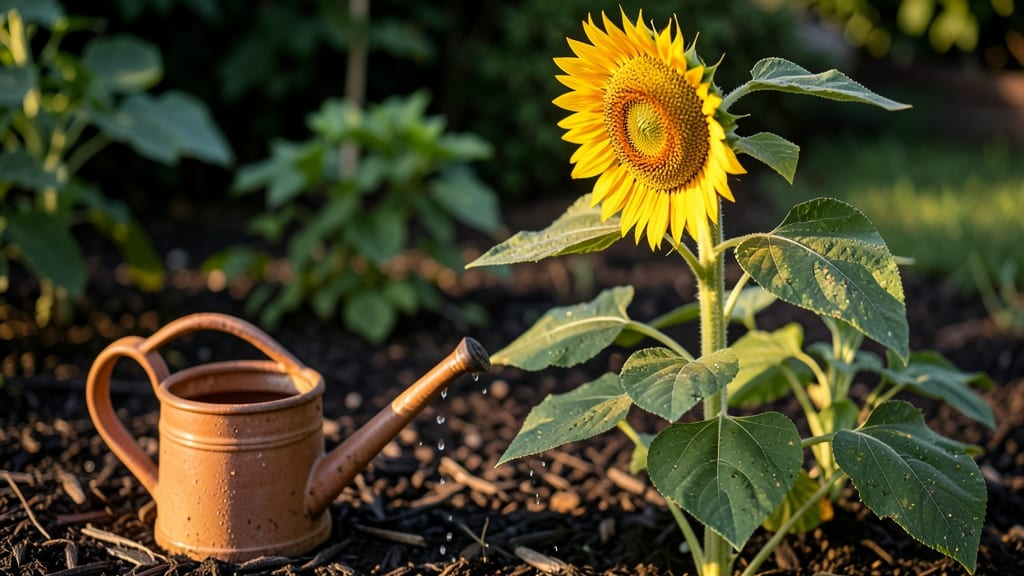
Growing sunflowers 🌻 requires the right watering balance to fuel their rapid growth from seedlings to towering giants—and most gardeners either drown or starve them by accident.
Too little water stunts their height, while too much rots the roots before they reach their 10-foot potential. The trick is keeping the soil consistently moist but never soggy, especially in Zone 6a where spring rains can quickly turn to drought.
Below, I’ll walk you through the exact watering schedule by growth stage—from April seedlings to October harvest—plus how to adjust for containers, heatwaves, and even rainy spells.
You’ll learn when to water, how deep to go, and the telltale signs your sunflowers are thirsty or drowning. No guesswork, just science-backed tips to grow sunflowers that reach for the sky.
How much water sunflowers need by growth stage (with soil moisture guide)
Sunflowers thrive on consistent moisture, but their water needs change dramatically as they grow from tiny seedlings to towering giants. Understanding these shifts is key to avoiding stunted growth or root rot. Each stage—seedling, vegetative, flowering, and seed production—demands a different approach to hydration.
The secret to perfect watering lies in soil moisture checks. Stick your finger 1-2 inches deep—if it feels dry, it's time to water. For sunflowers, overwatering is just as dangerous as underwatering.
Let’s break down the exact water needs at every growth phase to keep your sunflowers reaching for the sky.
During the seedling stage, young sunflowers need frequent, shallow watering to encourage root development. Use a spray bottle or gentle hose to avoid dislodging seeds. Aim for ½ gallon per plant every 2-3 days, keeping the soil consistently moist but never soggy.
Overwatering at this stage can lead to fungal diseases like damping-off.
As sunflowers enter the vegetative stage (3-6 weeks), their roots expand rapidly, demanding more water and deeper hydration. Increase your watering to 1-1.5 gallons per plant every 3-4 days.
Check soil moisture by inserting your finger 2 inches deep—if it’s dry, it’s time to water. This is also when mulching becomes crucial to retain moisture and regulate soil temperature.
The flowering stage (6-10 weeks) is when sunflowers need the most water to support their massive blooms. Reduce frequency slightly to every 4-5 days but increase volume to 1.5-2 gallons per plant.
Focus on deep watering to encourage roots to grow deeper, which improves drought resistance later. If you notice wilting or drooping petals, it’s a sign they need immediate hydration.
Once sunflowers reach the seed production stage (10+ weeks), their water needs decrease slightly, but consistency is key. Water every 5-7 days with 1 gallon per plant, allowing the soil to dry out slightly between waterings.
This phase is when sunflowers become most drought-tolerant, but sudden dry spells can still cause premature seed drop. Reduce watering further if your region experiences prolonged drought.
In hot, dry climates, sunflowers may need daily watering during peak summer months, while cooler regions can stretch watering to every 7-10 days. Always water in the early morning to minimize evaporation and prevent fungal growth.
Avoid wetting the leaves, especially in humid areas, to reduce the risk of powdery mildew.
For container-grown sunflowers, watering needs are higher due to limited soil volume. Check soil moisture daily in extreme heat and water every 2-3 days, providing 1-2 gallons per container. Ensure pots have drainage holes to prevent root rot, a common issue in overwatered containers.
Monitor your sunflowers closely for signs of stress. Yellowing leaves or drooping stems often indicate overwatering, while crispy edges or wilting signal underwatering. Adjust your watering schedule based on weather conditions, soil type, and your sunflower’s specific growth stage.
With the right balance, your sunflowers will reward you with vibrant blooms and towering height all season.
Best watering schedule for sunflowers: frequency, timing, and techniques
Watering sunflowers isn't just about keeping the soil damp—it's about timing, depth, and technique to fuel their rapid growth. Morning watering is my go-to because it gives leaves time to dry, reducing fungal diseases that thrive in damp evenings.
Aim for 1-2 gallons per plant every 2-3 days during peak summer heat, but adjust based on your soil type and container size.
Container-grown sunflowers dry out faster than in-ground plants, so check soil moisture daily by sticking your finger 1-2 inches deep. If it feels dry, water thoroughly until it drains from the bottom.
In-ground sunflowers need deeper watering—aim for 6 inches down—to encourage strong root development that supports their 10-foot stature.
🌱 Key Watering Tips for Sunflowers
- 1. Morning watering (6-9 AM) prevents fungal diseases and reduces evaporation.
- 2. Deep watering (6 inches) encourages roots to grow downward for stability.
- 3. 1-2 gallons per plant every 2-3 days in summer; reduce to 1 gallon in cooler months.
- 4. Container plants need daily checks—drain excess water to avoid root rot.
- 5. Mulch heavily (3-4 inches) to retain moisture and suppress weeds.
Adjust your watering schedule based on weather conditions. During droughts, increase frequency to every 1-2 days, but reduce to every 5-7 days in fall when growth slows. Overwatering is a common mistake—sunflowers are surprisingly drought-tolerant once established, so always let the top 1-2 inches of soil dry between waterings.
For container sunflowers, use self-watering pots or drip irrigation to maintain consistent moisture. In-ground plants benefit from soaker hoses placed at the base, delivering water slowly to the roots.
Avoid overhead sprinklers, which can damage leaves and promote disease. If your sunflowers' leaves start wilting or yellowing, it’s often a sign of overwatering or poor drainage.
Pro tip: Mulch around your sunflowers with straw or wood chips to lock in moisture and keep roots cool. This is especially helpful in Zone 6a where summer heat can dry out soil quickly.
Mulch also suppresses weeds that compete for water, giving your sunflowers the resources they need to reach their full height.
Remember, sunflowers thrive on consistency. Whether you're hand-watering or using irrigation, stick to a routine and monitor soil moisture closely. With the right schedule, your sunflowers will grow tall, strong, and ready for harvest by October.