
Flowers
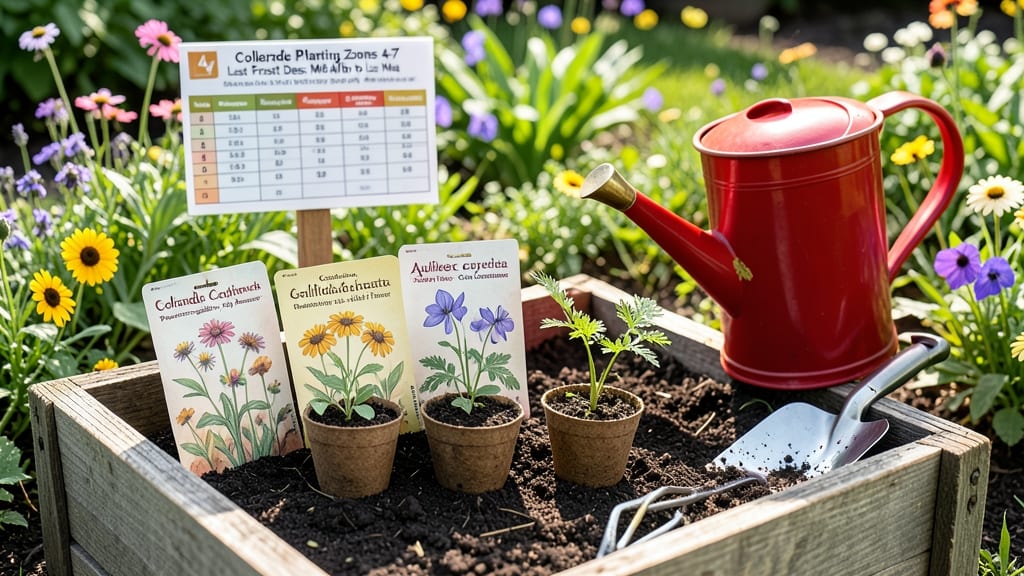
You can plant flowers in Colorado once the soil warms to 50°F and the last frost has passed—typically between March 15 and May 15 for most zones.
Colorado’s unpredictable frost dates can turn a beautiful flower garden into a risky gamble—unless you know the exact timing for your USDA zone and flower type.
Spring planting is all about patience: rush it, and a late frost will nip young shoots. Fall, on the other hand, rewards early starters with vibrant blooms the following year.
In this guide, I’ll break down the best planting windows for your zone, the hardiest flowers for Colorado’s climate, and how to stretch your season with simple tricks.
Colorado’s frost-free planting deadlines by USDA Zone (2024 guide)
Colorado’s diverse elevations create dramatic frost-free windows—from Denver’s Zone 5 to Southwest Colorado’s Zone 7. Missing the last spring frost or planting too early can kill tender flowers like marigolds or petunias.
My 2024 planting calendar breaks down exact deadlines by zone, so you can time blooms perfectly without frost damage.
Spring planting in Colorado hinges on soil temperature (aim for 50°F+) and frost predictions. The average last frost ranges from April 15 in Zone 7 to May 15 in Zone 4.
Fall planting must end before the first frost, which arrives as early as September 15 in high-altitude zones or as late as October 30 in lower elevations.
Here’s your zone-by-zone planting timeline for annuals and perennials, including cold-hardy workhorses like coneflowers and tender annuals such as geraniums that need late-May starts.
In Zone 4 (think Aspen or Leadville), wait until
Best flowers to plant in Colorado by season (cold-hardy vs. tender varieties)
Colorado’s diverse climate zones mean your flower choices should match your USDA zone and elevation. Cold-hardy perennials like coneflowers and lavender thrive year after year, while tender annuals like marigolds need precise timing to avoid frost damage. Let’s break down the best options for each season and hardiness level.
For spring planting, focus on perennials and early annuals that can handle Colorado’s late frosts. In fall, prioritize bulbs and hardy perennials to establish roots before winter. High-altitude gardens (like those in Zone 5) need extra attention to heat-tolerant varieties that won’t wilt in summer.
- March-April (Spring): Plant cold-hardy perennials like columbine and black-eyed Susan once soil reaches 50°F. Avoid frost-sensitive annuals until May 1.
- May-June (Late Spring): Introduce heat-loving annuals like zinnias and sunflowers after last frost (April 15–May 15). Use row covers for tender varieties.
- August-September (Fall): Plant bulbs (tulips, daffodils) and hardy perennials like sedum for early spring blooms. Avoid tender annuals after September 15.
- October (Late Fall): Focus on winter-hardy flowers like winter jasmine or ornamental grasses. Mulch to protect roots from freezing temps.
If you’re in Zone 6 or 7, you can push your spring planting slightly earlier (late March) for cold-tolerant annuals like pansies and snapdragons. These thrive in cool weather and add early color to your garden.
For high-altitude areas (e.g., Zone 5), opt for slow-growing perennials like penstemon or yarrow, which handle shorter growing seasons.
For summer blooms, prioritize drought-resistant annuals such as lantana or portulaca. These heat-lovers thrive in Colorado’s dry climate and require minimal water once established. Pair them with perennials like bee balm for continuous season-long color.
Fall is the perfect time to diversify your garden with late-blooming perennials like asters or chrysanthemums. These frost-resistant plants add autumn interest and often rebloom the following spring. Bulbs planted in fall (e.g., crocuses) will surprise you with early spring blooms before annuals even sprout.
Remember: Soil prep is key. Amend your garden beds with compost in early spring or fall to improve drainage and fertility. Mulch heavily in winter to protect roots from freeze-thaw cycles, which can damage tender varieties.
With the right timing and hardiness, your Colorado garden can bloom beautifully year-round.