
Planting
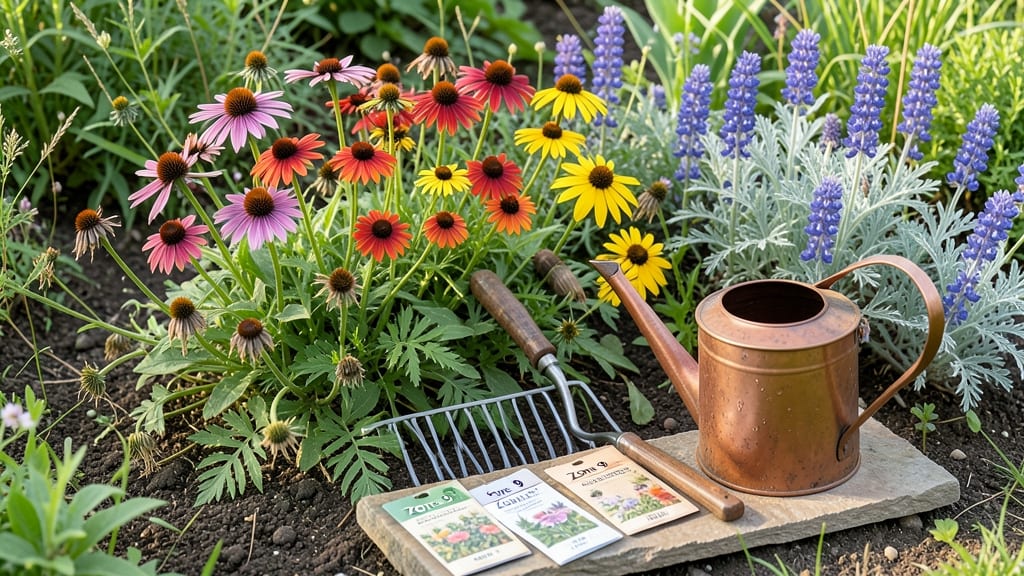
Planting wildflower seeds in Zone 9 at the right time ensures vibrant blooms all year—fall is the best window for most varieties, but timing matters more than you might think.
Picture this: you scatter seeds in late summer, expecting a burst of color by spring, only to find sparse growth or no blooms at all.
That’s because Zone 9’s mild winters and intense summers demand precision—plant too early, and seeds may rot; too late, and drought or heat can stall germination.
Here’s the game-changer: fall planting (October–December) gives wildflowers like Black-Eyed Susans and Coreopsis a head start, while early spring (February–March) works for heat-loving annuals. I’ll break down the exact months, microclimate tweaks, and seed prep to guarantee a year-round display of 🌼.
You’ll also discover how to adjust for summer droughts, which seeds thrive in your specific corner of Zone 9 (Southern California, Arizona, or Florida), and the simple post-planting care that keeps your wildflowers flourishing with minimal effort.
Optimal planting months for wildflower seeds in Zone 9
Zone 9’s mild winters and hot summers create perfect conditions for wildflowers—but timing matters. Planting at the wrong time can mean sparse blooms or seeds washing away in sudden rains.
I’ve found that fall and early spring are the sweet spots, but each season offers unique advantages for different wildflower varieties.
In Zone 9, where frost is rare but summer heat is intense, native wildflowers like California poppies and desert marigolds thrive when sown in cooler months.
Annuals like cosmos and zinnia also perform best when given a head start before summer’s peak temperatures. Let’s break down the best months for each planting window.
🌱 Did You Know? Many wildflowers in Zone 9 actually germinate better in fall because cooler temps reduce competition from weeds and ensure steady moisture. This is why October through December is my top recommendation for most varieties.
The fall window (October–December) is my absolute favorite for Zone 9 gardens. Seeds sown in these months take advantage of natural winter rains, which provide consistent moisture without the risk of overwatering or fungal issues.
Native species like California poppies and desert marigolds germinate best this way, and you’ll see vibrant blooms as early as March or April.
For winter planting (January–February), focus on cool-season annuals like sweet alyssum or larkspur. These varieties tolerate light frosts and establish roots before the heat arrives. However, avoid planting in January if your area experiences occasional frost—even Zone 9 can get chilly in high desert regions.
Spring planting in February–March works well for heat-loving annuals like cosmos and zinnia. These plants thrive when given a 4–6 week head start before summer’s peak. I’ve had the best success with pre-moistened seed mixes during this window to combat Zone 9’s dry springs.
Planting in April or later is risky unless you’re using heat-tolerant varieties. Summer heat can cause seeds to dry out before germinating, and established plants may struggle without daily watering. If you must plant late, opt for fast-germinating annuals like sunflowers and mulch heavily to retain moisture.
Pro tip: Always prepare your soil 2–3 weeks before planting. Loosen the top 2–3 inches of soil, remove weeds, and mix in compost for better seed-to-soil contact. In sandy soils (common in Southern California), add a thin layer of peat moss to help retain moisture during germination.
🌿 Remember: Wildflowers in Zone 9 need full sun (6+ hours daily), but some shade in afternoon hours can prevent heat stress for delicate species like black-eyed Susans. If you’re planting in urban areas, consider drip irrigation to ensure consistent moisture without wasting water.
How climate and rainfall affect wildflower germination in Zone 9
Zone 9’s mild winters and intense summer heat create unique challenges for wildflower germination. Unlike cooler climates, seeds planted in spring often struggle with drought stress before establishing roots. The key? Fall planting (October–December) leverages cooler temperatures and occasional rainfall to kickstart growth without the summer’s scorching sun.
Even in Zone 9, rainfall patterns vary dramatically—from monsoon seasons in Arizona to dry winters in Southern California. Native wildflowers like California poppies and desert marigolds evolved to thrive in these conditions, but non-natives may need extra care.
Understanding your local microclimate—whether you’re in a coastal fog belt or a high desert—will dictate your success.
⚠️ callout warning ⚠️
Planting wildflower seeds in June–August is a common mistake. The 100°F+ soil temps can bake seeds before they sprout, while intense evaporation drains moisture faster than roots can access. Even pre-moistened seed mixes may fail without daily shade cloth and evening watering. If you must plant in summer, opt for shade-tolerant varieties like Sweet Alyssum and use mulch to retain humidity.
Pro Tip: Test soil moisture daily—if the top 1 inch is dry, water immediately. Morning watering (before 10 AM) prevents fungal growth.
Fall planting works because temperatures hover between 60–75°F, giving seeds time to germinate before winter dormancy. In Southern California, November rains often provide natural irrigation, while Arizona’s late fall monsoons can do the same.
For areas with consistent dry falls, pre-moistened seed mixes or hydro-mulch create a protective barrier to retain moisture until roots establish.
If you’re in a high-desert microclimate (e.g., Phoenix or Tucson), aim for September planting to beat the worst heat. These regions benefit from stratification—a process where seeds experience a cool, moist period to break dormancy.
You can mimic this by chilling seeds in a damp paper towel for 2–4 weeks before planting, especially for native desert wildflowers like Penstemon.
Once seeds sprout, reduce watering frequency to prevent rot, but keep soil consistently moist for the first 4–6 weeks. Mature wildflowers in Zone 9 are drought-tolerant, but seedlings need regular moisture to compete with weeds.
A light mulch layer (straw or wood chips) locks in moisture and regulates soil temperature, which is critical during spring’s rapid warming.
For year-round blooms, stagger plantings: fall for perennials (e.g., Coneflower, Black-Eyed Susan) and early spring for annuals (e.g., Sunflowers, Cosmos). This ensures continuous color while minimizing water needs.
With the right timing and a little climate awareness, your Zone 9 garden can burst into 🌼 life with minimal effort.