
How To
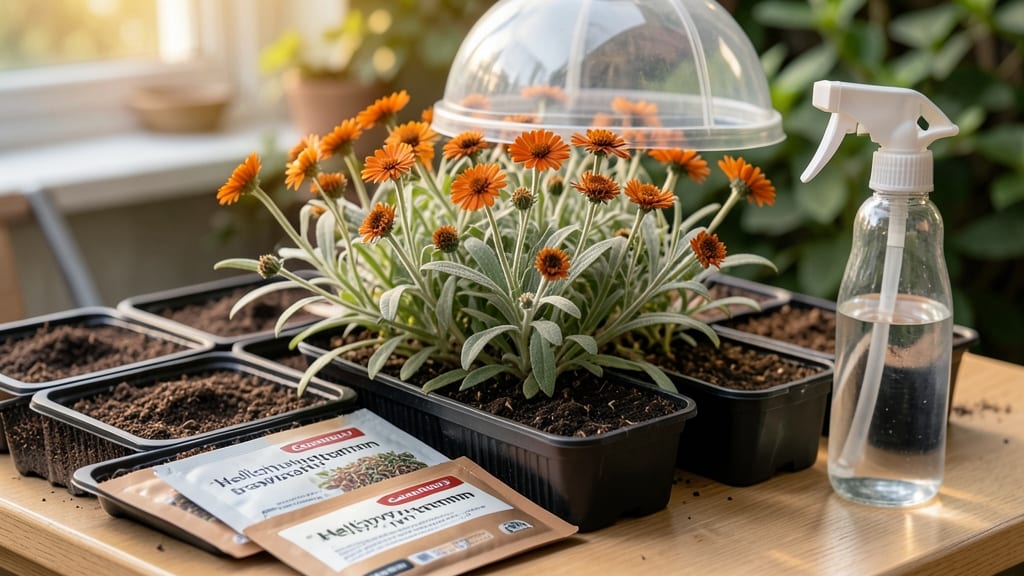
Start strawflower seeds indoors about 8 weeks before your last frost date to ensure sturdy, blooming plants by summer 🌼 — the exact timing depends on your USDA zone and seedling growth speed.
Picture this: you’ve got a tray of leggy, pale strawflower seedlings stretching toward the window, while your neighbor’s garden bursts with vibrant blooms. The difference? Timing. Too early and you’ll wrestle with weak plants; too late and you’ll miss the peak flowering season.
For most gardeners in Zone 6a, that means sowing seeds in early March to transplant outdoors by mid-May. But if you’re in a warmer zone, you might start as early as February, while cooler climates could wait until late March.
Below, I’ll break down the exact frost-date formula, common mistakes to avoid, and how to set up your indoor seed-starting station for success—so you can enjoy those long-lasting dried flowers from late summer through fall.
How to calculate indoor strawflower seed starting dates by frost dates
Timing your strawflower seeds correctly ensures vibrant blooms by summer—not leggy seedlings or late flowers. The key? A simple formula using your last frost date, USDA zone, and seedling growth rate. Let’s break it down step by step.
Strawflowers (Helichrysum) thrive with 60–90 days from seed to bloom, but indoor starts need extra care. Most gardeners aim for 8 weeks of indoor growth before transplanting outdoors. Adjust this timeline based on your local frost dates and growing conditions.
Start by locating your last frost date—this is the average date when frost no longer threatens your garden. For example, in USDA Zone 6a, the last frost is typically April 15.
Count backward 8 weeks to determine your ideal transplant date, then start seeds 8 weeks before that.
For Zone 6a, this means sowing seeds by February 15. However, if you’re using grow lights, you can start slightly earlier (by February 1) to account for faster growth. Conversely, if you’re relying on a sunny window, delay by 1 week to prevent leggy seedlings.
Strawflowers need 6+ hours of sunlight daily to thrive. If your indoor setup lacks natural light, supplement with LED grow lights for 12–14 hours/day. Position lights 2–3 inches above seedlings and adjust height as they grow to avoid stretching.
After calculating your start date, prepare your seedling trays with a well-draining mix (50% peat moss, 30% perlite, 20% vermiculite). Plant seeds ¼ inch deep and keep the soil moist but not soggy.
Use a humidity dome or plastic wrap to retain moisture until germination, which typically occurs in 7–14 days.
Once seedlings emerge, thin them to 2 inches apart to avoid overcrowding. Harden off seedlings by gradually exposing them to outdoor conditions for 1–2 weeks before transplanting. This process includes placing them outside for 1 hour/day, increasing time daily while protecting from direct wind.
Transplant strawflowers outdoors after the last frost date and when soil temperatures reach 55°F+. Space plants 12–18 inches apart in full sun for optimal blooms. Mulch around the base to retain moisture and suppress weeds, ensuring your strawflowers thrive through summer.
Pro tip: Mark your transplant date on a calendar and set reminders to adjust light exposure and fertilizer schedules as needed. With precise timing, your strawflowers will reward you with long-lasting blooms from midsummer to fall.
Strawflower seed starting mistakes that kill germination and growth
Starting strawflower seeds indoors too early is one of the most common mistakes that leads to weak, leggy seedlings. When you plant them 10+ weeks before your last frost, you risk overcrowding in small trays and seedlings that stretch desperately toward any available light.
These etiolated seedlings are prone to breaking during transplant and often struggle to recover once outdoors.
On the flip side, waiting too late—just 4-5 weeks before your last frost—means your strawflowers won’t mature enough to bloom before fall frost. You’ll end up with tall, leafy plants but no flowers, leaving your garden looking sparse when it should be in full bloom.
The ideal window is 6-8 weeks before your last frost date, giving seedlings enough time to develop strong roots and stems.
Mistake: Starting seeds too early (before January 15 in most zones) → Fix: Use a cool, dark spot (like a basement) to delay germination until soil temps reach 60°F+.
Mistake: Waiting until April → Fix: Start seeds indoors in March for Zone 6a; adjust ±2 weeks for warmer/cooler zones.
Mistake: Ignoring soil temperature → Fix: Use a seedling heat mat (70-75°F) to speed germination if your home stays cool.
Light is another critical factor strawflower seedlings often lack. Without 12-16 hours of light daily, seedlings stretch toward the nearest window, becoming weak and prone to falling over. A south-facing window might work in spring, but most homes don’t get enough sunlight this time of year.
Invest in a grow light (LED or fluorescent) to keep seedlings sturdy and compact.
Poor soil temperature control is a silent killer for strawflower seeds. These seeds need consistent warmth (around 70°F) to germinate properly. If your indoor temps drop below 60°F, germination slows dramatically, and seeds may rot before sprouting.
Use a seedling heat mat or place your seed tray on top of your fridge to maintain the right temperature.
Overwatering is another frequent issue that drowns strawflower seeds before they even sprout. Unlike some plants, strawflowers hate soggy soil. Keep the soil moist but never waterlogged—think of it as a damp sponge, not a swamp.
Use trays with drainage holes and water only when the top inch of soil feels dry to the touch. A spray bottle helps avoid disturbing seeds while keeping them hydrated.
Finally, transplanting too early or too late can ruin all your hard work. Seedlings should have 3-4 true leaves and be at least 2-3 inches tall before moving outdoors.
Harden them off for 7-10 days by gradually exposing them to outdoor conditions, then transplant on a cloudy day to reduce stress. If you rush this process, seedlings go into shock and may never recover.