
Flowers
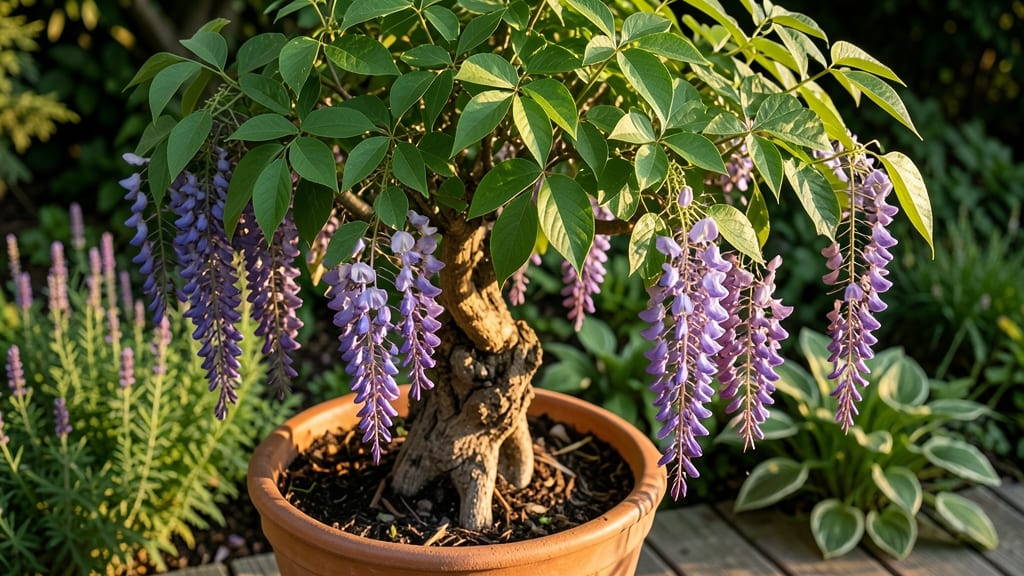
The wisteria flower time in April and May brings a fragrant, purple spectacle that turns any garden into a dreamy retreat.
But here’s the catch: timing your planting is the key to getting those cascading clusters faster. Miss the window, and you could wait years for the showstopper blooms you crave.
From USDA Zone 6a to the sunniest spot in your yard, I’ll break down the exact planting months for each variety — and the simple tricks to coax blooms faster than the neighbors.
Ready to transform your garden into a wisteria waterfall? Let’s get started.
Best planting times for wisteria by variety (with flowering speed guide)
Wisteria’s vibrant blooms are worth the wait—but only if you plant at the right time. Each variety has unique hardiness zones and flowering speeds, meaning a Chinese wisteria in Zone 7 may bloom faster than a Japanese wisteria in Zone 5.
Timing your planting to your local climate and variety is key to avoiding years of bare vines. Let’s break down the best windows for each type, plus how to predict bloom timing like a pro.
First, know that wisteria flowers appear on old wood, meaning last year’s growth. If you prune too aggressively, you risk cutting off next year’s blooms. The fastest bloomers (like Amethyst Falls) can produce flowers in just 2-3 years, while slower varieties may take 5+ years.
Your planting window directly impacts this timeline—plant too late, and you’ll delay those dreamy cascades.
Here’s the critical rule: Plant Chinese wisteria in early spring (March-April in most zones), Japanese wisteria slightly later (April-May), and American wisteria in late winter to early spring (February-March). These windows align with when roots establish before summer heat stress.
For example, in Zone 6, Chinese wisteria planted in March often blooms by year 3, while the same variety planted in May might take year 5 or longer.
🌸
| Variety | USDA Zones | Best Planting Window | Years to First Bloom | Flowering Speed | Bloom Time |
|---|---|---|---|---|---|
| Chinese Wisteria | 6-9 | March-April | 2-3 years | Fastest | Mid to late spring |
| Japanese Wisteria | 5-8 | April-May | 3-5 years | Moderate | Late spring |
| American Wisteria | 4-9 | February-March | 4-6 years | Slowest | Early to mid spring |
Notice how Chinese wisteria tops the list for fastest blooms? This variety thrives in warmer zones (6-9) and loves full sun. Plant it in March in Zone 7, and you’ll likely see flowers by year 3.
In contrast, American wisteria is the slowest bloomer but handles cooler zones (4-9), making it ideal for northern gardens. Its February-March planting window gives roots time to establish before late frosts.
Your local last frost date is your best friend when planting wisteria. For example, if your last frost is April 15, aim to plant Chinese wisteria by March 15 to avoid stress.
Use a frost calendar for your USDA zone (find yours via the USDA Plant Hardiness Zone Map) to pinpoint the exact window. Pro tip: Container-grown wisteria can be planted 1-2 weeks later than bare-root plants, as their roots are already established.
Don’t overlook soil temperature—roots won’t grow well in cold, wet soil. Wait until the ground reaches at least 50°F (10°C) before planting. In Zone 5, this might mean waiting until mid-May for Japanese wisteria, even though the general window is April-May.
Use a soil thermometer to check; planting too early in chilly soil can stunt growth and delay blooms by 1-2 years.
🌿
Once planted, water deeply for the first 2-3 months to encourage root growth. Chinese wisteria in Zone 8 planted in March should get 1 inch of water weekly until
How to trick wisteria into blooming faster (proven pruning & care hacks)
Wisteria’s fragrant blooms can take years to appear if you don’t give them the right care from day one. The secret? Strategic pruning and targeted growing conditions that mimic its natural habitat.
Unlike many vines, wisteria flowers on old wood, so aggressive pruning can actually delay blooms. Here’s how to speed up those stunning purple cascades without sacrificing the vine’s health.
First, let’s address the biggest myth: wisteria needs cold dormancy to bloom. If you live in a warm climate, you’ll need to trick the plant into thinking winter is coming.
This involves seasonal pruning and soil adjustments that most gardeners overlook. The results? 2-3 years faster to your first major bloom display.
Prune at the right time
Cut back 1/3 of last year’s growth in late winter (before buds swell). Avoid pruning in fall or early spring—this removes next year’s flower buds!
Boost soil pH to 6.5-7.0
Wisteria thrives in slightly acidic to neutral soil. Test your soil and amend with lime (for acidic) or sulfur (for alkaline) to speed up nutrient uptake and flowering.
Maximize sunlight exposure
Plant in full sun (6+ hours daily). If your vine gets partial shade, supplement with a grow light for 4-6 hours in winter to mimic long daylight hours.
Use the phosphorus hack
Apply a high-phosphorus fertilizer (10-20-10) in early spring when buds form. Phosphorus doubles bloom production by encouraging root and flower development.
For first-year planting, follow this critical checklist to set your wisteria up for rapid growth and early blooms. Start by choosing a sunny, sheltered spot with well-draining soil.
Wisteria roots can smother nearby plants, so give it plenty of space—at least 10 feet from trees or shrubs. Install a strong trellis or arbor immediately, as young vines need support to climb and develop properly.
After planting, water deeply once a week for the first month to encourage root establishment. Avoid overwatering, as soggy soil leads to root rot and stunted growth. In USDA Zones 5-7, mulch around the base with wood chips to protect roots during winter.
This mimics the cold dormancy wisteria needs to trigger flowering the following spring.
One often-overlooked trick is to pinch back new growth in late spring when vines reach 12-18 inches. This encourages bushier growth and more flowering sites the next year. Use clean, sharp pruning shears to avoid damaging the vine, and always cut just above a leaf node where buds form.
With these science-backed hacks, you’ll see noticeable blooms within 2-3 years—not the 5+ years most gardeners experience.