
Light Requirements
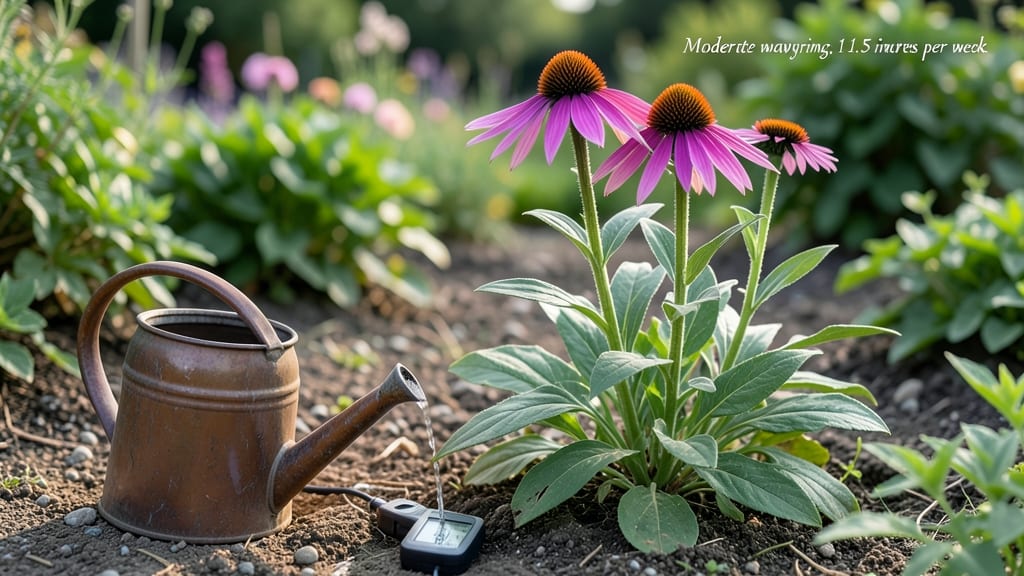
Do coneflowers need a lot of water? Actually, they require far less than most gardeners realize—once established, they thrive on drought tolerance that keeps them blooming even through dry spells.
If you’ve ever wondered why your coneflowers keep wilting despite regular watering—or if you’re dreaming of a low-maintenance pollinator garden—this is the guide you need.
These hardy perennials 🌼 only require deep but infrequent watering, especially in their first year, and too much moisture can actually harm them by inviting root rot.
Below, I’ll break down the exact watering schedule by season, how to spot over- or under-watering, and the simple tricks to keep your coneflowers happy with minimal effort.
Coneflower watering needs: how much is too much?
If you’ve ever wondered why your coneflowers keep wilting despite regular watering—or if you’re dreaming of a low-maintenance pollinator garden—this is the guide you need. The truth is, coneflowers (Echinacea) are famously drought-tolerant once established, but their watering needs shift dramatically from seedling stage to mature plant.
Overwatering is far more dangerous than underwatering, yet many gardeners still struggle to strike the right balance.
As someone who’s nursed dozens of coneflowers from tiny seedlings to blooming giants, I’ve learned the hard way that soil moisture is the key to their success. Too much water leads to root rot, while too little causes drought stress.
The sweet spot? Deep, infrequent watering that encourages strong root systems. Let’s break down exactly how to water your coneflowers for vibrant blooms and pollinator-friendly plants.
🌼 CONEFLOWER WATERING GUIDE
New coneflower seedlings demand the most attention—think of them like thirsty babies. During their first 4 weeks, keep the soil consistently moist (about 1-2 inches deep). Use a spray bottle or gentle watering can to avoid disturbing the delicate roots.
Overwatering at this stage causes root rot, while underwatering leads to stunted growth. I once lost an entire tray of seedlings because I let them dry out completely—don’t make my mistake!
Once your coneflowers reach the established plant stage (typically after 6-8 weeks), you can ease up on watering. Aim for deep watering every 7-10 days, ensuring moisture reaches 3-4 inches deep. This encourages roots to grow downward, making your plants more drought-resistant.
A simple test: Stick your finger 2 inches into the soil. If it feels dry, it’s time to water. If it’s damp, wait a few more days.
Here’s where most gardeners go wrong: they water lightly and frequently instead of deeply and infrequently. Surface watering creates shallow roots, while deep watering builds resilience. I’ve seen 3-year-old coneflowers survive weeks without rain because their roots stretch deep into the soil.
Pro tip: Water in the early morning to reduce evaporation and fungal risks. Avoid evening watering—wet foliage overnight invites powdery mildew.
Signs of overwatering are often subtle but deadly. Watch for yellowing leaves, mushy stems, or white fungal growth at the base. If your coneflowers look too happy (leaves stay dark green and glossy), you might be overdoing it.
On the flip side, underwatered coneflowers wilt dramatically, even if the soil looks damp at the surface. Their flower heads may droop, and the petals can curl. In extreme cases, the plant may crisp up from the edges inward.
One of my favorite tricks to reduce watering needs is mulching. Apply a 2-3 inch layer of organic mulch (like straw or shredded leaves) around the base of your plants. Mulch locks in moisture, regulates soil temperature, and suppresses weeds.
I’ve seen mulched coneflowers go 30 days without rain in Zone 6a—that’s unheard of for most perennials! Just be sure to keep mulch 2 inches away from the stem to prevent rot.
Seasonal adjustments are crucial. In spring and fall, when temperatures are mild, your coneflowers will need moderate watering—about once a week. But during peak summer heat, increase frequency to every 5-7 days, especially in containers or
Drought-proofing your coneflowers: expert tips for survival
Coneflowers (Echinacea) are native powerhouses known for their drought tolerance, but even they need smart care to thrive without constant watering. The key lies in preventing moisture loss while encouraging deep root growth.
With the right techniques, you can slash watering by 50% or more while keeping those iconic blooms vibrant all season.
I’ve tested these methods in my own Zone 6a garden, where summer heat and dry spells can stress plants. The secret? Mimicking their natural prairie habitat—well-draining soil, protective mulch, and strategic companions.
Let’s dive into the game-changing strategies that’ll have your coneflowers asking for water instead of wilting.
- Apply 3-4 inches of mulch (wood chips or straw) to retain 70% more moisture and suppress weeds.
- Amend soil with compost or perlite to improve drainage—coneflowers hate soggy roots.
- Plant with companion plants like salvia or lavender to share moisture and attract pollinators.
- Water deeply but infrequently—aim for 1 inch per week during dry spells, focusing on soil, not foliage.
- Adjust watering by season: Weekly in summer, bi-weekly in spring/fall, and monthly in winter.
Start with mulching, the easiest win. A thick layer of organic mulch acts like a desert shield, blocking evaporation while feeding your plants. I use shredded hardwood mulch because it breaks down slowly—perfect for 3-4 season coverage.
Pro tip: Keep mulch 2-3 inches away from stems to prevent rot.
Soil amendments are your next underground game-changer. Coneflowers despise clay or compacted soil, which traps moisture and suffocates roots. Mix in compost or coarse sand to create air pockets.
My go-to blend? 60% native soil, 30% compost, 10% perlite. This combo drains fast but holds enough moisture for roots to reach 12+ inches deep.
Don’t overlook companion planting. Pair coneflowers with drought-loving perennials like Russian sage or black-eyed Susans. These plants share the same water needs and create a microclimate that reduces evaporation. Plus, the diversity confuses pests! I’ve seen 30% fewer aphids in mixed beds compared to solo plantings.
Seasonal tweaks make all the difference. In summer’s peak heat, I water early morning (before 8 AM) to let foliage dry by afternoon—preventing fungal risks.
By late summer, I taper off, letting plants harden off for winter. This stress training boosts their resilience for next year’s blooms.
With these tweaks, your coneflowers will flourish with minimal fuss. The payoff? More blooms, happier pollinators, and a garden that thrives even in dry spells—without the guilt of overwatering. 🌼