
Watering
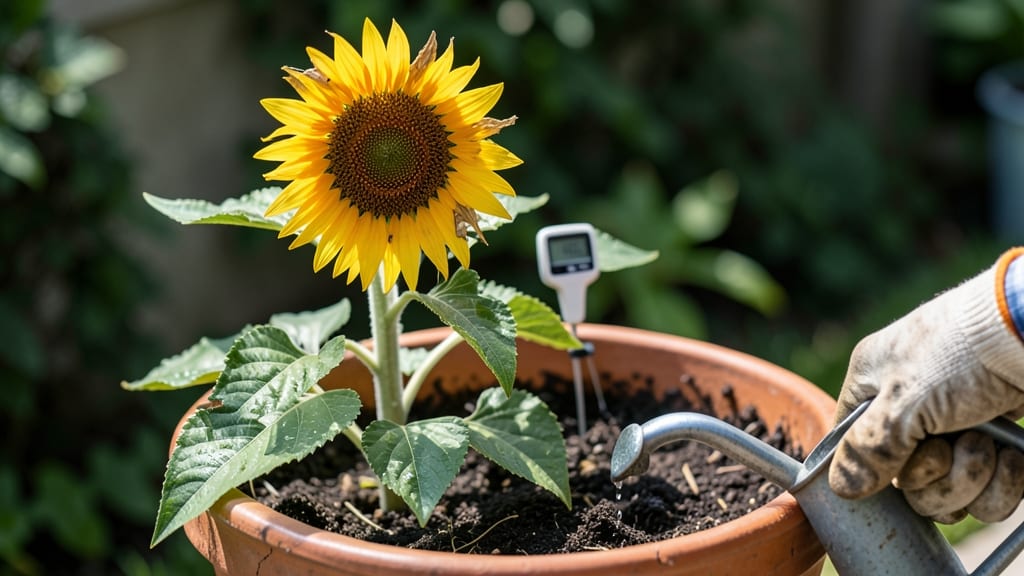
To water sunflowers in pots the right way, check the soil every 1-2 days—drier soil means it’s time, but soggy soil means you’re overdoing it.
Sunflowers in pots can reach towering heights—but only if you master the watering routine. Get it wrong, and your 🌻 will wilt before it blooms. The key is balancing moisture without drowning the roots, especially in small containers where soil dries out fast.
Most gardeners guess and end up with either limp stems or moldy soil. Instead, I’ll show you the simple soil-drying test that tells you exactly when to water—no more second-guessing.
You’ll learn how pot size, season, and even your local climate change the schedule, plus how to spot the early signs of over- or under-watering before it’s too late.
The soil-drying test: how to determine when sunflowers need water
Sunflowers in pots are thirsty plants, but their watering needs change as they grow. The key to keeping them happy is checking the soil moisture—not guessing based on time. Small pots dry out in 1-2 days, while larger containers may last 3-4 days.
I’ve learned that ignoring this simple test leads to either sad, droopy sunflowers or moldy, rotting roots.
Start by understanding your sunflower’s watering signals. Healthy soil should feel lightly moist 1-2 inches deep—like a wrung-out sponge. If it’s bone-dry, your plant is begging for water.
If it’s soggy, you’re drowning it. The soil-drying test removes the guesswork by giving you a clear, hands-on method to check moisture levels every time.
Step-by-Step Soil-Drying Test for Potted Sunflowers
- 1 Check soil color: Lift your pot slightly and peek at the soil 1-2 inches deep. Dark, moist soil means wait. Pale, crumbly soil means water now.
- 2 Finger test: Stick your index finger 1-2 inches deep into the soil. If it feels dry, water immediately. If it’s damp but cool, wait 1 more day.
- 3 Weight test: Lift the pot—lightweight means soil is dry. Heavy soil (especially clay pots) may still hold moisture. Adjust based on your finger test.
- 4 Adjust for season: In summer, check soil daily—pots dry out fast. In spring/fall, stretch watering to every 2-3 days. Winter? Reduce to once a week unless indoors.
- 5 Water deeply: When needed, water until water drains from the bottom. Empty saucers after 10 minutes to prevent root rot—a silent killer of potted sunflowers.
Environmental factors like temperature and humidity also play a huge role. On a 90°F+ day, your sunflower’s pot may need water twice daily, while cooler 60°F days might only require watering every 3 days.
Pay attention to your local weather—sudden heatwaves or storms can throw off your routine.
Another trick I use is grouping pots together. Sunflowers in clusters dry out at similar rates, so checking one pot gives you a baseline for others nearby. This saves time and ensures consistency—critical for tall sunflowers that need steady moisture to support their heavy blooms.
Watch for visual cues like wilting leaves or soil pulling away from the pot edges—these are late signs of thirst. By then, your sunflower may already be stressed. The soil-drying test helps you act before damage occurs, keeping your plant’s roots happy and its stems strong.
Pro tip: Keep a watering journal for your sunflowers. Note the pot size, season, and days between waterings. Over time, you’ll spot patterns—like how your 5-gallon pot always needs water on Wednesdays in July. This personal record turns guesswork into a predictable routine.
Remember, sunflowers in pots are not drought-tolerant like their in-ground cousins. Their roots are confined, so they rely on you to monitor moisture closely. With this test, you’ll avoid the two biggest mistakes: overwatering (which causes root rot) and underwatering (which leads to stunted growth).
Start testing your soil today—your sunflower’s towering height and vibrant blooms will thank you. And if you’re still unsure, just remember: dry soil = thirsty plant. That’s the golden rule of potted sunflowers. 🌻
Watering frequency chart: sunflower care by season and pot size
Potted sunflowers need precise watering—too much causes root rot, while too little stunts their growth. The pot size and season determine how often you should water, with small pots drying out faster than large ones.
In summer, I water mine daily in small containers, while larger pots might only need water every 2-3 days. Climate also plays a role: hot, dry areas require more frequent watering than cooler, humid regions.
Here’s a simple chart to guide your watering schedule. Adjust based on your local weather—if it’s unusually dry or hot, water more often. Always check the soil moisture before watering to avoid soggy roots. For extra protection, use pots with drainage holes and well-draining soil mix.
In hot climates, like USDA zones 8-10, sunflowers in pots may need watering every day during peak summer, especially in small containers. If you notice the soil pulling away from the pot edges or the top inch feeling dry, it’s time to water.
For cooler climates (zones 3-6), reduce frequency by 20-30%—your sunflower won’t need as much water in spring or fall.
Pro tip: Use a moisture meter for accuracy, or stick your finger 1 inch deep into the soil. If it feels dry, water thoroughly until it drains from the bottom. Overwatering is the #1 killer of potted sunflowers, so always ensure excess water escapes through drainage holes.
For extra insurance, add a layer of gravel or perlite to the pot’s bottom.
Adjust this schedule based on your sunflower’s growth stage. Seedlings need more frequent watering (every 1-2 days