
Flowers
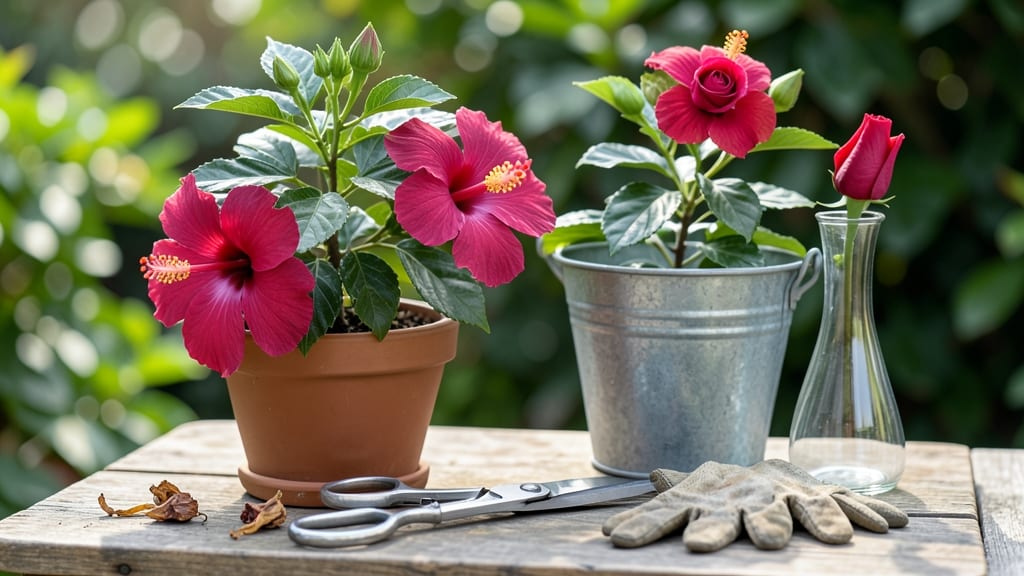
To harvest hibiscus flowers at their peak 🌸, pick them when fully open and vibrant in the morning hours—this simple timing trick keeps them fresh for days.
Did you know hibiscus flowers lose their vibrant color and freshness within hours if harvested at the wrong time? Mastering the perfect harvesting technique can extend their beauty for days—here’s how to do it right.
Your hibiscus thrives in Zone 6, where the blooms appear from June through September, but the key to long-lasting flowers lies in when and how you cut them. A sharp snip at the right moment preserves their color and keeps your plant blooming longer.
Below, I’ll walk you through the best time of day to harvest, the proper cutting method to avoid damaging your plant, and how to store or dry your flowers for arrangements that last.
Best time of day to harvest hibiscus flowers for maximum freshness
Harvesting hibiscus flowers at the wrong time can turn vibrant blooms into wilted disappointments within hours. The morning hours are your golden window—when dew has evaporated but temperatures remain cool. This timing preserves color, moisture, and structural integrity, giving your flowers days of freshness instead of hours.
The science behind this is simple: cooler morning air reduces transpiration stress, while afternoon heat accelerates wilting.
Hibiscus flowers are diurnal plants, meaning they open fully in response to morning sunlight. When you harvest at peak bloom (typically between 6 AM and 9 AM), you capture the flower at its most vibrant state.
Afternoon harvesting (post-noon) often results in flowers that lose petal integrity and fade faster—a common mistake even experienced gardeners make. Think of it like picking fruit at its ripest moment: timing is everything.
| Harvest Time | Optimal Conditions | Flower Longevity | Seasonal Adjustments |
|---|---|---|---|
| 6 AM - 9 AM | Cool temps (60-75°F), dry stems, fully open petals | 5-7 days fresh in water | Spring/Summer: Ideal Fall: Harvest by 8 AM |
| 9 AM - 12 PM | Warming temps, slight petal droop possible | 3-5 days fresh | Avoid if temps >80°F |
| Afternoon (12 PM - 5 PM) | Hot temps, wilting risk, closed petals | 1-3 days fresh | Emergency harvest only |
| Evening (5 PM - Sunset) | Dew forms, fungal risk increases | 1 day fresh (high spoilage) | Never harvest |
The ideal weather conditions for harvesting hibiscus flowers include clear skies and moderate humidity. Avoid harvesting after rain showers (wait 24 hours) because excess moisture weakens stems and encourages bacterial rot. In humid climates (like Zone 9+), harvest even earlier—by 5:30 AM—to prevent fungal issues.
Conversely, in arid regions, morning harvests still work, but you’ll need to replenish vase water more frequently to combat rapid dehydration.
Seasonal adjustments are key to maintaining quality. During peak summer months (July-August), hibiscus flowers open earlier due to longer daylight. Harvest by 5:30 AM to catch them at their prime.
In spring (May-June), when blooms are just starting, wait until 7 AM to ensure full petal unfurling. Fall harvesting (September-October) requires extra caution—cooler mornings mean flowers may stay closed longer, so check blooms at 6 AM and harvest only those fully open.
Light exposure plays a critical role in flower longevity after harvest. Hibiscus blooms contain anthocyanins, pigments sensitive to light degradation. Direct sunlight after harvesting accelerates color fading, while indirect light preserves vibrancy.
If you’re arranging harvested flowers, place them in a shaded vase location (like a north-facing windowsill) to extend their life by up to 30%. For drying hibiscus, avoid full sun entirely—use a well-ventilated dark space to prevent bleaching.
Another pro tip: Harvest on cloudy days when temperatures are naturally cooler. The lack of intense sunlight means flowers won’t overheat during the day, giving you a wider morning window (up to 10 AM) for harvesting without sacrificing quality.
This is especially useful in tropical climates where hibiscus thrive year-round. Just be sure to check blooms daily—cloud cover can delay opening times.
If you miss the morning window, don’t despair. A mid-morning harvest (before 11 AM) can still yield decent results, but act fast: trim stems immediately, place flowers in cool water, and store them in the fridge overnight before arranging.
This emergency technique buys you an extra 24-48 hours of vase life. However, afternoon or evening harvests should be avoided unless you’re drying flowers for crafting—even then, expect duller colors and fragile petals.
For commercial or large-scale harvesting, consider investing in a portable misting system. Lightly misting flowers post-harvest can restore turgor and extend freshness by up to 48 hours. Pair this with <
Step-by-step guide to harvesting hibiscus without damaging the plant
Harvesting hibiscus flowers the right way ensures your plant stays healthy and continues producing stunning blooms 🌺. The key is to use the correct tools and technique to avoid stressing the plant while maximizing the beauty of your harvest.
A single wrong cut can lead to broken stems or even stunted growth, so let’s get this right.
Start by gathering your tools: a pair of sharp pruning shears or clean scissors, and a bucket of water to place your cut flowers in immediately. Avoid using dull tools, as they can crush stems and invite disease.
I always keep a small spray bottle nearby to refresh any wilting petals during the process.
- Step 1: Choose a fully open flower with vibrant petals and a firm stem. Look for blooms that have just reached their peak—petals should be flat and fully unfurled.
- Step 2: Hold the stem at a 45-degree angle about 1-2 inches below the flower head. This prevents water from pooling on the cut stem, which can cause rot.
- Step 3: Make a clean, diagonal cut using sharp pruning shears. Avoid tearing the stem, as this can damage the plant and reduce vase life.
- Step 4: Immediately place the cut flower in a bucket of cool water to hydrate the stem and preserve freshness. Change the water every 24 hours for best results.
- Step 5: After harvesting, water your plant deeply and apply a light fertilizer to encourage new growth. This helps the hibiscus bounce back quickly.
- Step 6: Avoid harvesting more than 1/3 of the blooms at once to prevent over-stressing the plant. This keeps your hibiscus producing flowers for weeks.
If you notice stem breakage or premature wilting, it’s usually a sign of using dull tools or cutting too close to the main stem. Always cut just above a leaf node to encourage new growth.
I’ve found that harvesting in the early morning also reduces stress on the plant, as the flowers are fully hydrated from overnight dew.
For large hibiscus varieties, like the tropical hibiscus, support the stem with one hand while cutting to avoid snapping it. Smaller varieties, such as the dwarf hibiscus, require gentler handling to prevent damage to the delicate stems.
Always work in the shade to keep flowers cool and fresh during the process.
With these steps, your hibiscus will stay healthy, and your harvested flowers will last longer in arrangements or dried for crafting. The secret is patience and precision—your plant will thank you with even more stunning blooms! 🌿