
Flowers
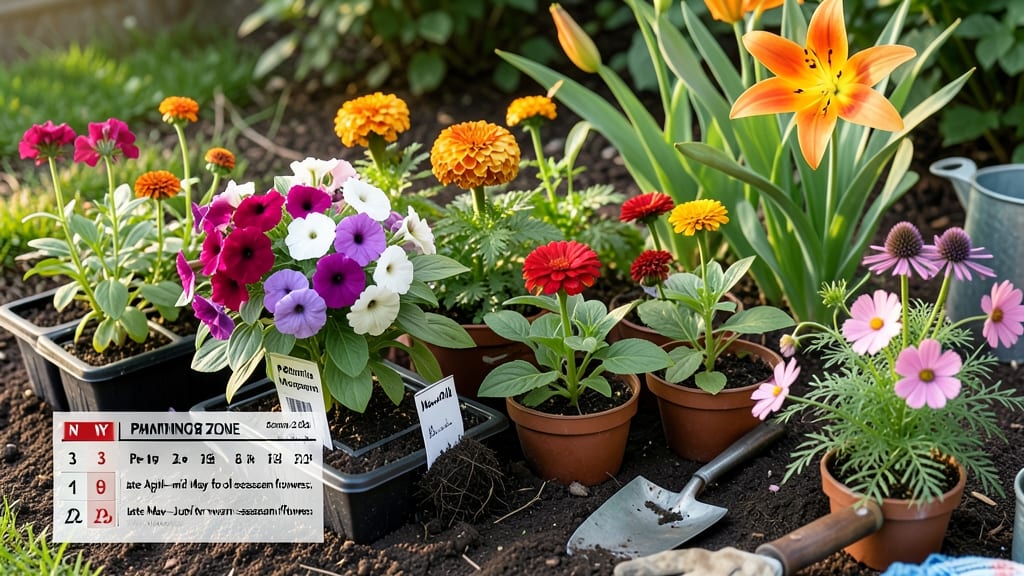
Planting flowers in New York after the last frost—typically late April to early June—sets the stage for a vibrant summer garden 🌸.
Timing your flower planting in New York wrong can mean wilted dreams before summer even arrives—but knowing your microclimate’s last frost date transforms guesswork into guaranteed blooms.
From the concrete heat islands of NYC to the lake-effect cooling of the Adirondacks, each region has its own schedule. Whether you’re planting heat-loving dahlias or cool-season pansies, getting the timing right means fewer replants and more color.
Below, I break down the exact frost-free windows for every corner of the state, plus how to adjust for urban heat, wind exposure, and even the best flowers to pick for your short growing season.
NY last frost dates by region: when to plant flowers safely
New York’s diverse climate means your last frost date could vary by 3-4 weeks depending on where you garden. In the Adirondacks, hardy flowers might survive until May 20, while Long Island gardeners can safely plant as early as April 25.
These differences matter—especially for heat-loving dahlias or cool-season pansies that need precise timing to thrive.
To avoid frost damage, I recommend checking the National Weather Service or your local Cornell Cooperative Extension for real-time updates.
But here’s a general rule: Annual flowers like marigolds and zinnias should wait until 2-3 weeks after your region’s last frost, while perennials like coneflowers can handle cooler soil and may go in earlier.
Below, I’ve broken down NY’s frost-free zones with exact planting windows for your region. Use this as your garden calendar to time everything from seed sowing to transplanting—because even a single night of frost can turn your dream garden into a sad, brown mess.
Notice how Long Island gets a 2-week head start compared to the Adirondacks? That’s why I always recommend hardening off seedlings for 7-10 days before transplanting—especially for tender annuals like impatiens or coleus.
If you’re in Zone 6b (like much of Upstate NY), consider using row covers to protect early plantings from late frosts.
For fall planting, aim to get perennials in the ground by late August (Western NY) to early September (Long Island).
This gives roots time to establish before the first frost, which typically hits mid-October in the south and late November in the north. Bulbs like tulips should go in even earlier—October—so they can root before winter.
Pro tip: If you’re unsure about your exact last frost date, use the 50% probability rule. For example, if the average last frost is May 1050% chance of frost until May 15, wait until then to plant heat-sensitive flowers like dahlias.
And always keep an emergency row cover handy—it’s saved my tomato plants (and yes, flowers too!) more times than I can count.
One more thing: NYC’s urban heat island can make it feel 2-3°F warmer than surrounding areas
How to adjust planting dates for NY microclimates (urban vs. rural)
New York’s diverse microclimates can shift planting windows by 2-4 weeks—so a late-May frost in the Adirondacks won’t match NYC’s heat-island effect. Urban gardens often warm up faster due to concrete, while rural areas near lakes or mountains stay cooler longer.
These differences mean delicate flowers like petunias might thrive in Brooklyn by May 15 but need row covers until June 1 in the Catskills.
For wind-prone areas like Long Island, coastal breezes can dry out soil faster, while lake-effect zones (like Buffalo) may experience sudden cold snaps. Adjusting your planting dates isn’t just about dates—it’s about protecting your blooms from unexpected weather.
I’ll show you how to fine-tune your schedule based on where you garden in the state.
🌱
- 1
- 2
- 3
- 4
- 5
If you’re gardening in NYC’s five boroughs, your soil can warm up 1-2 weeks faster than suburban areas. I’ve seen zinnias sprouting by April 25 in Brooklyn while Long Island City gardens were still frost-prone.
Test your soil temp with a thermometer—aim for 60°F+ before planting warm-season flowers.
For rural areas like the Hudson Valley, where lake breezes from the Champlain Valley cool things down, wait until May 10 for tender perennials like lavender.
In the Adirondacks, late-May frosts are common, so I recommend using black plastic mulch to warm soil and straw bale gardens for extra insulation.
Don’t forget about wind protection—if you’re on Long Island’s South Shore, 60 mph winds can flatten delicate stems like cosmos. Install windbreaks (e.g., bamboo screens, hedges) or choose sturdy varieties like rudbeckia for coastal gardens. Even a simple trellis can save your clematis from flopping over.
Pro tip: Use a planting calendar from Cornell Cooperative Extension (they offer free regional guides) to cross-check your local adjustments. My Upstate garden thrives with August-sown pansies, but NYC gardeners need to wait until September 10 to avoid heat stress.