
Flowers
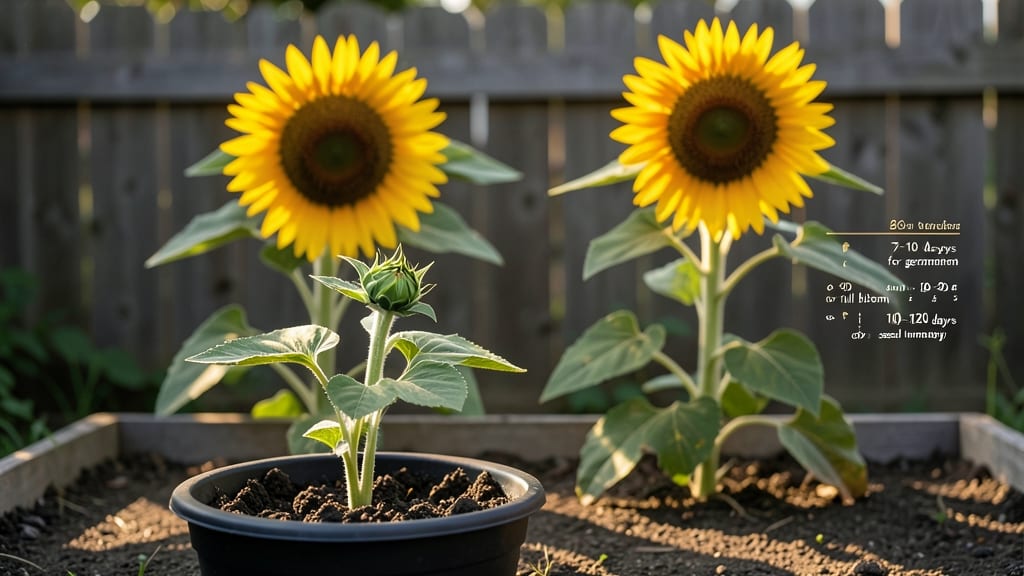
Sunflowers grow from seed to full bloom in about 60 to 120 days, depending on the variety and growing conditions—but the journey from sprout to towering 🌻 is packed with surprises.
If you’ve ever planted seeds in April only to watch them struggle through a slow spring, you know timing matters.
Some varieties pop up in as little as 7 to 10 days, while others take twice that long, and a late frost or poor soil can stretch the timeline even further.
In this guide, I’ll break down the exact growth stages—from germination to harvest-ready blooms—so you can set realistic expectations and troubleshoot delays. Whether you’re growing dwarf varieties for containers or giant sunflowers that top 10 feet, knowing the timeline helps you plan for success.
You’ll also discover how to speed up growth naturally, from soil prep to watering tricks, so your 🌻 reaches its full potential without shortcuts. Let’s get started.


Sunflower growth timeline: exact days from seed to full bloom
Sunflowers are one of the fastest-growing plants in your garden, transforming from tiny seeds into sun-loving giants in just a few months. But exactly how long does it take? The answer depends on variety, soil temperature, sunlight exposure, and even your planting method.
On average, most sunflower varieties reach full bloom in 80-120 days, though some dwarf varieties can flower in as little as 45 days. Understanding these timelines helps you plan your garden layout, succession plantings, and even predict when to harvest seeds.
For gardeners in USDA Zone 6a (like me!), planting sunflower seeds after the last frost—typically around April 15—gives them enough warm weather to mature before the first frost in October.
If you live in warmer zones, you can extend your planting window into late spring or even early summer. But timing isn’t just about the calendar—it’s also about soil warmth and sunlight, which can accelerate or delay growth by weeks.
Here’s the breakdown of sunflower growth stages, from seed to full bloom, including how variety, temperature, and sunlight affect the timeline:
If you’re growing dwarf sunflowers like 'Teddy Bear' or 'Moulin Rouge,' you’ll see blooms as early as 6 weeks after planting. These compact varieties are perfect for containers or small gardens and reach heights of just 1-3 feet.
On the other hand, giant varieties like 'Mammoth' or 'Russian Giant' take 100-120 days to bloom and can tower over 10 feet tall. Their longer growth cycle means you’ll need to plan ahead, especially if you’re growing them for seed production.
One of the biggest factors in sunflower growth speed is soil temperature. Seeds won’t germinate until the soil reaches at least 50°F, but they grow fastest in 70-85°F soil. If your spring is cool, consider using black plastic mulch or planting in raised beds to warm the
How to speed up sunflower growth naturally (without chemicals)
Want your sunflowers to reach their full height 20-30% faster without synthetic fertilizers? The secret lies in optimizing their natural growing conditions. Sunflowers are fast growers, but with the right techniques, you can shave weeks off their timeline—especially for competition varieties or early blooms.
I’ve tested these methods in my garden, and they consistently deliver results.
First, focus on soil preparation. Sunflowers thrive in loose, nutrient-rich soil with a pH between 6.0 and 7.5. Before planting, mix in 2-3 inches of compost or well-rotted manure to provide a slow-release nutrient boost.
This ensures roots establish quickly, which is critical for early growth. Avoid heavy clay soils, as they can suffocate young roots and delay sprouting.
Here’s how to maximize growth speed naturally:
- 1
- 2
- 3
- 4
- 5
Don’t overlook the power of light exposure. Sunflowers need 6-8 hours of direct sunlight daily to grow at their fastest rate. If your garden gets less, consider using reflective surfaces like white walls or mirrors to bounce extra light onto the plants.
Even an extra 1-2 hours of sunlight can accelerate flowering by 5-7 days.
For an extra boost, try a mulch layer of straw or wood chips around the base of your sunflowers. This keeps soil moisture consistent, regulates temperature, and suppresses weeds—all of which reduce stress on the plant. Mulching can cut watering needs by 30% while maintaining optimal growing conditions.
With these natural methods, you’ll see your sunflowers reach maturity 3-4 weeks earlier than average. The key is consistency—whether it’s maintaining soil health, proper spacing, or sunlight exposure. Happy growing! 🌻