
How To
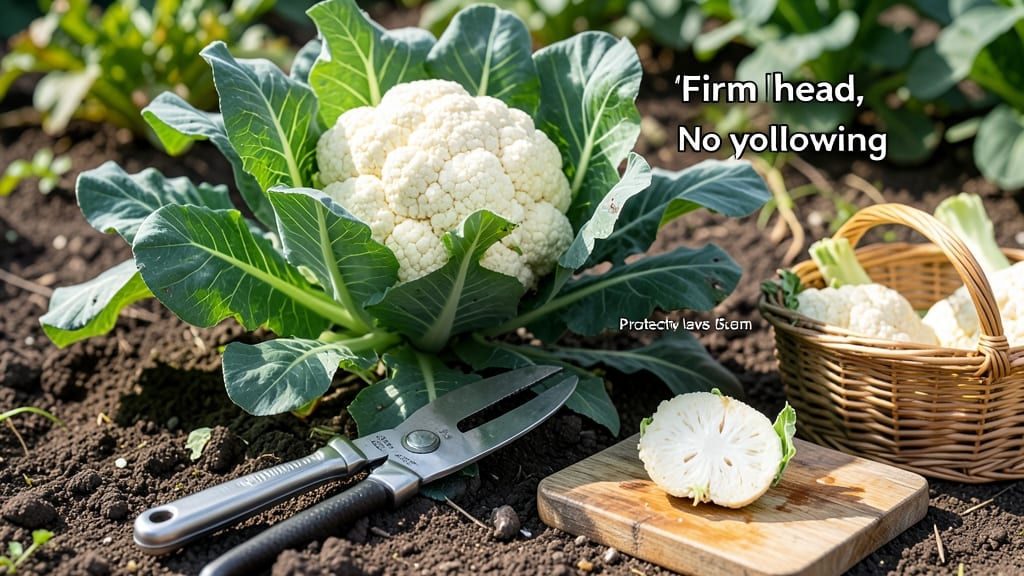
Knowing when to pick cauliflower means watching for a firm, compact head that’s 6-8 inches wide and creamy white, pale green, or purple—because even a day too late can turn your harvest bitter.
Picture this: your 🥬 cauliflower sits in the garden, growing faster than you expected, and suddenly you’re second-guessing whether it’s ready. The leaves curling inward? That’s your cue. The head feels solid but still yields slightly to gentle pressure?
Perfect. Miss these signs, and you might end up with a loose, woody mess that’s tough to eat.
Beyond size and color, temperature and weather play a role—cool evenings help the head tighten, while sudden heat can speed up ripening. I’ll walk you through every detail, from the ideal curd texture to what to do if you wait too long (spoiler: there’s still hope!).
By the end, you’ll confidently harvest your cauliflower at peak flavor, cut the stems just right, and store it properly for up to 5 days of freshness. No more guesswork—just a foolproof checklist for gardeners in Zone 6a and beyond.
Cauliflower curd color and size: the ultimate picking guide
Timing your cauliflower harvest perfectly ensures tender, flavorful curds instead of bitter, woody messes. The key lies in three critical factors: curd color, size, and texture. Each variety has unique cues, but mastering these basics will transform your harvest every time.
Let’s break down what to look for—because waiting too long or picking too early can ruin your crop.
Most gardeners focus only on head size, but color consistency and texture firmness are equally important. For example, a creamy white curd might be ready at 6 inches, while a purple variety could take an extra week to reach its vibrant hue.
Seasonal temperatures also play a role—cooler weather slows maturity, while heat can cause premature bolting. Understanding these nuances means never missing the perfect window again.
🌱 Pro Tip: Check your plants daily during the last week of expected maturity. Cauliflower heads develop quickly, and even a 24-hour delay can turn a perfect harvest into a disappointment.
| Cue | Ready Signs | Not Ready Signs | Action |
|---|---|---|---|
| Color |
|
|
Harvest immediately |
| Size |
|
|
Wait 2-3 days or harvest smaller |
| Texture |
|
|
Harvest or discard |
| Leaves |
|
|
Harvest or monitor closely |
Let’s start with color, the most obvious (but often overlooked) cue. A creamy white curd is the gold standard for classic varieties like Snowball or Snowman.
If you’re growing purple cauliflower, aim for a deep, even hue—light purple means it’s not ready yet. Romanesco varieties should have a pale green tint when mature. Pro tip: Check color in morning light—shade can make heads look darker than they are.
Next, size matters. The ideal 6-8 inch diameter ensures maximum flavor and tenderness. Smaller heads (under 5 inches) are often underdeveloped, while oversized ones (over 10 inches) can become woody and bitter.
Measure your curd with your hand—if it’s about the size of a softball, it’s likely ready. Varieties like Cheddar or Orange Duke may reach maturity slightly larger, so always cross-reference with color and texture.
Texture is the final puzzle piece. A perfect cauliflower curd should feel firm to the touch but not rock-hard. Gently press the head—if it gives slightly (like a ripe avocado), it’s ready. Rock-hard curds mean it’s overripe, while soft or mushy spots signal rot or pest damage. Pay extra attention to the outer buds—they should be tightly packed, not loosening or opening.
Seasonal variations can throw off your timing. In cooler climates (USDA Zones 3-5), caul
5 Key signs your cauliflower is ready (beyond size and color)
When your cauliflower reaches the right size and color, it’s tempting to grab your harvesting shears—but hold on. The true readiness lies in subtle cues most gardeners miss. I’ve learned the hard way that waiting too long turns those creamy curds into tough, bitter disappointment.
The key is watching for leaf behavior, stem thickness, and even weather patterns that signal the perfect moment.
For example, purple varieties like ‘Graffiti’ need slightly different timing than white types, and a cool evening can actually help tighten the head overnight. These hidden clues ensure you harvest at peak flavor, not just when the head looks "big enough."
Let’s break down the 5 must-check signs that prove your cauliflower is finally ready to pick.
- 1 Leaves Curling Inward: The outer leaves should start tightly wrapping around the head, almost like a protective blanket. This means the plant is directing all energy to the curd.
- 2 Stem Thickness: Gently squeeze the main stem—it should feel sturdy and thick (about the diameter of your thumb). A thin stem means the head isn’t fully formed yet.
- 3 Bud Closure: Check for tiny buds on the head’s surface. If they’re still closed, the curd is ready. Open buds mean it’s overripe and woody.
- 4 Weather Window: Harvest on a cool, cloudy day (ideal temperature: 60-70°F). Hot days can stress the plant, while cool nights help the head tighten perfectly.
- 5 Head Firmness: Press the curd gently—it should feel solid but slightly springy, like a well-inflated balloon. If it’s rock-hard, it’s past its prime; if too soft, it’s not ready.
One mistake I made early on was picking my cauliflower based only on size, ignoring the leaf curl. The result? A head that was loose and stringy inside.
Now, I double-check all five signs—especially the bud closure—because those tiny details make the difference between a restaurant-worthy harvest and a sad, inedible mess.
Pro tip: If you’re growing multiple varieties, like orange ‘Cheddar’ or green ‘Romanesco’, the same rules apply—but watch their unique color development. For example, ‘Romanesco’ should have deep green fractals before harvesting.
And if your garden is in Zone 6a, aim to harvest before mid-July to avoid heat stress.
Once you’ve confirmed all five signs, grab your sharp knife and cut the stem about 1 inch below the curd. This leaves room for any side shoots to form—some varieties will give you a second harvest!
Store your cauliflower in the fridge (unwashed) for up to 5 days, or blanch and freeze for long-term storage.
Remember: Patience is key. Rushing leads to bitter curds, while waiting too long means tough, fibrous heads. Trust the signs, not just the calendar, and you’ll always harvest at the perfect moment.