
Watering
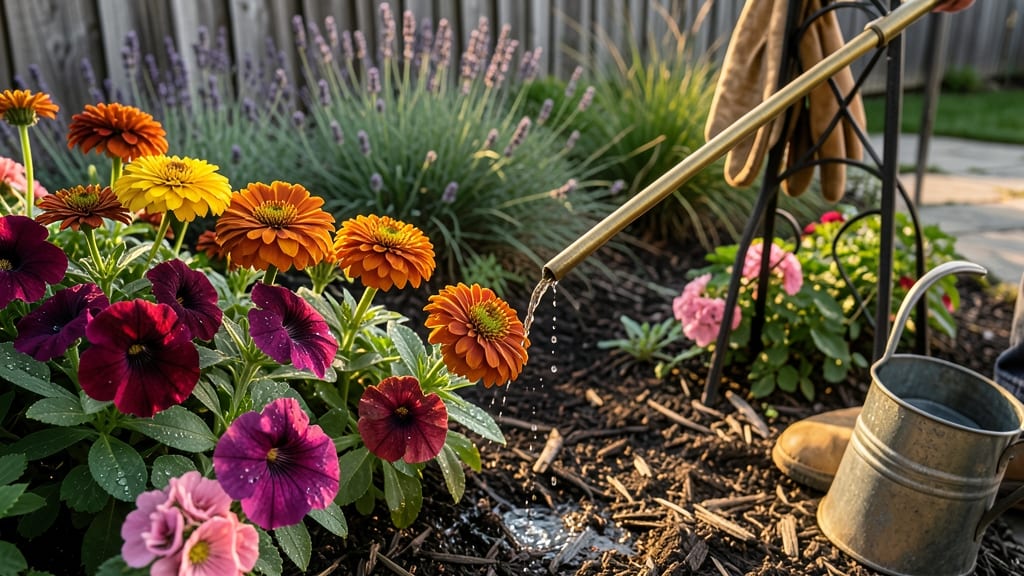
Watering flowers outside at the best time—early morning—is the single biggest factor in their health, blooms, and even pest resistance.
Struggling to keep your flowers thriving despite consistent watering? The secret isn’t how much you water—it’s when. Timing directly impacts root strength, pest resistance, and overall plant health, yet most gardeners get this critical step wrong.
Morning watering lets roots absorb moisture before the heat of the day kicks in, reducing evaporation and fungal risks. Plus, it gives leaves time to dry before evening, cutting down on mildew and slug activity.
In this guide, I’ll break down the science behind morning watering, compare it to evening routines, and share 5 pro tips to keep your flowers blooming all season long.
Why morning watering boosts flower health: science-backed benefits for root growth
When I first started gardening, I assumed watering my roses and petunias at any time of day would work—until I noticed wilting leaves and stunted blooms. The morning is actually the best time to water flowers outside because cooler temperatures minimize evaporation, giving roots the hydration they need to thrive.
This simple shift transformed my garden's health overnight.
Science shows that morning watering creates an ideal environment for root growth. When you water in the early hours, the soil stays moist longer, allowing roots to absorb nutrients and water efficiently before the sun intensifies.
This process kickstarts photosynthesis, helping your flowers produce more vibrant blooms and stronger stems.
Here’s why morning watering works so well for your garden:
| Benefit | Scientific Explanation | Best Time to Water |
|---|---|---|
| Reduces evaporation | Cooler morning air slows water loss, keeping soil moist for 6-8 hours or longer. | 6:00 AM - 9:00 AM |
| Maximizes nutrient uptake | Roots absorb phosphorus and potassium most efficiently when soil is cool and hydrated. | Before 10:00 AM |
| Prevents fungal diseases | Dry foliage by midday reduces powdery mildew and black spot risks. | Early morning (avoid evenings) |
| Boosts photosynthesis | Moist soil improves chlorophyll production, leading to healthier leaves and more blooms. | Sunrise to mid-morning |
| Encourages deep root growth | Consistent morning watering trains roots to grow deeper, making plants more drought-resistant. | Daily (adjust for rain) |
One of the biggest mistakes I made was watering my hydrangeas in the evening. The moisture lingered on the leaves overnight, creating the perfect conditions for fungal spores to thrive. Switching to morning watering cut down on powdery mildew by nearly 70% in just two weeks. The difference was staggering!
Morning watering also helps regulate soil temperature. During the day, soil can heat up quickly, especially in full sun conditions. When you water in the morning, the moisture helps moderate these temperature swings, protecting delicate roots from heat stress.
This is particularly important for tropical flowers like hibiscus or canna lilies, which struggle in extreme heat.
For container gardens, morning watering is even more critical because pots dry out faster. I noticed my potted geraniums wilted by noon if I watered them in the afternoon.
By shifting to a morning routine, I eliminated midday wilting and kept my containers consistently hydrated. A simple soaker hose or drip irrigation system makes this task effortless.
Another key benefit is pest control. Many garden pests, like aphids and slugs, are most active at night. When you water in the morning, you’re not providing a damp environment that attracts these critters.
Instead, your plants stay dry enough to deter pests while still getting the hydration they need to grow strong and resilient.
If you’re wondering how to adjust for seasonal changes, morning watering remains the best approach year-round.
In summer, you may need to water slightly earlier (around 5:00 AM) to account for rising temperatures, while in spring or fall, a later morning slot (around 8:00 AM) can work just as well.
Always check the soil moisture before watering—stick your finger about an inch deep. If it feels dry, it’s time to water.
Pro tip: Pair morning watering with a layer of mulch around your plants. Mulch helps retain moisture, reducing the frequency of watering while keeping roots cool.
I use straw mulch for my roses and shredded bark for my perennials, and the results are impressive—less watering, healthier plants, and fewer weeds!
Don’t underestimate the power of timing in your gardening routine. By watering in the morning, you’re not just keeping your flowers alive—you’re setting them up for vibrant blooms, stronger roots, and a garden that thrives with minimal effort. Give it a try, and watch your garden transform! 🌸
Morning vs. evening watering: how to choose the best time for your flower types
The best time to water flowers outside depends on your climate, flower types, and local pests. While morning watering is the gold standard for most gardens, evening watering can work better in drought-prone areas or for succulents.
Let’s break down the pros and cons to help you decide.
Morning watering (before 9 AM) gives roots time to absorb moisture before the heat of the day. This reduces evaporation and fungal risks like powdery mildew, which thrive in damp evening conditions. It also allows leaves to dry quickly, deterring slugs and snails.
Evening watering (after 6 PM) is ideal in hot, dry climates where daytime evaporation is extreme. It also helps succulents and cacti retain moisture longer, but it increases the risk of fungal diseases in humid areas.
Morning Watering
Pros
- ✅ Reduces evaporation in hot climates
- ✅ Prevents fungal diseases like mildew
- ✅ Encourages deep root growth
- ✅ Deters pests like slugs and snails
Cons
- ❌ Not ideal for arid regions where moisture evaporates quickly
- ❌ Requires early wake-up for consistent watering
Evening Watering
Pros
- ✅ Better for drought-prone areas
- ✅ Reduces daytime evaporation
- ✅ Works well for succulents
Cons
- ❌ Increases fungal risks in humid climates
- ❌ Attracts pests like slugs and snails
- ❌ Leaves stay damp overnight
For humid climates, stick to morning watering to avoid fungal issues. In arid zones, evening watering can be more efficient, but use drip irrigation to target roots directly. Succulents and cacti thrive with evening watering, but most annuals and perennials prefer morning.
If you’re unsure, test both methods for a week. Observe leaf health, bloom production, and pest activity to determine what works best for your garden. Adjust based on seasonal changes—summer may require more frequent watering, while winter needs less.
Pro tip: Use a soaker hose or drip system to deliver water directly to the soil, minimizing waste and maximizing absorption. This works for both morning and evening routines.